By Anonymous (not verified), 17 February, 2026
You may have heard that empathy involves “walking in someone else’s shoes.” But this tidy metaphor misses a crucial aspect of empathetic behavior: close, compassionate listening. BrenĂ© Brown addresses the missing component in her book Atlas of the Heart: Rather than walking in your shoes, I need to learn how to listen to the story you tell about what it’s like in your shoes and believe you even when it doesn’t match my experiences. To show empathy, then, we must learn to listen carefully, understand what was said, and withhold judgment.
By Anonymous (not verified), 17 February, 2026
One-on-one conferences play a crucial role in writing classrooms. Conferences give students a chance to ask questions, voice concerns, receive feedback, and map out next steps for their work. In my own classroom, students report feeling better prepared to tackle writing challenges after conferring with me. That’s not to say writing conferences are all sunshine and rainbows. Without proper planning and boundaries, conferences can turn into a logistical nightmare. How can you carve out class time to meet with 20, 30, or more students without disrupting your calendar?
By Anonymous (not verified), 17 February, 2026
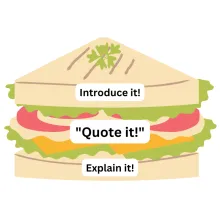
Do your students use quotations in their writing? This common practice allows writers to engage with experts, marshal evidence, and create dialogue. But the practice also comes with potential pitfalls. Some students overuse quotations, adding so many that their own voice gets lost in the mix. Other students drop in quotations without enough context. The quotes just hang there with no clear connection to the surrounding ideas.
By Anonymous (not verified), 17 February, 2026
For far too long, the ELA community treated reading and writing a bit like rival siblings. Everyone knew the two were related, but many believed they were better off taught separately. Curricula often focused on reading, while writing was cast aside as secondary, the Harry to reading’s William. Today, we know we had it wrong. The two literacies not only belong together but also get along splendidly when taught in tandem.
By Anonymous (not verified), 17 February, 2026
With the availability of tools like Grammarly and ChatGPT, it may be tempting to spend less time teaching grammar. Wouldn't it be more efficient to let technology detect and correct grammar issues for students, and leave it at that? Efficient? Maybe. Effective? Not so much. The presence of grammar checkers and chat bot assistants does not diminish the need to learn grammar, just as calculators did not eliminate the need to learn math. Calculators did alter the way math was taught, though. The same is true of teaching grammar in the age of AI.
By Anonymous (not verified), 17 February, 2026
Near the end of the school year, my freshmen embark on a multi-week advocacy unit. During this time, they must plan, research, write, revise, and polish a final project. The first few times I assigned the project, students struggled out of the gates. They waited too long to commit to a topic, perform preliminary research, and find a focus for their writing. As a result, they had to scramble to finish, affecting the quality of their work. The mini deadlines I set up along the way were not enough.
By Anonymous (not verified), 17 February, 2026
One of the most thought-provoking works we've read lately is Bad Ideas About Writing, edited by Cheryl E. Ball and Drew M. Loewe. This open-access book from the University of West Virginia examines popular myths and assumptions about the teaching and learning of writing. You’ll find brief, “opinionated encyclopedia entries and researched mini-manifestos” from experts in writing studies.
By Anonymous (not verified), 17 February, 2026
It's time to set up your classroom for the school year—boxes, rugs, chairs, shelves, books, handouts. . . . You want to organize the room just so, but the task can feel overwhelming. How can you organize your classroom space while your mental space feels so disorganized? Use these mental-health tips to put your mind in order and feel cool, calm, and collected—inside and out.  1. Combat imposterism. We've all had those nagging feelings that we aren't deserving of our position or capable of doing our job.
By Anonymous (not verified), 17 February, 2026
In Language Arts, students learn to write—narratives, explanatory essays, arguments, reports, and literary analyses. In other classes, they write to learn—notes, summaries, lab reports, emails, and reflections. Writing helps students gain knowledge, wrestle with it, and reflect on it. You can use 10 simple writing-to-learn activities to supercharge learning in any class throughout the day. 1.