Analyzing Characters
Almost all literature contains characters, the answer to who? in the 5 W's and H. Characters in literature are just like people in real life. You can describe them physically—their facial expressions, body posture, hair color, eye color, build, race, age, and sex. You can describe them psychologically—personality, intellect, education, role in society, desires, and fears. In fact, what characters desire and what they fear tend to be the sources of conflict for them, striving to get what they want and overcome what they dread.
Analyzing Characters in Literature
Sometimes authors describe characters outright, but often they show who characters are through their words and deeds. Your job as the reader is to analyze characters by finding outright evidence in the text and inferring other traits through dialogue and action.
Analyze literary characters.
Closely read the following excerpt from the great American novel Their Eyes Were Watching God. Then answer the questions that follow about the two main characters, Janie Mae Killicks and Joe Starks.
Listen to "Excerpt from 'Their Eyes Were Watching God' "
Hide audio
Excerpt from "Their Eyes Were Watching God"
by Zora Neale Hurston
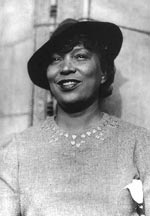
Zora Neal Hurston was a novelist, folklorist, and short story writer in the southern United States during the first half of the 20th century (Library of Congress)
When Janie had finished indoors she sat down in the barn with the potatoes. But springtime reached her in there so she moved everything to a place in the yard where she could see the road. The noon sun filtered through the leaves of the fine oak tree where she sat and made lacy patterns on the ground. She had been there a long time when she heard whistling coming down the road.
It was a citified, stylish dressed man with his hat set at an angle that didn’t belong in these parts. His coat was over his arm, but he didn’t need it to represent his clothes. The shirt with the silk sleeveholders was dazzling enough for the world. He whistled, mopped his face and walked like he knew where he was going. He was a seal-brown color but he acted like Mr. Washburn or somebody like that to Janie. Where would such a man be coming from and where was he going? He didn’t look her way nor no other way except straight ahead, so Janie ran to the pump and jerked the handle hard while she pumped. It made a loud noise and also made her heavy hair fall down. So he stopped and looked hard, and then he asked her for a cool drink of water.
Janie pumped it off until she got a good look at the man. He talked friendly while he drank.
Joe Starks was the name, yeah Joe Starks from in and through Georgy. Been workin’ for white folks all his life. Saved up some money—round three hundred dollars, yes indeed, right here in his pocket. Kept hearin’ ’bout them buildin’ a new state down heah in Floridy and sort of wanted to come. But he was makin’ money where he was. But when he heard all about ’em makin’ a town all outa colored folks, he knowed dat was de place he wanted to be. He had always wanted to be a big voice, but de white folks had all de sayso where he come from and everywhere else, exceptin’ dis place dat colored folks was buildin’ theirselves. Dat was right too. De man dat built things oughta boss it. Let colored folks build things too if dey wants to crow over somethin’. He was glad he had his money all saved up. He meant to git dere whilst de town wuz yet a baby. He meant to buy in big. It had always been his wish and desire to be a big voice and he had to live nearly thirty years to find a chance. Where was Janie’s papa and mama?
“Dey dead, Ah reckon. Ah wouldn’t know ’bout ’em ’cause mah Grandmas raised me. She dead too.”
“She dead too! Well, who’s lookin’ after a lil girl-chile lak you?”
“Ah’m married.”
“You married? You ain’t hardly old enough to be weaned. . . . Never specks to get too old to enjoy syrup sweeten’ water when it’s cool and nice.”
“Us got plenty syrup in de barn. Ribbon-cane syrup. If you so desires—”
“Where yo’ husband at, Mis’ er-er.”
“Mah name is Janie Mae Killicks since Ah got married. Useter be name Janie Mae Crawford. Mah husband is gone tuh buy a mule fuh me tuh plow. He left me cuttin’ up seed p’taters.”
“You behind a plow! You ain’t got no mo’ business wid uh plow than uh hog is got wid uh holiday! You ain’t got no business cuttin’ up no seed p’taters neither. A pretty doll-baby lak you is made to sit on de front porch and rock and fan yo’self and eat p’taters dat other folks plant just special for you.”
Janie laughed and drew two quarts of syrup from the barrel and Joe Starks pumped the water bucket full of cool water. They sat under the tree and talked. He was going on down to the new part of Florida, but no harm to stop and chat. He later decided he needed a rest anyway. It would do him good to rest a week or two.
Every day after that they managed to meet in the scrub oaks across the road and talk about when he would be a big ruler of things with her reaping the benefits. Janie pulled back a long time because he did not represent sun-up and pollen and blooming trees, but he spoke for far horizon. He spoke for change and chance. Still she hung back. The memory of Nanny was still powerful and strong.
- Describe Janie Mae Killicks physically.
- Describe Janie Mae Killicks psychologically. Include what she desires and fears.
- Describe Joe Starks physically.
- Describe Joe Starks psychologically. Include what he desires and fears.
- Based on what Janie Mae Killicks and Joe Starks desire and fear, what conflicts do you see in the excerpt? What conflicts do you anticipate as the story unfolds in the future?
Teaching Tip
Help students see that analyzing a character's desires and fears helps predict the person's actions going forward in the story. When two characters have different desires and fears, they often come into conflict, which is what drives the plot.
Analyzing the Psychology of the Poet
Some poetry tells a story, and you can analyze characters in poems just as you did in literature. However, even poetry that does not tell a story contains a character—the mind of the poet. You can often analyze the psychology of the poet, especially when the word "I" is used in the poem.
Analyze the psychology of the poet.
Closely read the poem "The Negro Speaks of Rivers" by Langston Hughes. Then answer the questions to analyze the "I" in the poem.
Listen to "The Negro Speaks of Rivers"
Hide audio
The Negro Speaks of Rivers
by Langston Hughes
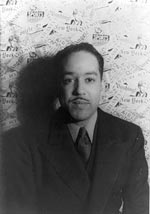
Langston Hughes was the father of the Harlem Renaissance, a poet, novelist, playwright, and columnist (Library of Congress)
I’ve known rivers:
I’ve known rivers ancient as the world and older than the
flow of human blood in human veins.
My soul has grown deep like the rivers.
I bathed in the Euphrates when dawns were young.
I built my hut near the Congo and it lulled me to sleep.
I looked upon the Nile and raised the pyramids above it.
I heard the singing of the Mississippi when Abe Lincoln
went down to New Orleans, and I’ve seen its muddy
bosom turn all golden in the sunset.
I’ve known rivers:
Ancient, dusky rivers.
- Describe the "I" in this poem psychologically.
- Infer the desires and fears that this "I" has.
- What words, sounds, images, thoughts, and emotions stand out in this poem.
Teaching Tip
Help students see that any narrator in literature or poetry can be treated as another character. The voice that tells the story belongs to a person, and students can analyze that narrator psychologically even if an "I" is not used.