Closely Reading Nonfiction
Close reading is active reading. Instead of simply skimming over a text, you engage it, question it, and think about it. Yes, you might start by looking at the heading, noting the source, and trying to get a sense of what you are about to read. But then you should read carefully, annotating the text as you go: underline important concepts, jot notes in the margin, and write questions that occur to you. After you finish reading, you should ask and answer the 5 W's and H about the topic, making sure you fully understand the reading.
You can practice this process by closely reading the following passage and answering questions about it.
Closely read an excerpt.
Read the following excerpt from Plato's Phaedrus, a dialogue in which the ancient Greek philosopher Socrates reflects on how writing changes people's thinking. First survey the piece, reading the heading and first sentences and getting a sense of what it is about. As you read, annotate the text, underlining key ideas and jotting down notes and questions. Afterward, answer the 5 W's and H about the reading.
Listen to "Excerpt from Plato's Phaedrus"
Hide audio
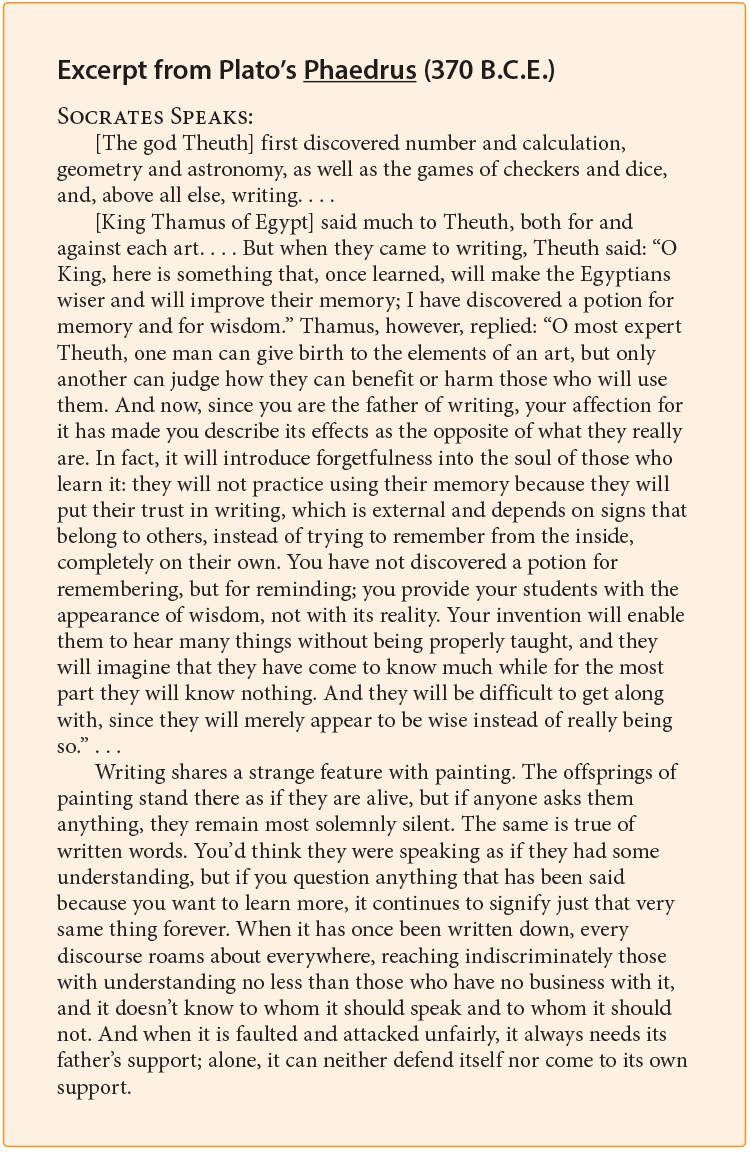
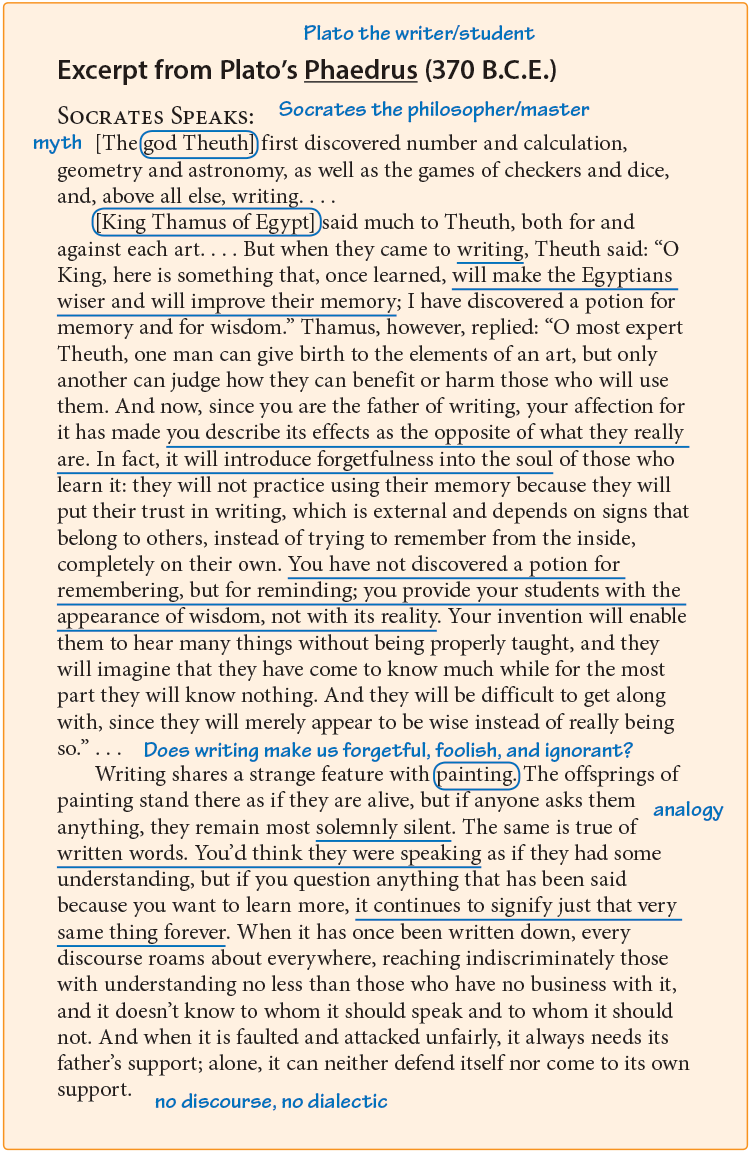
- Who wrote this piece, and who is featured as the narrator of the piece?
- What is the excerpt about?
- Where and when was this text originally written and read?
- Why did the writer create this text? (What was he trying to do?)
- How does the writer make his point? What literary devices does he use?
- Do you agree or disagree with the excerpt? Why?
Closely Reading Visuals
You can ask exactly the same sorts of questions to closely read visuals—from ads to artwork to memes on social media. Remember that all such visuals are forms of communication, with a sender, a receiver, a message, a medium, and a context. Answering the 5 W's and H can help you analyze any visual. You can practice this process by closely reading the following vintage ad.
Closely read an ad.
Closely read the ad from S. Anagyros Company of New York, “Makers of the Highest Grade Turkish and Egyptian Cigarettes in the World.” The ad originally appeared in Life magazine on June 26, 1919. Note especially the ideas presented visually through illustrations, type selection, layout, and so on. Afterward, analyze the visual by answering the 5 W's and H.
Listen to "Egyptian Deities Ad"
Hide audio
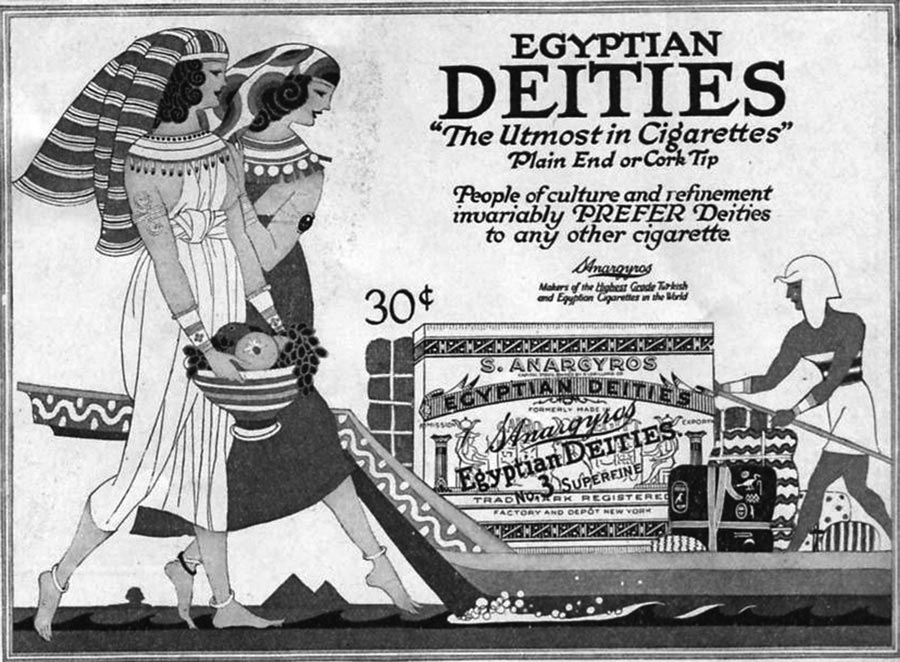
- Who created this visual? Who was meant to view it?
- What is the visual about? What does the visual show?
- Where and when was this visual created and seen? What significant events occurred around that time and place?
- Why was the visual created? What is its purpose?
- How does the ad make its point? What visual devices it use?
- What problems do you find with the message presented by this ad? Are the appeals honest?