Closely Reading Nonfiction

By Anonymous (not verified), 12 March, 2026
Unit Lesson Body

Closely Reading Nonfiction

Close reading is active reading. Instead of simply skimming over a text, you engage it, question it, and think about it. Yes, you might start by looking at the heading, noting the source, and trying to get a sense of what you are about to read. But then you should read carefully, annotating the text as you go: underline important concepts, jot notes in the margin, and write questions that occur to you. After you finish reading, you should ask and answer the 5 W's and H about the topic, making sure you fully understand the reading.

You can practice this process by closely reading the following passage and answering questions about it.

Closely read an excerpt.

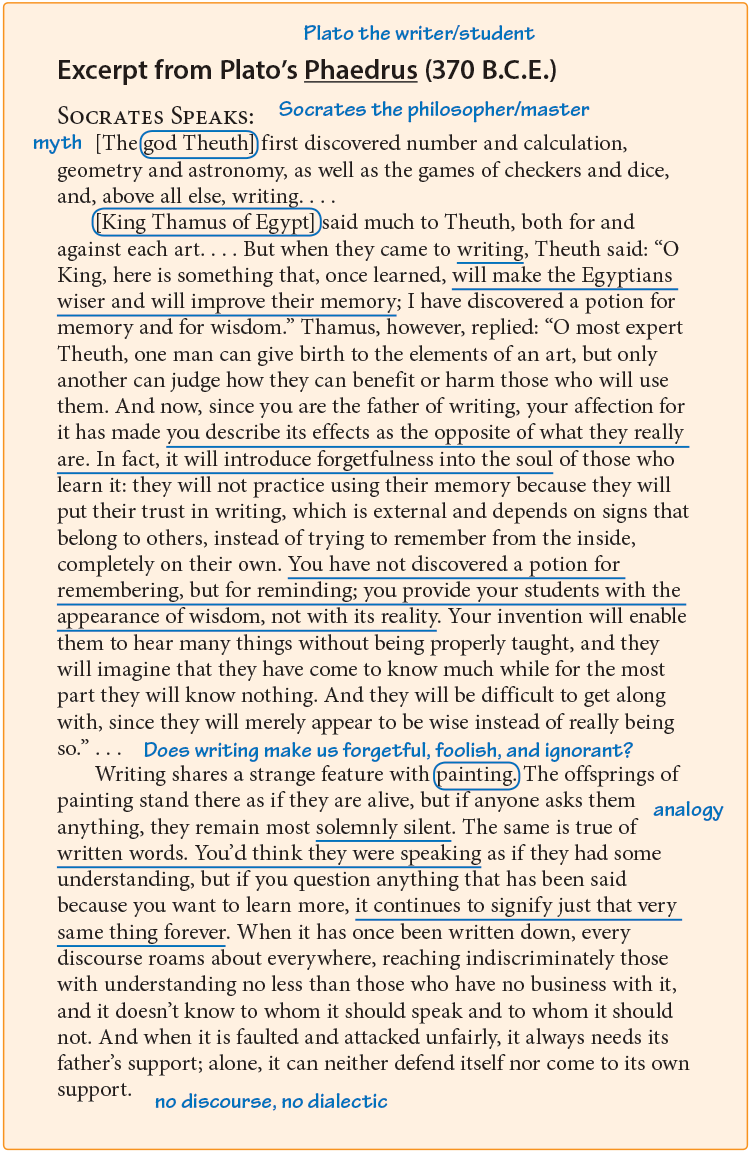
Read the following excerpt from Plato's Phaedrus, a dialogue in which the ancient Greek philosopher Socrates reflects on how writing changes people's thinking. First survey the piece, reading the heading and first sentences and getting a sense of what it is about. As you read, annotate the text, underlining key ideas and jotting down notes and questions. Afterward, answer the 5 W's and H about the reading.

Listen to "Excerpt from Plato's Phaedrus"

Hide audio
  • Editing
  • Editing
  1. Who wrote this piece, and who is featured as the narrator of the piece?
  2. What is the excerpt about?
  3. Where and when was this text originally written and read?
  4. Why did the writer create this text? (What was he trying to do?)
  5. How does the writer make his point? What literary devices does he use?
  6. Do you agree or disagree with the excerpt? Why?

Closely Reading Visuals

You can ask exactly the same sorts of questions to closely read visuals—from ads to artwork to memes on social media. Remember that all such visuals are forms of communication, with a sender, a receiver, a message, a medium, and a context. Answering the 5 W's and H can help you analyze any visual. You can practice this process by closely reading the following vintage ad.

Closely read an ad.

Closely read the ad from S. Anagyros Company of New York, “Makers of the Highest Grade Turkish and Egyptian Cigarettes in the World.” The ad originally appeared in Life magazine on June 26, 1919. Note especially the ideas presented visually through illustrations, type selection, layout, and so on. Afterward, analyze the visual by answering the 5 W's and H.

Listen to "Egyptian Deities Ad"

Hide audio
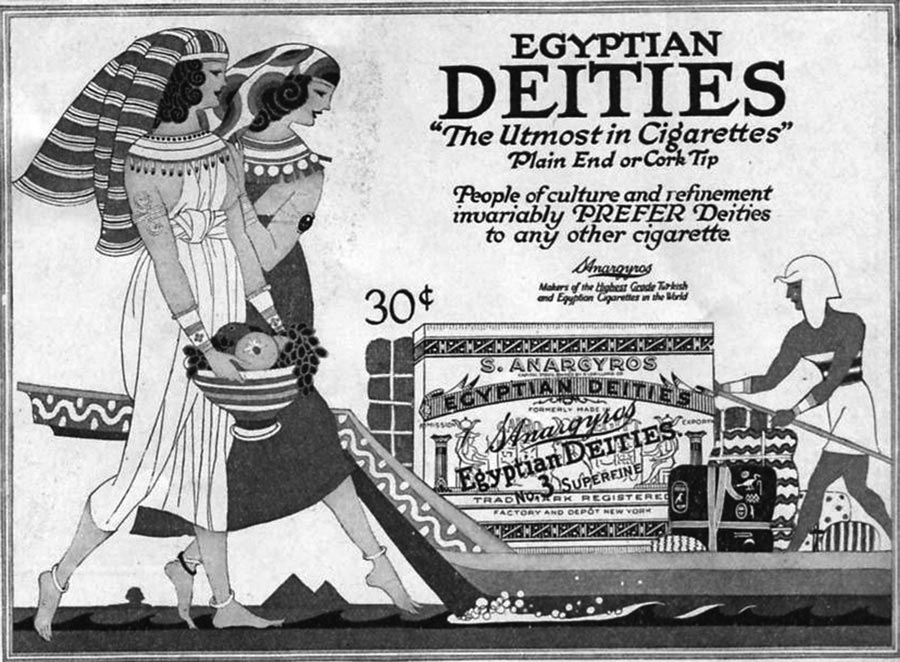
Egyptian Deities Ad
  1. Who created this visual? Who was meant to view it?
  2. What is the visual about? What does the visual show?
  3. Where and when was this visual created and seen? What significant events occurred around that time and place?
  4. Why was the visual created? What is its purpose?
  5. How does the ad make its point? What visual devices it use?
  6. What problems do you find with the message presented by this ad? Are the appeals honest?
Templates
Template Name
Closely Read an Excerpt
Template Content

Student:

Date:

Read the following excerpt from Plato's Phaedrus, a dialogue in which the ancient Greek philosopher Socrates reflects on how writing changes people's thinking. First survey the piece, reading the heading and first sentences and getting a sense of what it is about. As you read, annotate the text, underlining key ideas and jotting down notes and questions. Afterward, answer the 5 W's and H about the reading.

Excerpt from Plato’s Phaedrus (370 B.C.E.)

Socrates Speaks:

[The god Theuth] first discovered number and calculation, geometry and astronomy, as well as the games of checkers and dice, and, above all else, writing. . . .

[King Thamus of Egypt] said much to Theuth, both for and against each art. . . . But when they came to writing, Theuth said: “O King, here is something that, once learned, will make the Egyptians wiser and will improve their memory; I have discovered a potion for memory and for wisdom.” Thamus, however, replied: “O most expert Theuth, one man can give birth to the elements of an art, but only another can judge how they can benefit or harm those who will use them. And now, since you are the father of writing, your affection for it has made you describe its effects as the opposite of what they really are. In fact, it will introduce forgetfulness into the soul of those who learn it: they will not practice using their memory because they will put their trust in writing, which is external and depends on signs that belong to others, instead of trying to remember from the inside, completely on their own. You have not discovered a potion for remembering, but for reminding; you provide your students with the appearance of wisdom, not with its reality. Your invention will enable them to hear many things without being properly taught, and they will imagine that they have come to know much while for the most part they will know nothing. And they will be difficult to get along with, since they will merely appear to be wise instead of really being so.” . . .

Writing shares a strange feature with painting. The offsprings of painting stand there as if they are alive, but if anyone asks them anything, they remain most solemnly silent. The same is true of written words. You’d think they were speaking as if they had some understanding, but if you question anything that has been said because you want to learn more, it continues to signify just that very same thing forever. When it has once been written down, every discourse roams about everywhere, reaching indiscriminately those with understanding no less than those who have no business with it, and it doesn’t know to whom it should speak and to whom it should not. And when it is faulted and attacked unfairly, it always needs its father’s support; alone, it can neither defend itself nor come to its own support.

  1. Who wrote this piece, and who is featured as the narrator of the piece?
  1. What is the excerpt about?
  1. Where and when was this text originally written and read?
  1. Why did the writer create this text? (What was he trying to do?)
  1. How does the writer make his point? What literary devices does he use?
  1. Do you agree or disagree with the excerpt? Why?
Template Name
Closely Read an Ad
Template Content

Student:

Date:

Closely read the ad from S. Anagyros Company of New York, “Makers of the Highest Grade Turkish and Egyptian Cigarettes in the World.” The ad originally appeared in Life magazine on June 26, 1919. Note especially the ideas presented visually through illustrations, type selection, layout, and so on. Afterward, analyze the visual by answering the 5 W's and H.

  1. Who created this visual? Who was meant to view it?
  1. What is the visual about? What does the visual show?
  1. Where and when was this visual created and seen? What significant events occurred around that time and place?
  1. Why was the visual created? What is its purpose?
  1. How does the ad make its point? What visual devices it use?
  1. What problems do you find with the message presented by this ad? Are the appeals honest?
Unit Container Label
Unit Container D7 ID
Lesson Weight
2