CCSS.ELA-LITERACY.W.6.1.A

By Anonymous (not verified), 12 March, 2026

Revising Advertisement Essays

After you write a first draft, you're ready to revise. You need to think about how well you have connected your product to the needs of readers. You also need to make sure you haven't used any unfair appeals, which actually weaken your argument. These activities will help you revise.

Revising to Appeal to Readers

You can't convince people to buy your product by showing how it will help you. You must convince them by showing how your product helps them. To do so effectively, you need to think about the needs of your audience.
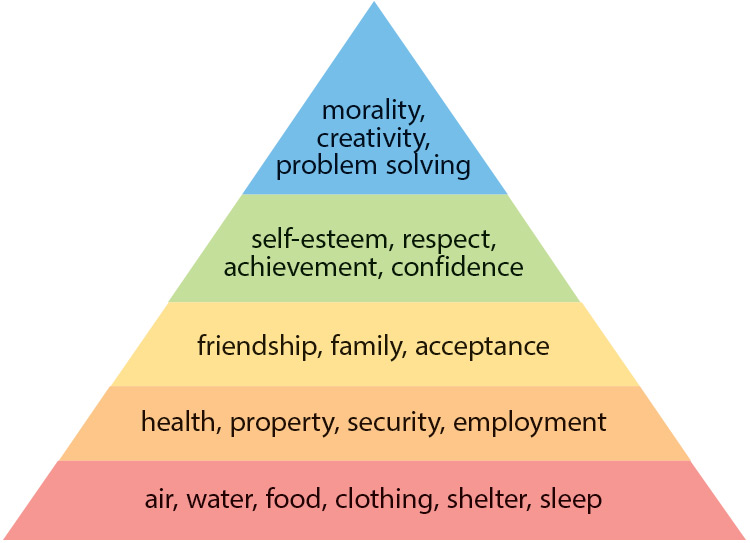
Basic Needs Pyramid

The American psychologist Abraham Maslow created a pyramid that showed different levels of human need. At the bottom, you'll find basic needs: air, water, food, and so on. On the next level, you'll find needs that build on those, and so on, going up to morality, creativity, and problem solving at the top. You can use this pyramid to connect your product to the needs of your readers.

Connect to readers' needs.

Answer the following questions to think of ways your product helps readers.

  1. How does your product connect with readers' basic needs (bottom-level)?
  2. How does your product connect with readers' intermediate needs (middle three levels)?
  3. How does your product connect with readers' upper-level needs (top triangle)?
  4. Choose three needs from the list above. For each one, write a sentence that appeals to your reader, showing how the person benefits from the product.
By Anonymous (not verified), 12 March, 2026

Writing an Advertisement Essay

Now that you have chosen a product to promote, listed reasons to use it, and gathered details to support your reasons, you are ready to connect your ideas in a first draft. These writing activities will help you create a strong beginning, middle, and ending. You'll also read another student's advertisement essay to see how all of the parts came together.

Writing the Beginning Paragraph

The first sentence is the lead. It should capture your reader’s interest, getting people interested in your product.

Write a lead.

Review each lead-writing strategy and write an example of your own.

  1. Ask the reader a question.

    What weighs less than a pound and could save your life?

  2. Start with a story.

    After school, you walk out the door and throw on your backpack. You unlock your bike from the bike rack. Then you hop on and ride off. What’s missing from this picture?

  3. Begin with an important quotation.

    "Wear a helmet now. Finish living later." That's just one slogan of many submitted to the recent Bicycle Helmet Safety Slogan Contest.

  4. Make a surprising statement.

    When bike fatalaties occur, 97 percent of the time, the rider had no helmet.

Write your beginning paragraph.

Write your lead and then provide details as you work toward your opinion statement. Write the opinion statement as the last sentence in the beginning paragraph.

Lead Sentence

Detail Sentences

Opinion Statement

By Anonymous (not verified), 12 March, 2026

Prewriting for Advertisement Essays

Prewriting is your first step in writing an essay to advertise a product. These prewriting activities will help you select a product to write about, develop an opinion statement, and gather and organize your reasons and details before you begin a first draft.

Prewriting to Select a Topic

The topic of your advertisement essay should be a product that you want to promote. For example, imagine that a malware-fighting program helped clean up your computer, and you want others to know about it.

Brainstorm topics.

Under each category in the chart, list four or five possible products that you could advertise. A sample topic appears under each category.

Entertainment

Food

Health/Safety

Grooming

Technology

Game Design Round Table


Chunky peanut butter


Taking walks


Hair gel


A new smart phone


Entertainment

Game Design Round Table

Food

Chunky peanut butter

Health/Safety

Taking walks

Grooming

Hair gel

Technology

A new smart phone

Teaching Tip

For obvious copyright reasons, most examples and models in this unit avoid brand names. However, many students are ardent fans of particular brands, whether they are buying jeans or music or pizzas. Allow students to advocate for a specific brand, artist, or product. The more specific students can be in their writing, the more invested and effective they become.

By Anonymous (not verified), 12 March, 2026

Warm-Up for Advertising a Product

The world around you is filled with advertisements, from click-bait on Web sites to com

By Anonymous (not verified), 12 March, 2026

Writing a Persuasive Essay

Once you finish prewriting, you are ready to create the first draft of your essay. These writing activities will help you create a strong beginning, middle, and ending for your persuasive essay.

Writing the Beginning Paragraph

The beginning paragraph of your essay is very important. It should get the reader interested in your topic, and it should state your opinion. To gain your reader’s interest, share some important background information, ask a question, begin with a quotation, or start with a surprising statement.

Read a sample, and write your beginning paragraph.

Read this beginning paragraph, and then write your own.

Topic NamedMany local schools have decided to install metal detectors. But are metal detectors the answer for all schools?Key Question The answer to this question for King Middle School is no. Our school has a good safety record. For this and other reasons, metal Opinion Statement detectors are not needed.

Beginning Paragraph

By Anonymous (not verified), 12 March, 2026

Prewriting for Persuasive Essays

Prewriting is your first step in writing a persuasive essay. These prewriting activities will help you select a topic to write about, develop an opinion statement, and gather and organize your reasons and details before you begin a first draft.

Prewriting to Select a Topic

For your own persuasive essay, you need to select a debatable school issue that you feel strongly about. A debatable issue has differing opinions. For example, few people would debate the need for education, but many would debate the idea of extending the school year.

Brainstorm topics.

Complete the sentence starters to consider issues about school life that you have strong feelings about.

One thing I'd like to change about our school is . . .

One problem I see often at our school is . . .

One way we could make school better for all students is . . .

One cause, sport, or activity I wish our school would take part in is . . .

Select a topic.

Share your topic ideas with one or two classmates to find out which ones they like. Also ask yourself which topics you feel most strongly about. Put a star (*) next to the topic for your persuasive essay.

Prewriting to Develop an Opinion

To write a convincing persuasive essay, you need to feel strongly about your topic. These activities will help you develop your opinion of the topic.

List your thoughts.

Answer the questions below to consider what you know and want to know about your topic.

By Anonymous (not verified), 12 March, 2026

Warm-Up for Persuasive Essays

Persuasive essays share an opinion and attempt to convince readers to agree with it. This unit will show you how to build a strong argument that influences your readers.

Persuasive Essays
© Thoughtful Learning 2016

What Is a Persuasive Essay?

Listen to "What Is a Persuasive Essay?"

Your browser does not support the audio tag.

Hide audio

A persuasive essay allows you to express and support an opinion about an important topic—often a topic that pulls people in different directions.

Does homework really help you? Are school uniforms a good idea? Is more security needed in your school? You have opinions about these topics, right? In fact, you have opinions about a lot of things. Everyone does.

The purpose of persuasive writing is to convince readers to agree with an opinion. To be convincing, you must learn a great deal about your topic. Then you must write about it clearly and thoughtfully. In this unit, you will write a persuasive essay about an important school-related topic.

Thinking About Opinions

An opinion is a personally held belief that cannot be proven to be true. The central idea or argument of a persuasive essay is expressed in an opinion statement. An opinion statement shares a specific opinion about an interesting topic.

Sample Opinion Statement

A special bike lane is needed on all busy streets.

  • Specific topic: Bike lanes
  • Thought or feeling: Needed on all busy streets

Analyze opinion statements.

In each of the following opinion statements, highlight or circle the topic and underline the feeling or belief about it. The first one has been done for you.

By Anonymous (not verified), 12 March, 2026

Revising Promotion Essays

After you write a first draft, you'll be ready to start reviewing and revising. When you revise, you think about the "big picture," including your opinion, reasons, and details and the ways that you connect them into a beginning, middle, and ending. These activities will help you revise.

Revising to Answer Objections

Believe it or not, one of the most powerful ways to support your opinion is to consider the ideas of people who disagree. When you mention an opposing viewpoint, you show your reader that you have already thought about objections against your opinion. You also get the opportunity to handle the objection in one of three ways:

  • Refuting the objection means showing how the opposing idea is incorrect.

    Some people say that students who have to share instruments learn patience and cooperation. Unfortunately in the past, students who share instruments have only learned that band is not for them and have dropped out.

  • Addressing the objection means recognizing it is valid but has some limitations.

    Many people have suggested a fund-raiser to make money for new instruments. Though fund-raisers can be helpful, the cost of new instruments means a lot of effort to buy only a few instruments.

  • Conceding the objection means saying it is a good point while at the same time stressing the importance of your position.

    Yes, every student would prefer to play a new instrument. That's true. But a used instrument is better than nothing, which is what many students currently have.

Answer objections.

Think about three objections to your opinion and write them in the spaces provided. Then, under each objection, write a response that refutes, addresses, or concedes the objection.

Objection 1:

Answer 1 (Refute, Address, or Concede):

Objection 2:

Answer 2 (Refute, Address, or Concede):

Objection 3:

Answer 3 (Refute, Address, or Concede):

By Anonymous (not verified), 12 March, 2026

Writing a Promotion Essay

Once you have selected a topic, formed an opinion, and organized reasons to support the opinion, you are ready to write a first draft of your essay. These writing activities will help you create a strong beginning, middle, and ending. You'll also read another student's promotion essay to see how all of the parts came together.

Writing the Beginning Paragraph

The first sentence is called the lead. It should capture your reader’s attention, introducing the cause in an interesting way.

Write a lead.

Review each lead-writing strategy and write an example of your own.

  1. Ask a provocative question about the topic.

    What does a trumpet player sound like without a trumpet?

  2. Start with a surprising fact or detail about the topic.

    The trumpet section of our band has ten players but only six trumpets.

  3. Tell a little story about the topic.

    The first time I played my trumpet in concert, I realized I had made a friend for life.

Write your beginning paragraph.

Write your lead and then provide details as you work toward your opinion statement. Write the opinion statement as the last sentence in the beginning paragraph.

By Anonymous (not verified), 12 March, 2026

Prewriting for Promotion Essays

Prewriting is your first step in writing an essay to promote your cause. These prewriting activities will help you select a topic to write about, develop an opinion statement, and gather and organize your reasons and details before you begin a first draft.