Narrative Paragraph

By Anonymous (not verified), 12 March, 2026

Warm-Up for Narrative Paragraphs
Writing a Personal Narrative
(c) Thoughtful Learning 2016

This lesson will help you think about important memories you have that you would like to share in a narrative paragraph.

What Is a Narrative Paragraph?

Listen to "What Is a Narrative Paragraph?"

Your browser does not support the audio tag.

Hide audio

A narrative paragraph is a short piece of writing that captures an important moment in your life. Narrative is another word for "story."

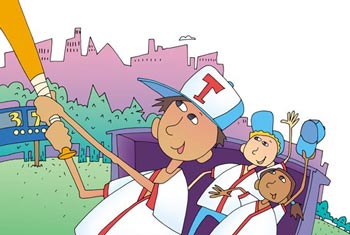
Your mind is like a bank for memories. It saves and stores special moments from your life for you to remember and enjoy. For example, what about that day that you hit the winning home run? In a narrative, you pull out a memory from your mind bank and tell the story to others. This unit will show you how to turn a special moment from your life into a story for readers to enjoy.

Thinking About Special Memories

Wouldn’t it be neat if you could experience something great all over again? Imagine if a genie granted you the power to relive three of your favorite memories. What memories would you do over?

Here’s how one student used his three memory wishes.

By Anonymous (not verified), 12 March, 2026

Editing Paragraphs

After making big changes to improve a paragraph, you need to make little changes (editing) to correct any remaining errors. You'll look for problems with sentences, punctuation, capitalization, grammar, usage, and spelling. The following activities will help you edit your writing.

Editing for Sentences

Every sentence needs a subject and a verb. The subject is the person, place, thing, or idea that the sentence is about. The verb tells something about the subject.

Editing Sentences

If a group of words does not have a subject or a verb, it is a fragment.

Editing Sentences

To fix a fragment, add the part that is missing—subject, verb, or both.

Editing Sentences
By Anonymous (not verified), 12 March, 2026

Revising Paragraphs

Once you draft a paragraph, take a break and come back to it to see it freshly. When you revise, you check your writing for its ideas and structure. These activities will help you revise.

Revising for Structure

Your first job in revising is to check the overall structure of your paragraph. Choose one of the paragraphs you have written and check each part below.

Check your topic sentence or opinion statement.

Answer these questions about your first sentence. Apply any changes that will improve your first sentence.

  1. How could my first sentence more clearly identify my topic?
  2. How could I capture my reader’s attention in the first sentence?

Check your body sentences.

Answer these questions about your body sentences. Apply any changes that will improve them.

By Anonymous (not verified), 12 March, 2026

Understanding Narrative Paragraphs

In a narrative paragraph, you tell a story about a personal experience. You try to pull your readers into the story and keep them wondering what will happen next. Be sure to include specific details to make your experience come to life.

Read a narrative paragraph.

Note how the author catches your interest in the topic sentence, describes the event, creates suspense, and closes the paragraph.

Listen to "Climbing Contest"

Your browser does not support the audio tag.

Hide audio

Topic Sentence

Topic Sentence Last Tuesday, I invited Danny, Julio, Renatta, and Mishiko to ride over to climb my favorite oak tree. We’ve all climbed the tree together before, but this time we decided to see who could climb the highest. Julio and Renatta climbed a little bit higher than usual, and I climbed almost to the end of one huge limb. Body SentencesMishiko climbed even higher than I did, but Danny won our little contest. Unfortunately, he didn’t realize how high he had climbed, until he looked down. He froze. He clung to the limb he was on and was afraid to climb down. What if he had to stay up in the tree all night? Renatta took off on her bike to tell her mom. Her mom called the fire department, and before long, an engine—with sirens blasting—arrived to rescue Danny. Ending Sentence It was very exciting, but we also learned a lesson about climbing contests.

By Anonymous (not verified), 12 March, 2026

Writing Strong Beginnings and Endings

An effective paragraph begins with a clear topic sentence and ends with a strong closing point. These activities will help you practice writing these important parts.

Writing Topic Sentences

The topic sentence tells the reader what the paragraph is about. It names the topic and gives a thought or feeling about it. Most of the time, it is the first sentence of the paragraph.

Sample Topic Sentence

The new indoor skateboard park challenges even the best skateboarders.

  • Specific topic: The new indoor skateboard park
  • Thought or feeling: Challenges even the best skateboarders

Read topic sentences.

Write the topic and thought or feeling for each sentence.

  1. My brother’s room is the messiest room on the planet.

    Topic:

    Thought or feeling:

  2. Keeping a well-organized backpack is one of the keys to a good day at school.

    Topic:

    Thought or feeling:

By Anonymous (not verified), 12 March, 2026

Warm-Up for Writing Paragraphs

Paragraphs are the building blocks of great writing. This unit will show you how to create paragraphs for three different purposes: to tell a story, to explain a topic, and to influence readers.

What Is a Paragraph?

Writing Paragraphs
© Thoughtful Learning 2016

Listen to "What Is a Paragraph?"

Your browser does not support the audio tag.

Hide audio

A paragraph is a group of sentences about one topic. Usually, the first sentence names the topic, and the other sentences give more details about it. In a well-written paragraph, sentences follow a clear order so that readers can quickly understand the topic.

Think of a paragraph as a telescope: It focuses on one specific idea and magnifies it so that people can see it more clearly.

Learning to write good paragraphs is essential to becoming a good writer. This unit will give you a chance to improve your paragraph-writing skills.

Teaching Tip