Historical Narrative

By Anonymous (not verified), 12 March, 2026

Editing Historical Narratives

After revising your narrative, you need to edit it to correct any remaining errors. You'll look closely at sentences, punctuation, capitalization, grammar, usage, and spelling. The following activities will help you edit your historical narrative.

Editing Dialogue for Quotation Marks

Dialogue uses quotation marks. These special marks go before and after the exact words of the speaker.

“Let’s keep looking,” I said.

A crewmember said, “We should stay clear of the rocks.”

Periods and commas that follow the speaker’s words always go inside the quotation marks.

“You have navigated us this far,” I responded. “I trust the south branch will keep us on the Missouri River.”

Question marks and exclamation marks go inside the quotation marks when they punctuate the dialogue.

“Captain Lewis, might that be the Great Falls?” asked Manny.

“At last—the Great Falls!” exclaimed Lieutenant Clark.

Watch the video "Punctuating Dialogue."

Hide video

Teaching Tip

In one special case, punctuation should go outside the quotation marks. This occurs when a question mark or an exclamation point is used to punctuate the sentence, rather than the quotation. Note the difference in these examples:

“Will we have turkey and apples?” asked Trev.

Did you hear Mom say, “We’re out of pickles”?
By Anonymous (not verified), 12 March, 2026

Revising Historical Narratives

Once you draft your historical narrative, take a break and come back to it to see it freshly. When you revise, you make sure the people, places, and events are clearly described and the writing captures the story in a vivid way. These activities will help you revise.

Revising to Add Dialogue

Dialogue refers to the words spoken by characters. Even though you might not know the exact things people said in the past, you can still add dialogue to your story. The trick is to use words and language that make sense for the time period.

  • Too modern:

    “Chill out,” said Meriwether Lewis. “We got this.”

  • More realistic:

    “We must remain calm,” said Meriwether Lewis. “The task is attainable.”

Add dialogue.

Use the tips and examples to help create dialogue for your historical narrative. Revise existing dialogue to make it sound realistic.

  • Create a conversation between two characters.

    “Which direction do you favor, Captain Lewis?” asked Clark.

    “You have navigated us this far,” I responded. “I trust the south branch will keep us on the Missouri.”

  • Use language that represents the time in history.

    “Captain Lewis, might that be the Great Falls?”

  • Use dialogue to help move your story along.

    “We shall navigate the south branch farther and will not return until we reach the Great Falls,” I said.

By Anonymous (not verified), 12 March, 2026

Writing a Historical Narrative

Once you finish prewriting, you are ready to tell your story in writing. These activities will help you hook the reader's attention at the beginning, build interest through a sequence of events, and create a strong ending for your narrative. You'll also read another student's essay to see how all of the parts came together.

Writing the Beginning Paragraph

The first sentence in your narrative should grab the reader’s attention. It is called a “lead.”

Write a lead.

Read each lead-writing strategy and example. Then write your own.

  • Start in the middle of the action:

    With the mighty Rockies on the horizon, our expedition came upon a fork in the Missouri River.

  • Start with interesting dialogue:

    “If we make the wrong choice, the expedition is doomed,” said Captain Lewis.

  • Use a startling idea:

    If your life hung on a 50-50 chance, could you flip the coin?

Write your beginning paragraph.

Write your lead and give more details to establish the setting and the main problem or obstacle facing the characters.

By Anonymous (not verified), 12 March, 2026

Prewriting for Historical Narratives

Prewriting is your first step in writing a historical narrative. These prewriting activities will help you select a topic to write about, research important details about the topic, and organize your thoughts before you begin a first draft.

By Anonymous (not verified), 12 March, 2026

Reading Historical Narratives

Before you recreate a historical moment, you'll want to see examples from other students. This lesson shows you a sample historical narrative paragraph and essay. As you read them, think about how the writer made the people, places, and events come to life through description, action, and dialogue.

Reading a Historical Narrative Paragraph

A historical narrative paragraph has three main parts. The topic sentence states the topic and focus of the story. The body sentences explain the main actions of the story. The ending sentence wraps up the historical narrative in an interesting way.

Sample Paragraph

Listen to "Standing Up"

Your browser does not support the audio tag.

Hide audio

Standing Up

Topic Sentence I never much liked crowds, but I always liked trees. That's why I wasn't thrilled when my mother woke me up before dawn, told me to put on my Sunday dress and shoes, and walked me seven miles to join a million other people on the Mall in Washington, D.C. Body Sentences She said that what we were doing was important because we were standing up for our rights. As I sweated in the hot sun, surrounded by strangers, I felt like I was just standing up. One by one, adults that I couldn't see spoke into the microphone, their voices ringing from loudspeakers like sermon after sermon. I asked Mom when we could go. "We have to hear Dr. King speak, first." I told her I needed to use the bathroom. She said, "Don't be long." But instead of going to the bathroom, I went to a nearby grove to be alone. There was a tree there, and another girl in it, who motioned me upward. I climbed up beside her and suddenly could see over the heads of the crowd to the gleaming white Lincoln Memorial. I could see Dr. King standing there. And, best of all, I could hear him when he spoke those amazing words: "I HAVE A DREAM . . ." Ending Sentence Suddenly, I knew just what I would be standing up for.

Respond to the paragraph.

Answer these questions about the paragraph.

By Anonymous (not verified), 12 March, 2026

Warm-Up for Historical Narratives

What would it be like to travel back in time? In this unit, you'll pretend to do just that by writing from the perspective of a historical figure. To do so, you'll need to think creatively about the past.

What Is a Historical Narrative?

Listen to "What Is a Historical Narrative?"

Your browser does not support the audio tag.

Hide audio

Writing a Personal Narrative
© Thoughtful Learning 2016

A historical narrative is a story that brings to life a person, an event, or a time from the past. You may write from the perspective of a real person or create a character who takes part in a real historical event.

Start by thinking of an interesting time in history and journeying there in your mind. Who would you be? What would you be doing? Would you change history? A historical narrative is a time machine that takes you wherever you want to go!

Thinking About Historical Figures

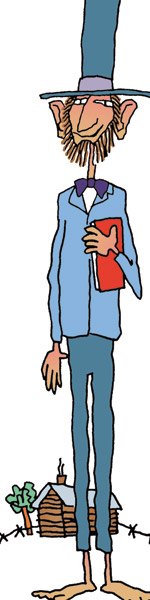
Think about important people from history, alive or dead. Imagine if two of these historical figures met each other at a “Historical Summit.” What would the meeting be like? What would they talk about?

Here’s what a transcript of a historical summit between two presidents might look like.

Historical Summit

Attendee 1: Abraham Lincoln

Title: 16th U.S. President

Claim to fame: Ending slavery

Attendee 2: Barack Obama

Title: 44th U.S. President

Claim to fame: Becoming the first African-American president