CCSS.ELA-LITERACY.W.4.2.B

By Anonymous (not verified), 12 March, 2026

Revising Fiction Reviews

Okay, so you've finished your first draft. Great work! What should you do next? First, set it aside for a while. When you return to it, you will be able to read it with fresh eyes. Why is this important? It will help you recognize areas that need improvement. That's the purpose of revising—to make your ideas stronger and easier to follow. The improvement strategies on this page will help you add, cut, and rearrange the writing you've already done.

Revising to Cite Evidence

Citing specific details from the book can help you explain the characters, conflict, and theme. You can make a general idea (purple) stronger or more convincing by adding different types of specific evidence (green).

  • Dialogue is something a character says.
  • Marty feels bad about lying to his family. He says, “Funny how one lie leads to another, and before you know it your whole life can be a lie.”

  • Reasons answer the question why?
  • Marty feels sad. He catches Judd kicking Shiloh.

  • Actions are something a character does.
  • Lucy wants her own space. She builds a wall to split her shared bedroom.

  • Examples provide a specific instance of something.
  • Lucy doesn't feel connected to some Chinese customs. She doesn’t like traditional Chinese food such as octopus and frog.
By Anonymous (not verified), 12 March, 2026

Writing a Fiction Review

Once you finish prewriting, you are ready to create the first draft of your review. These writing activities will help you create strong beginning, middle, and ending parts. You'll also read another student's review to see how all of the parts work together.

Writing the Beginning Paragraph

The purpose of your beginning paragraph is to grab your reader's attention, introduce the title and author of your book, and tell something interesting about it. The paragraph should start with a lead sentence, which gets the reader interested in the book. You can introduce the title and author in the lead or in a new sentence. Then, to close out the paragraph, introduce the big challenge the main character must face in the book. But don't spoil the ending!

Write a lead sentence.

Try out at least two of these strategies for introducing the topic of your review. Read the examples for ideas.

1. Ask a question related to the work.

Have you ever felt like a stranger in your school or community?

2. Talk directly to your readers.

You never know when you will meet someone who will change your life.

3. Provide a suspenseful detail from the story.

Just when Lucy thought she was getting her very own room, a stranger showed up and changed everything.

4. Share a feeling you have about the work.

The Great Wall of Lucy Wu by Wendy Wan-Long Shang changed the way I think about my heritage.

Write your beginning paragraph.

Start with your lead sentence. Follow with one or two sentences that identify the title and author of the book and introduce the biggest challenge facing the main character.

By Anonymous (not verified), 12 March, 2026

Assessing with an Explanatory Rubric

Test graders will use a rubric to judge the quality of your writing for assessment. By using the following rubric to judge your own writing, you can become aware of what testers are looking for and can improve your scores in the future.

Assess with a rubric.

Use the following rubric to score an explanatory essay for assessment.

By Anonymous (not verified), 12 March, 2026

Writing an Essay for Assessment

Some tests ask you to write an essay response to articles you have closely read. The following activity will help you practice.

Analyze an essay prompt.

Read the following prompt, answer the PAST questions, write a focus statement, and list details.

  1. Read the writing prompt.
  2. Imagine that your teacher has assigned you to write an explanatory essay about the lives of monarch butterflies. You will be using the sources in this unit. Focus your thinking about monarch butterflies and create an essay. Include details from the sources to support your ideas.

  3. Answer the PAST questions.
  4. Purpose?

    Audience?

    Subject?

    Type?

By Anonymous (not verified), 12 March, 2026

Writing a Paragraph for Assessment

Some tests ask you to write a paragraph in response to sources you have read or viewed. The following activity will help you practice responding.

Analyze the writing prompt.

Read the following prompt, answer the PAST questions, write a topic sentence, and list details.

  1. Read the writing prompt.
  2. You have just read three articles and watched a video about monarch butterflies. Write a paragraph that explains how the additional sources expand your understanding from Source 1. Include at least two examples, naming the title and author of each source that you use.

  3. Answer the PAST questions.
  4. Purpose?

    Audience?

    Subject?

    Type?

By Anonymous (not verified), 12 March, 2026

Revising Process Essays

Once you finish a first draft of your process essay, set it aside for awhile. When you return to it, you can see it anew. That's what revising means—seeing your work with new eyes. When you revise, you look at your essay from your reader's perspective to make sure you have included all of the important ideas and placed them in the best structure. These activities will help you revise.

Revising to Elaborate Details

To explain something, you need to elaborate. When you elaborate, you use different types of details to explain an idea.

Step 2: Get a cage

Next, you need to get a cage for your hamster.

Detail 1: Metal cages

Metal cages let the air flow through.

Detail 2: Plastic cages

Plastic cages can have all kinds of tubes for exercise.

Detail 3: Cage features

You need a water bottle, food dish, and wheel for running.

By Anonymous (not verified), 12 March, 2026

Writing a Process Essay

Once you finish prewriting, you are ready to create the first draft of your ideas. These writing activities will help you create a strong beginning, middle, and ending for your process essay. You'll also read another student's essay to see how all of the parts came together.

Writing the Beginning Paragraph

Write your beginning paragraph.

Write your lead sentence and move to your focus statement.

Lead Sentence

Detail Sentences

Focus Statement

By Anonymous (not verified), 12 March, 2026

Prewriting for Process Essays

Prewriting is your first step in writing a process essay. These prewriting activities will help you select a topic to write about, create a focus statement, and gather and organize your details before you begin a first draft.

Prewriting to Focus Your Ideas

Plan your writing.

Use this sheet to plan your process essay.

  1. List three things that you know how to do really well.
  2. Which of these three processes would you like to explain in an essay?
  3. What tools and materials do you need for this process?
  4. What steps would you list for doing this process?
  5. What special thought or feeling do you have about this process?
By Anonymous (not verified), 12 March, 2026

Reading a Process Paragraph and Essay

Before you explain a process, you'll want to see how others did so. This lesson shows you a process paragraph and a process essay, explaining each part. As you read them, think about how the writers put ideas together and how you might explain ideas in your process writing.

Reading a Process Paragraph

A process paragraph has three main parts. The topic sentence states the process. The body sentences describe the steps. The ending sentence wraps up the process. This paragraph describes the process of building a tree house.

Listen to "Tree House Summer."

Your browser does not support the audio tag.

Hide audio

Sample Paragraph

Tree-House Summer

Topic SentenceLast summer, my friends and I built a tree house in my back yard. We started by designing the tree house. Body SentencesThen we listed materials we needed and found a store that sold building supplies. We took our list and the money we had saved and went shopping. We loaded everything into my dad’s van and headed back. The first thing we had to do was build a frame for the floor of the house. (My mom helped with that.) Next we used a rope to raise all the wood up into the tree. We then carefully nailed the boards to the frame, and we soon had a floor. After that, we added walls and a roof. Ending SentencesWe now had a great place to hang out for the rest of the summer!

By Anonymous (not verified), 12 March, 2026

Warm-Up for Process Essays

A process essay leads readers through a series of steps for getting something done. This lesson will help you think about different processes and which ones you might explain in an essay.

What Is a Process?

Listen to "What Is a Process?"

Your browser does not support the audio tag.

Hide audio

Writing a Process Essay
(c) Thoughtful Learning 2016

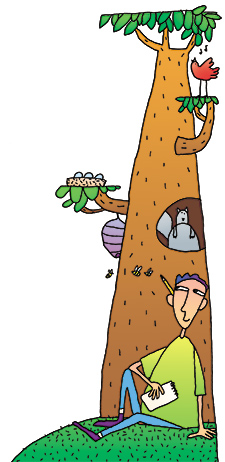
A process is a series of steps for getting something done. For a bird, building a nest is a process. For a bee or a squirrel, gathering food is a process. And for a student, writing a process essay is, itself, a process.

What processes do you know how to do? What processes could you explain to others?

When you write a process essay, you explain how to do something or how something works. Each paragraph in your essay focuses on a step in the process. The sentences follow time order, leading the reader from start to finish.

Process writing helps you get the job done!

Watch the video "What Is a Process?"