CCSS.ELA-LITERACY.W.4.3

By Anonymous (not verified), 12 March, 2026

Prewriting for Personal Narratives

Prewriting is your first step in writing a personal narrative. These prewriting activities will help you select a topic to write about, gather important details about the topic, and organize your thoughts before you begin a first draft.

Prewriting to Focus Your Ideas

Choose your topic.

Your goal is to write a personal narrative about an unforgettable experience. Complete the following sentence starters to help you discover a writing idea. Then circle the topic you wish to write about.

  • I’ll never forget the time when . . .
  • I learned an important lesson when . . .
  • I was proud of myself when . . .

Gather the basic parts.

Fill in a 5 W’s memory chart to gather all of the basic details about the experience.
By Anonymous (not verified), 12 March, 2026

Warm-Up for Personal Narratives

All of us have important times in our lives. By thinking back to these times, we understand ourselves better. By sharing these times with those we love, we become closer. This lesson will help you think about events in your life.

What Is a Narrative?

Writing a Personal Narrative
(c) Thoughtful Learning 2015

Listen to "What Is a Narrative?"

Your browser does not support the audio tag.

Hide audio

A narrative is a story. It tells something that happened, like in a book or a movie. But books and movies are not the only places to find good stories. Your experiences make great stories, too.

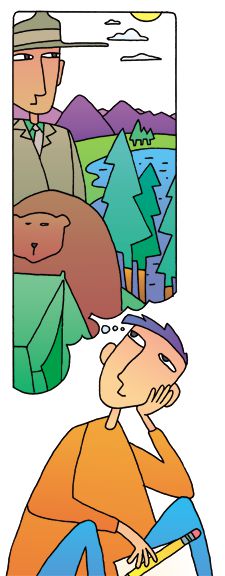
A personal narrative is a true story about something that happened in your life. You might share an exciting, surprising, or scary experience, like the time you went camping and saw a bear. Or you might share a moment when you learned an important lesson.

The best personal narratives include many details, helping readers feel like they are a part of the story, too. In this unit, you will write a true story from your own life in way that makes it come alive once again!

Watch the video "What Is a Personal Narrative?"

Hide video

Thinking About a True Story

Before you can share a story, you need to remember all the important things that happened. Asking and answering the 5 W’s questions can activate your memory and help you record important details about your experience.

  • Who was with me?
  • What exactly happened?
  • Where did this happen?
  • When did this happen?
  • Why did it happen?
By Anonymous (not verified), 12 March, 2026

Editing Narrative Paragraphs

After making big changes to improve your paragraph, you need to make little changes (editing) to correct any remaining errors. You'll look for problems with sentences, punctuation, capitalization, grammar, usage, and spelling. The following activities will help you edit your writing.

Editing for the Right Word

The words to, two, and too are easily confused because they sound exactly alike. However, each word means something different.

  • Two means the number 2.

    My family owns two dogs.

  • To indicates direction. It also is used with verbs.
  • I rode my bike to the zoo to see the polar bear.

  • Too means “also.”
  • Jason likes karate, too.

Choose the right word (two, to, too).

Select the correct word in parentheses.

  1. My ( two, to, too ) brothers are coming ( two, to, too ) the show. My ( two, to, too ) brothers are coming ( two, to, too ) the show.
  2. Are you going ( two, to, too ) see the movie, ( two, to, too )? Are you going ( two, to, too ) see the movie, ( two, to, too )?
  3. Quinn and I are like ( two, to, too ) peas in a pod. Quinn and I are like ( two, to, too ) peas in a pod.
  4. The ( two, to, too ) squirrels jumped from tree ( two, to, too ) tree. The ( two, to, too ) squirrels jumped from tree ( two, to, too ) tree.
  5. I’m ready ( two, to, too ) spend some time with my cousins. I’m ready ( two, to, too ) spend some time with my cousins.
  6. Vinny ran ( two, to, too ) his room ( two, to, too ) find his ( two, to, too ) video-game controllers. Vinny ran ( two, to, too ) his room ( two, to, too ) find his ( two, to, too ) video-game controllers.
  7. Horses like apples, and I do, ( two, to, too ). Horses like apples, and I do, ( two, to, too ).
  8. ( Two, To, Too ) of my best friends live in my neighborhood. ( Two, To, Too ) of my best friends live in my neighborhood.
  9. I used a search engine ( two, to, too ) find information about ( two, to, too ) art contests. I used a search engine ( two, to, too ) find information about ( two, to, too ) art contests.
  10. I, ( two, to, too ), enjoy reading books. I, ( two, to, too ), enjoy reading books.
By Anonymous (not verified), 12 March, 2026

Revising Narrative Paragraphs

Once you finish writing your narrative paragraph, you'll be ready to start revising. When you revise, you think about the "big picture": your topic and details and the way you build your paragraph using transitions. These activities will help you revise.

Revising for Time Order

Review the order of actions.

Use a time line to list the actions from your paragraph. Review the list to make sure the actions are in time order (in the order they happened). Rearrange any actions that are out of order.

  1. Action 1
  2. Action 2
  3. Action 3
  4. Action 4
  5. Action 5
By Anonymous (not verified), 12 March, 2026

Writing a Narrative Paragraph

Once you finish prewriting, you are ready to write your paragraph. These writing activities will help you create a topic sentence, body sentences, and an ending sentence. You'll also read another student's paragraph to see how all of the parts came together.

Writing the Topic Sentence

Your narrative paragraph should begin with a topic sentence. It names the topic and shares a specific thought or feeling about it.

Sample Topic Sentence 1:

Whitewater rafting with my family was a crazy adventure.

  • Topic: Whitewater rafting with my family
  • Special Thought: A crazy adventure

Sample Topic Sentence 2:

I’ll never forget the time I saw the playful polar bear.

  • Topic: The playful polar bear
  • Special Feeling: Never forget seeing it

Write your topic sentence.

Respond to the first two items below, and use your responses to help you write a topic sentence for your narrative paragraph.

  1. Name your topic.
  2. Share a specific thought or feeling about it.
  3. Write your topic sentence.
By Anonymous (not verified), 12 March, 2026

Prewriting for Narrative Paragraphs

Prewriting is your first step in writing a narrative paragraph. These prewriting activities will help you select a memory to write about, create a focus statement, and gather and organize your details before you begin a first draft.

Prewriting to Choose Your Topic

Your narrative paragraph will share a special memory from your life. Here’s how you can get started.

Gather writing topics.

Finish the sentence starters below to collect writing ideas for your narrative. Draw a star next to the topic you like best.

  1. One of my favorite times with my best friend was . . .
  2. I’ll never forget the holiday when . . .
  3. I’ll never forget my family vacation to . . .
  4. One crazy thing my family did was . . .
  5. I’ll always remember the first time I . . .
  6. An exciting time in my neighborhood was when . . .

Teaching Tip

Students may also decide to use a writing topic from the “My Memory Wishes” activity.

By Anonymous (not verified), 12 March, 2026

Reading a Narrative Paragraph

Before you capture your own memory wish in a narrative paragraph, you should read a similar paragraph created by a different student. As you read and respond to the paragraph, think about how the writer made the memory come to life for the reader.

Reading a Narrative Paragraph

A narrative paragraph tells a true story from the writer’s life. It has three main parts. The topic sentence introduces the topic of the story. The body sentences tell what happened in the story. And the ending sentence wraps up the story. The sample paragraph tells about a special trip to the zoo.

Listen to "Polar Bear Games"

Your browser does not support the audio tag.

Hide audio

Sample Paragraph

Polar Bear Games

Topic SentenceI’ll never forget the time I saw the playful polar bear. My family and I were at the polar bear pen at the zoo. Inside the pen, a white polar bear named Amelia was wrestling with a log. Body SentencesThe bear rolled around and tossed the log into the air. Then she batted it into a giant swimming pool. But the polar bear wasn’t done with the log just yet. She leaped into the water and disappeared. “Let’s go down to the water-window!” I said, so my sister and I raced down to find her. Next, we pressed our faces against the glass, and the playful polar bear swam right in front us.Ending Sentences And guess what? She had the log tucked under her arm!

By Anonymous (not verified), 12 March, 2026

Warm-Up for Narrative Paragraphs

Writing a Personal Narrative
(c) Thoughtful Learning 2016

This lesson will help you think about important memories you have that you would like to share in a narrative paragraph.

What Is a Narrative Paragraph?

Listen to "What Is a Narrative Paragraph?"

Your browser does not support the audio tag.

Hide audio

A narrative paragraph is a short piece of writing that captures an important moment in your life. Narrative is another word for "story."

Your mind is like a bank for memories. It saves and stores special moments from your life for you to remember and enjoy. For example, what about that day that you hit the winning home run? In a narrative, you pull out a memory from your mind bank and tell the story to others. This unit will show you how to turn a special moment from your life into a story for readers to enjoy.

Thinking About Special Memories

Wouldn’t it be neat if you could experience something great all over again? Imagine if a genie granted you the power to relive three of your favorite memories. What memories would you do over?

Here’s how one student used his three memory wishes.

By Anonymous (not verified), 12 March, 2026

Understanding Narrative Paragraphs

In a narrative paragraph, you tell a story about a personal experience. You try to pull your readers into the story and keep them wondering what will happen next. Be sure to include specific details to make your experience come to life.

Read a narrative paragraph.

Note how the author catches your interest in the topic sentence, describes the event, creates suspense, and closes the paragraph.

Listen to "Climbing Contest"

Your browser does not support the audio tag.

Hide audio

Topic Sentence

Topic Sentence Last Tuesday, I invited Danny, Julio, Renatta, and Mishiko to ride over to climb my favorite oak tree. We’ve all climbed the tree together before, but this time we decided to see who could climb the highest. Julio and Renatta climbed a little bit higher than usual, and I climbed almost to the end of one huge limb. Body SentencesMishiko climbed even higher than I did, but Danny won our little contest. Unfortunately, he didn’t realize how high he had climbed, until he looked down. He froze. He clung to the limb he was on and was afraid to climb down. What if he had to stay up in the tree all night? Renatta took off on her bike to tell her mom. Her mom called the fire department, and before long, an engine—with sirens blasting—arrived to rescue Danny. Ending Sentence It was very exciting, but we also learned a lesson about climbing contests.