CCSS.ELA-LITERACY.W.4.8

By Anonymous (not verified), 12 March, 2026

Writing a Summary

Once you finish prewriting, you are ready to create the first draft of your summary. These writing activities will help you create a strong beginning, middle, and ending for your summary.

Writing the Topic Sentence

The topic sentence is the first sentence of a summary. It states the focus (overall point or thought) of the text in your own words. To write an effective topic sentence, follow this formula.

Topic of the reading

+

Overall point about the topic

=

Topic sentence

Korean pop music


gaining worldwide popularity through a mix of sound and technology


Korean pop music is gaining a worldwide following through a mix of sound and technology.

Write your topic sentence.

Answer the questions below to help you form a topic sentence for your summary of the article.

By Anonymous (not verified), 12 March, 2026

Prewriting for Summaries

Prewriting is your first step in writing a summary. These prewriting activities will help you read closely and pick out the important details for your summary.

Prewriting to Read Closely

Before you can write a great summary, you need to read closely. To do so, use a close-reading strategy called SQ3R—Survey, Question, Read, Recite, Review.

Survey, question, and read.

Follow these instructions before you read the article below.

  1. Survey the article: Place a check mark by the title and author.
  2. Question the topic and purpose: Write notes on the document.
  3. Read the text: Underline the focus statement and topic sentences.

Listen to "The Modern Day Magellan' "

Your browser does not support the audio tag.

Hide audio

By Anonymous (not verified), 12 March, 2026

Reading Summaries

Before you write your own summary of an article, you'll want to see how others did so. In this lesson, you'll read a sample article and summary. As you read them, think about what parts of the original article are included in the summary.

Reading a Sample Article and Summary

A summary identifies the key information in a text, condenses it, and states it using the writer’s own words. Read this article about a popular type of music and think about the main idea and key information.

Listen to "K-Pop Goes Global"

Your browser does not support the audio tag.

Hide audio

Sample Article

Title

K-Pop Goes Global

Author

by Frances Blake

Korean pop music, or ‘K-pop’ as it’s more commonly called, has already taken over Asia’s music scene and is gaining more fans in the West all the time. Beginning But what is it about K-pop that is attracting so many listeners? It’s K-pop’s unique blend of sound and technology.

To begin with, the music of these young Korean pop stars is unique and captivating with its energetic mix of musical styles, including hip-hop, techno, R&B, and even dubstep. Middle

Where American or British pop groups rarely have more than four or five members, it’s common for K-pop groups like Girls' Generation to include nine or ten singers. Members of the groups are recruited at an early age by Korean record companies, and the young musicians must train for two years singing and dancing before they can join a group. “Every time they perform a song, it’s got to be perfect,” says record company owner Yi Yuen.

Ending

It’s not just the music that attracts fans to the genre. K-pop groups produce larger-than-life music videos complete with multicolored light shows, impressive choreography, and several outfit changes. Listeners keep track of their favorite K-pop groups on the Internet and follow group members on social media Web sites like Twitter. One music video by the group 2NE1 has over 100 million views on YouTube. K-pop’s international influence shows no signs of slowing down soon.
By Anonymous (not verified), 12 March, 2026

Warm-Up for Summarizing, Paraphrasing, and Quoting

Writing a Process Essay
(c) Thoughtful Learning 2016

Summarizing, paraphrasing, and quoting all involve using key details from other sources in your own writing. This lesson will help you get a feel for summarizing.

What Is Summarizing?

Listen to "What Is Summarizing?"

Your browser does not support the audio tag.

Hide audio

Summarizing means identifying the key information in a text, condensing it, and putting it in your own words. In this unit, you will learn the steps to writing an effective summary. You will also learn about two other research skills called paraphrasing and quoting.

All three skills will help you decide what ideas from other sources are most important. These skills will allow you to write about information from other sources and use the information fairly.

Thinking by Summarizing

Read the comic strip below called Black Ducks. Study the pictures, read the speech bubbles, and think about the key information. Then read the summary that explains the comic strip.

Episode 74

By Anonymous (not verified), 12 March, 2026

Editing Narrative Paragraphs

After making big changes to improve your paragraph, you need to make little changes (editing) to correct any remaining errors. You'll look for problems with sentences, punctuation, capitalization, grammar, usage, and spelling. The following activities will help you edit your writing.

Editing for the Right Word

The words to, two, and too are easily confused because they sound exactly alike. However, each word means something different.

  • Two means the number 2.

    My family owns two dogs.

  • To indicates direction. It also is used with verbs.
  • I rode my bike to the zoo to see the polar bear.

  • Too means “also.”
  • Jason likes karate, too.

Choose the right word (two, to, too).

Select the correct word in parentheses.

  1. My ( two, to, too ) brothers are coming ( two, to, too ) the show. My ( two, to, too ) brothers are coming ( two, to, too ) the show.
  2. Are you going ( two, to, too ) see the movie, ( two, to, too )? Are you going ( two, to, too ) see the movie, ( two, to, too )?
  3. Quinn and I are like ( two, to, too ) peas in a pod. Quinn and I are like ( two, to, too ) peas in a pod.
  4. The ( two, to, too ) squirrels jumped from tree ( two, to, too ) tree. The ( two, to, too ) squirrels jumped from tree ( two, to, too ) tree.
  5. I’m ready ( two, to, too ) spend some time with my cousins. I’m ready ( two, to, too ) spend some time with my cousins.
  6. Vinny ran ( two, to, too ) his room ( two, to, too ) find his ( two, to, too ) video-game controllers. Vinny ran ( two, to, too ) his room ( two, to, too ) find his ( two, to, too ) video-game controllers.
  7. Horses like apples, and I do, ( two, to, too ). Horses like apples, and I do, ( two, to, too ).
  8. ( Two, To, Too ) of my best friends live in my neighborhood. ( Two, To, Too ) of my best friends live in my neighborhood.
  9. I used a search engine ( two, to, too ) find information about ( two, to, too ) art contests. I used a search engine ( two, to, too ) find information about ( two, to, too ) art contests.
  10. I, ( two, to, too ), enjoy reading books. I, ( two, to, too ), enjoy reading books.
By Anonymous (not verified), 12 March, 2026

Revising Narrative Paragraphs

Once you finish writing your narrative paragraph, you'll be ready to start revising. When you revise, you think about the "big picture": your topic and details and the way you build your paragraph using transitions. These activities will help you revise.

Revising for Time Order

Review the order of actions.

Use a time line to list the actions from your paragraph. Review the list to make sure the actions are in time order (in the order they happened). Rearrange any actions that are out of order.

  1. Action 1
  2. Action 2
  3. Action 3
  4. Action 4
  5. Action 5
By Anonymous (not verified), 12 March, 2026

Writing a Narrative Paragraph

Once you finish prewriting, you are ready to write your paragraph. These writing activities will help you create a topic sentence, body sentences, and an ending sentence. You'll also read another student's paragraph to see how all of the parts came together.

Writing the Topic Sentence

Your narrative paragraph should begin with a topic sentence. It names the topic and shares a specific thought or feeling about it.

Sample Topic Sentence 1:

Whitewater rafting with my family was a crazy adventure.

  • Topic: Whitewater rafting with my family
  • Special Thought: A crazy adventure

Sample Topic Sentence 2:

I’ll never forget the time I saw the playful polar bear.

  • Topic: The playful polar bear
  • Special Feeling: Never forget seeing it

Write your topic sentence.

Respond to the first two items below, and use your responses to help you write a topic sentence for your narrative paragraph.

  1. Name your topic.
  2. Share a specific thought or feeling about it.
  3. Write your topic sentence.
By Anonymous (not verified), 12 March, 2026

Prewriting for Narrative Paragraphs

Prewriting is your first step in writing a narrative paragraph. These prewriting activities will help you select a memory to write about, create a focus statement, and gather and organize your details before you begin a first draft.

Prewriting to Choose Your Topic

Your narrative paragraph will share a special memory from your life. Here’s how you can get started.

Gather writing topics.

Finish the sentence starters below to collect writing ideas for your narrative. Draw a star next to the topic you like best.

  1. One of my favorite times with my best friend was . . .
  2. I’ll never forget the holiday when . . .
  3. I’ll never forget my family vacation to . . .
  4. One crazy thing my family did was . . .
  5. I’ll always remember the first time I . . .
  6. An exciting time in my neighborhood was when . . .

Teaching Tip

Students may also decide to use a writing topic from the “My Memory Wishes” activity.

By Anonymous (not verified), 12 March, 2026

Reading a Narrative Paragraph

Before you capture your own memory wish in a narrative paragraph, you should read a similar paragraph created by a different student. As you read and respond to the paragraph, think about how the writer made the memory come to life for the reader.

Reading a Narrative Paragraph

A narrative paragraph tells a true story from the writer’s life. It has three main parts. The topic sentence introduces the topic of the story. The body sentences tell what happened in the story. And the ending sentence wraps up the story. The sample paragraph tells about a special trip to the zoo.

Listen to "Polar Bear Games"

Your browser does not support the audio tag.

Hide audio

Sample Paragraph

Polar Bear Games

Topic SentenceI’ll never forget the time I saw the playful polar bear. My family and I were at the polar bear pen at the zoo. Inside the pen, a white polar bear named Amelia was wrestling with a log. Body SentencesThe bear rolled around and tossed the log into the air. Then she batted it into a giant swimming pool. But the polar bear wasn’t done with the log just yet. She leaped into the water and disappeared. “Let’s go down to the water-window!” I said, so my sister and I raced down to find her. Next, we pressed our faces against the glass, and the playful polar bear swam right in front us.Ending Sentences And guess what? She had the log tucked under her arm!

By Anonymous (not verified), 12 March, 2026

Warm-Up for Narrative Paragraphs

Writing a Personal Narrative
(c) Thoughtful Learning 2016

This lesson will help you think about important memories you have that you would like to share in a narrative paragraph.

What Is a Narrative Paragraph?

Listen to "What Is a Narrative Paragraph?"

Your browser does not support the audio tag.

Hide audio

A narrative paragraph is a short piece of writing that captures an important moment in your life. Narrative is another word for "story."

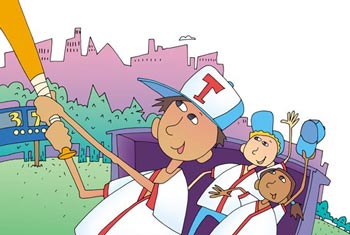
Your mind is like a bank for memories. It saves and stores special moments from your life for you to remember and enjoy. For example, what about that day that you hit the winning home run? In a narrative, you pull out a memory from your mind bank and tell the story to others. This unit will show you how to turn a special moment from your life into a story for readers to enjoy.

Thinking About Special Memories

Wouldn’t it be neat if you could experience something great all over again? Imagine if a genie granted you the power to relive three of your favorite memories. What memories would you do over?

Here’s how one student used his three memory wishes.