Nonfiction Reading and Writing Assessment
Many high-stakes assessments test your ability to read nonfiction and write analyses about it. You'll find these types of tasks on the high school tests for the Common Core, the ACT and SAT, and the AP tests for English Language and Composition, U.S. History, and World History.
Of course, these assessments seek to measure the reading and writing ability you have gained over the whole of your schooling so far, so simply cramming won't spell success. However, taking a practice test that requires the same skills will help you know what kinds of questions to anticipate, allowing you to score your best.
How Can I Practice for Assessment?

Listen to "How Can I Practice for Assessment?"
Hide audio
In this unit, you'll get to practice closely reading nonfiction texts. After each, you'll answer a bank of multiple-choice questions that check your comprehension but also require you to infer shades of meaning. Then you'll need to analyze a writing prompt about the texts and write an on-target essay response. You'll find three such practice tests.
You'll also find a practice test that requires you to view advertisements, answer questions about them, and write an essay response. Finally, you will find a practice test for answering document-based questions (DBQs) like those on the AP history exams. You'll analyze a writing prompt, closely read seven documents related to it, and write a response to the prompt.
At the end of this unit, you'll find sample argument and explanatory rubrics showing the way that essays are scored on high-stakes assessments. You can find the specific rubrics used for a given high-stakes writing assessment at these locations:
- PARCC Scoring Rubric for Prose Constructed Response Items (Grades 6-11)
- Smarter Balanced Performance Task Writing Rubrics
- ACT Writing Test Scores
- SAT Essay Scoring
- AP English Language and Composition Scoring Guidelines
For practice with high-stakes literature assessments, see the units "Reading and Writing Literature for Assessment" and "Practice Tests for Reading and Writing Literature."
Reading and Writing Nonfiction Assessment I
Closely read the following articles and answer the questions afterward. Then you will need to analyze a prompt about these models and respond by writing an insightful essay.
Closely read and respond to source 1.
Read and/or listen to the following text, focusing on the topic, purpose, and main points. Answer the questions afterward.
Listen to "The Undercover Wonder"
Hide audio
Source 1
The Undercover Wonder
by Phillip Korver
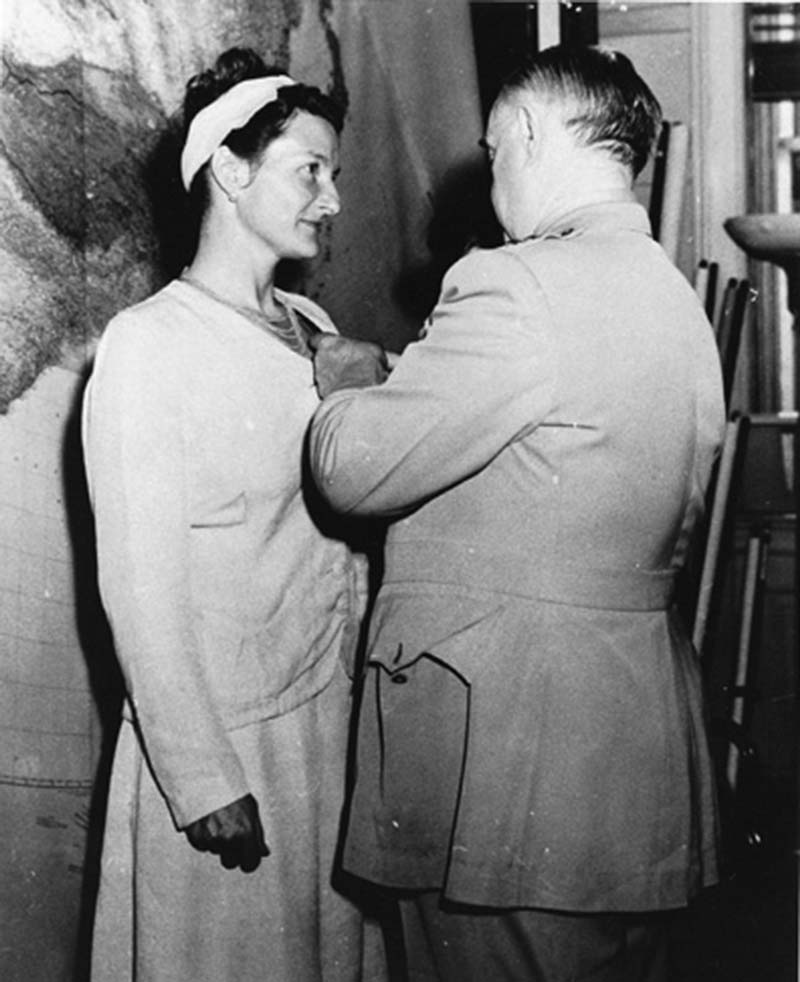
Virginia Hall receiving the Distinguished Service Cross in 1945 from OSS chief General Donovan (CIA.gov)
1 Given that Virginia Hall dedicated her life to avoiding detection, it isn’t surprising that her name is unknown to most Americans. During World War II, when most women skillfully filled wartime vacancies on the American home front, Hall worked in Europe as a spy for the Allied forces. Through her clandestine efforts, Hall saved lives, relayed enemy positions, and earned a top spot on the Gestapo’s most wanted list.
Early Career
2 Hall was at the epicenter of World War II before the first shots were even fired. She left the United States in 1926 in hopes of a career in foreign affairs, but her career goal was sidetracked when her lower left leg needed to be amputated after a hunting accident. Undeterred, Hall worked in clerical positions in Turkey and Italy, and then volunteered as an ambulance driver in Paris as Nazi Germany seized control of the city. When the French surrendered Paris, Hall fled to London, where she worked in the American Embassy. There she gained the attention of the British Special Operations Executive (SOE), and so began Hall’s career as a spy.
WWII
3 The SOE was seeking candidates to do uncover work to aid the French troops. Hall, despite her wooden leg, filled the bill. In 1941, she became the SOE’s first female operative sent into France. She traveled to Nazi-controlled Lyon, France, under the guise of a reporter for the New York Post. For the next 14 months, she worked as a spy for the British government and the French Resistance, all while writing newspaper stories to maintain her cover. Her actions eventually gained the attention of the Nazi Secret State Police, or Gestapo. The Gestapo even printed wanted posters with Hall’s likeness. When the United States joined the war, the danger of being an American “newspaper woman” in Nazi-controlled territory was too great, and Hall fled to Spain.
4 After doing SOE undercover work in Spain, Hall returned to London and joined a new American agency: the Office of Strategic Services (OSS), the precursor to the CIA. Hall requested reassignment to Nazi-occupied France, and the OSS obliged. Because of the Gestapo’s familiarity with her appearance, Hall disguised herself as an elderly milkmaid, donning a white wig and an ill-fitting dress. She trained battalions of French Resistance fighters, coordinated parachute supply and aid drops, and relayed Nazi positions to London. When the Nazis retreated, Hall’s teams blocked their path by blowing up bridges, destroying train tracks, and capturing hundreds of enemy soldiers.
Post-WWII
5 Hall is credited with saving the lives of countless Allied troops. She became the only civilian woman to receive the OSS’s Distinguished Service Cross during World War II. When she returned to the U.S., she worked for the CIA. Only recently did the CIA release details of her heroism to the public. Despite her hard work to maintain anonymity, Virginia Hall ought to be remembered among the famous U.S. heroes of World War II.
Teaching Tip
This material simulates the reading and writing that students will do on high-stakes assessments. Students who work through these pages will be better prepared for reading and writing nonfiction on Common Core, SAT and ACT, and AP assessments.
-
Which statement best describes the essay’s thesis?
A. Virginia Hall fought bravely for the Allies despite her physical impairment.
B. Most people think of spies as men, but women have also worked bravely undercover.
C. Virginia Hall deserves to be recognized among the U.S. heroes of World War II.
C. Virginia Hall deserves to be recognized among the U.S. heroes of World War II.
D. Through persistence and determination, women can do anything that men can do.
-
Which statement best explains the effect of the hunting accident on Virginia Hall's service as a spy?
A. Overcoming her injury inspired Virginia Hall to serve her country.
B. She did not allow it to deter her.
B. She did not allow it to deter her.
C. Virginia Hall used her wooden leg along with a white wig and ill-fitting clothes to disguise herself as an elderly milkmaid.
D. The hunting accident set Hall back many years in her career.
-
In the first paragraph, use context clues to select the best definition of “clandestine.”
A. Kept secret or done secretively
A. Kept secret or done secretively
B. Illegal
C. Done in disguise
D. Used for military purposes
-
In the second paragraph, use context clues to select the best definition of "epicenter."
A. Simulation of a real-world location
B. The central focus of a key activity
B. The central focus of a key activity
C. A safe-house for spies
D. The command center
-
In the third paragraph, use context clues to select the best definition of the idiom "filled the bill."
A. Paid the price
B. Was exactly what was needed
B. Was exactly what was needed
C. Wrote a recommendation
D. Wrote a resignation
-
Infer the best topic sentence for the fourth paragraph.
A. Virginia Hall was a master of disguises.
B. The OSS was one of the first spy agencies to employ women.
C. The Gestapo couldn't track down Virginia Hall.
D. Virginia Hall carried out many dangerous and crucial missions in France.
D. Virginia Hall carried out many dangerous and crucial missions in France.
-
Infer why the CIA would not recognize Virginia Hall's contribution until recently.
A. The CIA did not want to reveal that it had used a female spy.
B. Her status as a spy was only recently declassified.
B. Her status as a spy was only recently declassified.
C. The CIA wanted to protect Hall from the Gestapo.
D. Hall's identity was not revealed until the OSS became the CIA.
-
What do the photo and caption reveal about the career of Virginia Hall?
A. The OSS recognized her tremendous contribution to the war effort.
A. The OSS recognized her tremendous contribution to the war effort.
B. General Donovan took credit for her accomplishments.
C. The Distinguished Service Cross went to only one civilian in World War II.
D. Virginia Hall had a long career with the CIA.
-
What statement best describes the purpose of this article?
A. To argue for more women serving as spies
B. To explain the heroic, secret accomplishments of an American hero
B. To explain the heroic, secret accomplishments of an American hero
C. To advocate for the service of Americans with disabilities
D. To show how Allied spy services collaborated during World War II
-
Select the best alternate title for this selection.
A. Overcoming Prejudice to Serve
B. The "Hall" of Fame
C. The Unsung Hero Virginia Hall
C. The Unsung Hero Virginia Hall
D. Milkmaid on a Mission
Closely read and respond to source 2.
Read and/or listen to the following text, focusing on the topic, purpose, and main points. Answer the questions afterward.
Listen to "Source 2: Spies Among Us"
Hide audio
Source 2
Spies Among Us
by Henley Ramirez
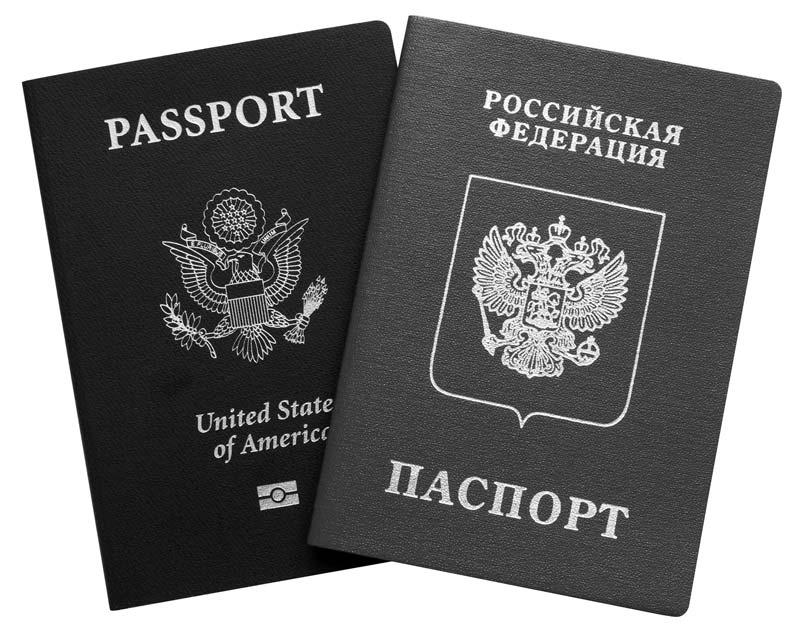
United States and Russian passports (Shutterstock)
1 When the Cold War ended, it seemed like the spy game would fall with the Iron Curtain. Many people believed spy tactics like envelope exchanges, code names, and briefcase swaps would be relegated to thriller novels and television programs such as The Americans, and nothing more. These notions were premature. In an era where intelligence gathering is primarily the domain of computer hackers and space satellites, recent stories prove Cold War–era espionage is still alive in the 21st century.
Spies Next Door
2 For example, undercover Russian agents were found living in American neighborhoods. In 2010, the FBI arrested 10 people living in American cities and suburbs on accusations of being part of a Russian espionage ring. The FBI surveilled the group for almost seven years before making the arrest. In that time, the ring posed as ordinary Americans in an attempt to learn information about the U.S.’s nuclear program. Known as the “Illegals Program,” the group communicated with each other using invisible ink and bag exchanges in public places.
Caught in the Act
3 American undercover activity was unearthed in Russia as well. In May 2013, the Russian Foreign Ministry detained U.S. embassy employee and alleged CIA agent Ryan Fogle after he was caught attempting to recruit a Russian special services staffer. Fogle’s belongings included two wigs, a knife, two pairs of dark glasses, and large sums of cash. In retaliation, Russian security services revealed the identity of the United States’ CIA chief in Russia. The outing breached diplomatic protocol. According to a post–Cold War trust-building tradition, U.S. and Russian spy agencies reveal to each other the identities of their respective station chiefs but agree not to publicize them. The breach of protocol deepened tension between the governments.
Poison Controversies
4 And then there’s the story of Alexander Litvinenko, a former Russian agent, who fled prosecution in Russia to work for the British MI6 agency. Working with MI6, Litvinenko publicized Russian secrets in two different books. He also accused the Russian secret service of staging domestic terrorist attacks. In 2006, Litvinenko fell ill while working alongside Spanish spies for MI6. He died three weeks later. It was discovered that he’d been poisoned by polonium-210, a deadly radioactive element. His death led to diplomatic tensions between Britain and Russia after the Russian government refused to extradite the chief suspect in the case. In 2018, former Russian spy Sergei Skripal and his daughter, Yulia, fell ill in the UK due to the Russian-developed nerve-agent Novichok. Prime Minister Theresa May said, "It is highly likely that Russia was responsible for the act against Sergei and Yulia Skripal," and called for a series of retaliatory sanctions.
Hackers and Internet Trolls
5 Espionage took a decidedly 21st century turn in 2016 when the Russian SVR staged an elaborate and multi-pronged attack against the U.S. election. In addition to swarming Facebook and Twitter with bots that churned out politically charged posts, the Russian government spent tens of millions of dollars to establish false U.S. identities and companies in order to propagate fake news stories through vast networks. Hackers stole the voter registration information of millions of Americans and sought to compromise voting machines. Numerous Russian operatives, including the gun-toting Maria Butina, sought influence among U.S. lawmakers and major political donors. These spies tried to get lawmakers to lift sanctions that had resulted from Russia's annexation of Crimea and its ongoing war in Ukraine. Despite denials from Vladimir Putin, the U.S. intelligence agencies unanimously agree about this Russian meddling. Sophisticated cyber-espionage and real-world operations are only likely to increase in the future.
Cold War 2.0
6 Stories involving invisible ink, alleged poisonings, briefcase exchanges, and undercover agents posing as soccer moms should belong only to a bygone era, but they don’t. As long as distrust exists between governments, countries will field operatives, both electronic and corporeal. The spy game lives on.
-
Which best sums up the thesis of the article?
A. Though the Cold War is over, nations continue to spy on each other in the 21st century.
A. Though the Cold War is over, nations continue to spy on each other in the 21st century.
B. Hackers and cyberattacks have replaced Cold War-era tactics.
C. Double agents often play two governments off each other, to deadly consequences.
D. U.S. intelligence agencies agree that Russians meddled in the 2016 election, despite denials from Vladimir Putin.
-
In the second paragraph, infer the best definition for "surveilled."
A. Surveyed illegally
B. Assailed through cyberattacks
C. Watched closely over time
C. Watched closely over time
D. Prevented from leaving the country
-
In the third paragraph, infer the best definition for "protocol."
A. Agreed-upon procedure
A. Agreed-upon procedure
B. Mission objective
C. Polite conversation
D. Status quo
-
Infer why spy agencies would reveal the identities of their station chiefs to their foes.
A. Spy agencies hope the opponent will try to recruit the chiefs as double agents.
B. Spy agencies want to prevent the opponent from recruiting their station chiefs
C. Sharing the information eases tension and builds trust.
C. Sharing the information eases tension and builds trust.
D. Hackers can easily discover the identities of station chiefs anyway.
-
Infer why Russia would use a rare radioactive element rather than common poison to eliminate an enemy spy.
A. Radioactive elements aren't rare in Russia.
B. Russia wanted everyone to know who had poisoned the spy.
B. Russia wanted everyone to know who had poisoned the spy.
C. Radioactive elements are more deadly than regular poisons.
D. The radioactive element caused a devastating explosion.
-
In the fifth paragraph, infer the best definition for "propagate."
A. Discover illegally
B. Relegate to others
C. Demonstrate with evidence
D. Spread widely
D. Spread widely
-
In the fifth paragraph, how did espionage change?
A. It focused on hackers, bots, and cyber-attacks.
B. It involved a widespread disinformation campaign.
C. It targeted a presidential campaign.
D. All of these changes occurred.
D. All of these changes occurred.
-
What statement best describes the purpose of this article?
A. To call Congress to protect the U.S. from cyber-attacks
B. To provide information about espionage in the 21st century
B. To provide information about espionage in the 21st century
C. To warn citizens about Russian hackers
D. To thrill readers with stories of espionage
-
In the sixth paragraph, infer the best definition for the term "corporeal."
A. Low-level officer
B. Flesh and blood
B. Flesh and blood
C. Red and white blood cells
D. Physical punishment
-
Source 2 takes a dimmer view of espionage than Source 1. Infer why.
A. Source 1 deals with a brave American female spy fighting Nazis in World War II.
B. Source 2 deals with present-day threats from espionage.
C. Source 2 focuses on unresolved, current-day tensions.
D. All of these are reasons for the darker tone.
D. All of these are reasons for the darker tone.
Writing an Essay for Assessment I
Some tests ask you to write an essay response to articles you have closely read. The following activity will help you practice.
Analyze and respond to an essay prompt.
Read the following prompt, analyze it using the PAST questions, and write an essay response.
Source 1 presents Virginia Hall as an unsung American hero who risked her life in World War II to serve her country. Source 2 presents Maria Butina as a treacherous Russian spy seeking to subvert the country by gaining influence with politicians. Is one woman truly heroic and the other truly treacherous? Does morality really apply to espionage, or is every spy equally guilty? Write an essay stating your position and defending it using evidence from both sources and from current events and history.