Revising Literary Research Papers
After you complete the first draft of your research paper, take a break. Then you'll be able to return to it and see it with fresh eyes. That's what the word revision means—seeing your work anew. When you revise, you check the "big picture," looking at the ideas, organization, and voice of your writing. The following activities will help you.
Revising to Elaborate Details
Your research paper should be more than just a list of details: First of all . . . Second of all . . . Thirdly . . . Fourthly . . . . Instead, you should elaborate ideas. You can do so by introducing a concept, looking more carefully at it, defining the terms you are using, giving examples, telling an anecdote, providing historical context, and so on. Note how each of these types of details further "unpacks" the concept, allowing readers to understand it more fully.
In the following paragraph from "The Mind Behind Middle-earth," note how the topic sentences introduce two main points, and the writer explores each point separately, using a variety of details to unfold the picture for the reader. Click on the callouts to view each part.
Topic Sentences What other primal human desires should fantasy fulfill? Tolkien speaks of a profound yearning to "survey the depths of space and time" ("Faerie" 5). Point 1 Anyone who has studied one of Tolkien's maps of Middle-earth understands his commitment to exploring the depths of space. Historical Quotation In a letter to a proof reader, Tolkien writes, "I wisely started with a map, and made the story fit (generally with meticulous care for distances). The other way about lands one in confusions and impossibilities, and in any case it is weary work to compose a map from a story" ("Dear Mrs. Mitchinson"). Anecdote In fact, as the reader journeys with the nine Companions of the Ring, the reality of the world constantly pushes back. One comes to believe it must be a real place because it takes so long to go from place to place. Point 2 Anyone who has studied Tolkien's Silmarillion also knows his dedication to the depths of time. Novel Summary The Silmarillion begins with the creation of the world and runs through thousands of years of deep history, ending in a three-page summary of the War of the Ring. Historical Context Tolkien developed The Silmarillion first, starting in the trenches of World War I in 1914, but publishers believed it too arcane to appeal to most readers. Textual Analysis Even so, this epic work provides the millennial "soup" of mythology that underlies The Lord of the Rings. Textual Examples Throughout the latter novel, Tolkien provides glimpses of the ages before, the time of the Valar elves, the time of the Númenórean kings of men. One sees the magnificent Third Age even as it is passing away and meets the elves only as they abandon Middle-earth for Valinor across the sea. Closing Sentence The grand sweep of space and time in The Lord of the Rings awakens a deep longing to remain in this Secondary World, even as it vanishes.
Revise to elaborate details.
Review your research paper, looking for concepts that are underdeveloped or paragraphs that read like dry lists. Rework these parts, elaborating concepts by using a variety of details to explore them. Consider quotations, historical observations, anecdotes, definitions, examples, statistics, analyses, predictions, and observations.
Revising to Improve Voice
When you began this research paper, you selected a topic that piqued your curiosity. Somewhere during the process, though, you might have gotten so wrapped up in reporting facts that your initial enthusiasm might not be apparent in the voice of your work. If your research paper sounds dry and uninspired, you can use a number of techniques to improve the voice.
Change passive voice to active voice. In an active sentence, the subject is doing the action of the verb. In a passive sentence, the subject is receiving the action of the verb. You can make a passive sentence active by asking "What or who is doing this action?" and making your answer into the subject of the sentence.
Active sentence: Tolkien published The Hobbit in 1938.
Change general nouns and verbs to specific nouns and verbs.
Specific nouns and verbs: Tolkien's Catholicism inspired the concept of eucatastrophe.
Use only adjectives and adverbs that clarify.
Clarifying modifiers: The Lord of the Rings is both epic and revelatory.
Choose examples that show your enthusiasm for the topic.
Enthusiastic: As Gandalf puts it, "Hobbits really are amazing creatures. . . . You can learn all that there is to know about their ways in a month, and yet after a hundred years they can still surprise you" (Fellowship 72).
Improve the voice of your research paper.
Revise each sentence below for voice, improving the problem in parentheses. Make up details as needed. Then review the voice in your draft and use these strategies to revise.
- The wizard does a magic spell to get rid of the monsters. (general nouns and verbs)
- When Gandalf falls to the bad Balrog, his friends feel bad. (say-nothing modifiers)
- The hobbits were abducted by the orc chieftain and his band. (passive voice)
- The companions of the Ring were rewarded with gifts from Lady Galadriel. (passive voice)
- The end of the bad man's golden circle was decided by the little people. (passive voice, general nouns and verbs)
Teaching Tip
Teach students that tone reveals the writer's opinion about the subject. A writer who shows fascination, curiosity, and delight in a topic may well awaken those same feelings in the reader. A writer who shows boredom, annoyance, and exasperation will rub off on the reader as well. Tone is one key component of voice.
Revising with a Peer Response
Share your writing.
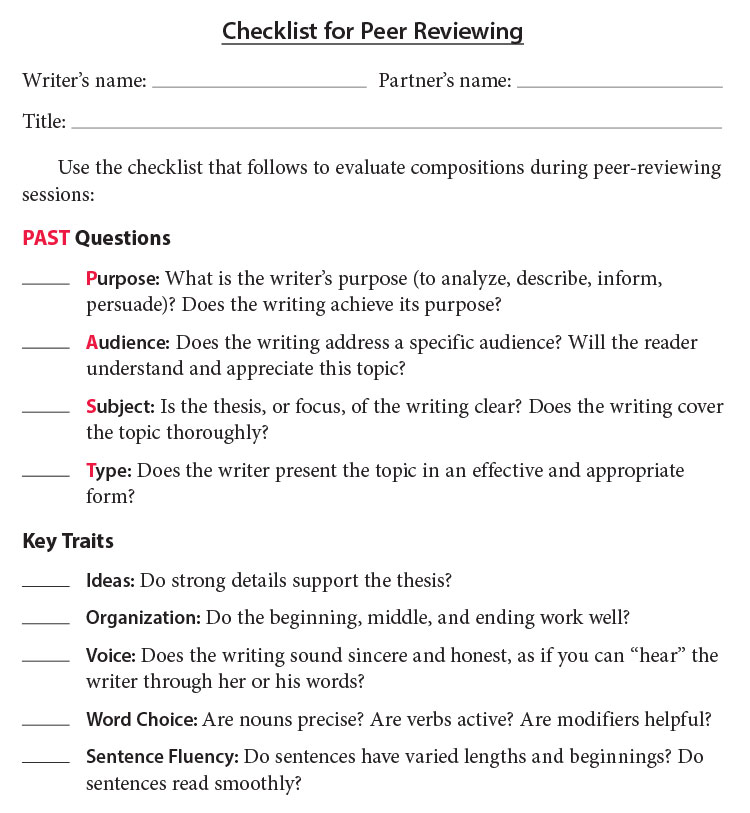
Have a trusted classmate read your literary research paper and complete the form.
Revising in Action
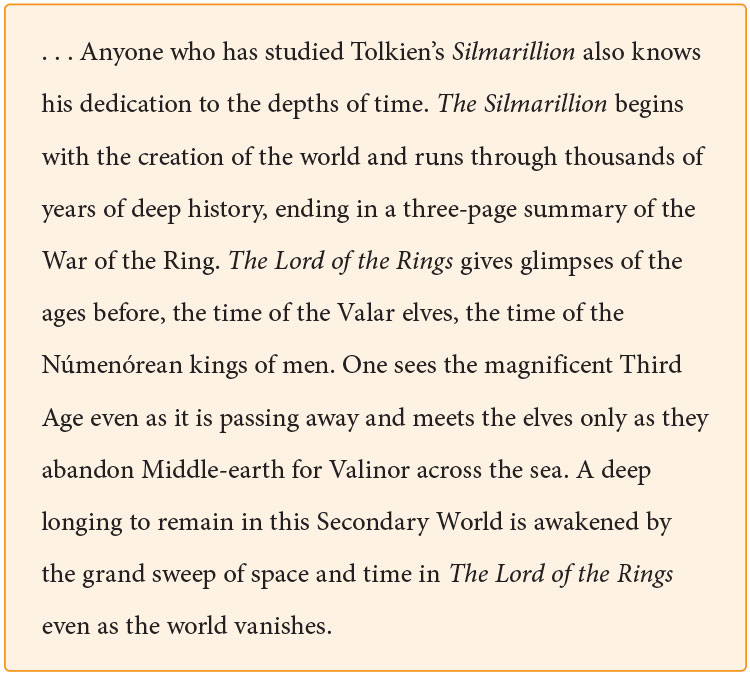
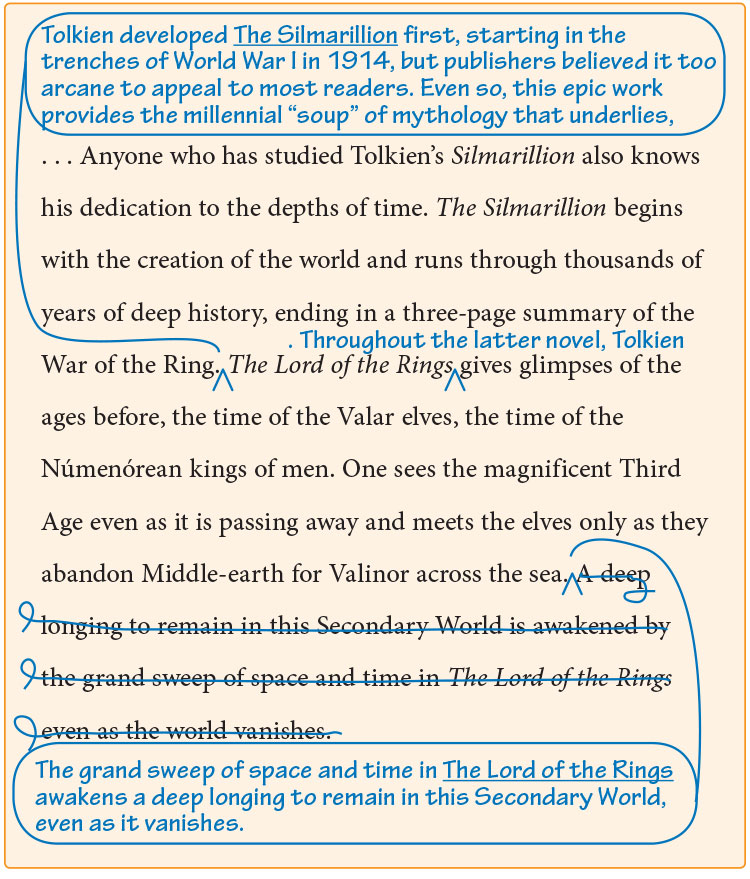
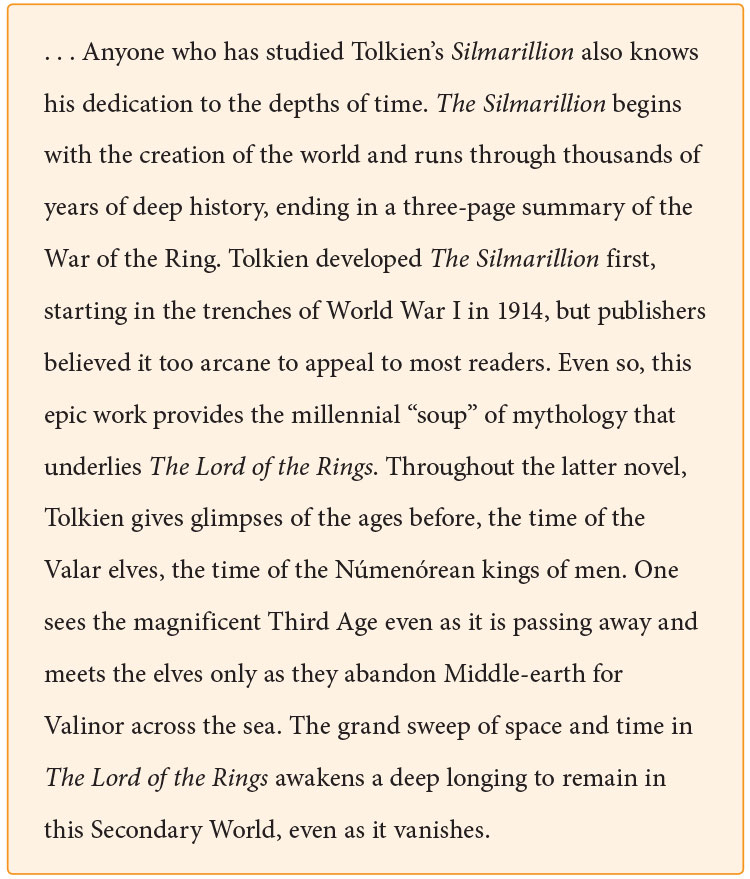
When you revise, you add, delete, rewrite, and rearrange your writing to make it clearer. Here are some revisions to the literary research paper about J. R. R. Tolkien's definition of fantasy.
-
Paragraph Before Revisions
-
New material elaborates concepts and makes a passive sentence active.
-
Paragraph After Revisions
Revise with a checklist.
As you revise your research paper, ask yourself the questions on this checklist. When you can answer a question yes, check it off. Continue revising until all questions are checked off.
Developing Your Ideas
- Does the analysis have a strong lead that catches the reader's interest?
- Does the thesis statement clearly focus the paper?
- Does each body paragraph begin with a topic sentence that names a main point in support of the thesis statement?
- Does evidence from a variety of sources support each topic sentence?
- Are concepts fully elaborated with quotations, anecdotes, examples, definitions, analyses, and other explanations?
- Does the voice sound enthusiastic, with active sentences, precise nouns and verbs, modifiers that clarify, and evidence that shows interest?
- Do the sentences read smoothly?