Revising Character Analyses
After you have completed a first draft of your analysis, set it aside awhile. Once you get some distance from it, you'll be able to more objectively make improvements. Start by focusing on the large-scale issues: the ideas and organization in your writing. The following activities will help you.
Revising to Connect Characters to Themes
An effective character analysis should show how the words and actions of the characters demonstrate larger themes. Often themes express life lessons, social or cultural realities, or moral dilemmas. Answering questions about the literature can help you identify themes:
- Why is this character so interesting?
George Wilson is interesting because he seems so powerless all the way through but does the one action that changes everything.
- What is the most critical moment for this character?
After his wife is killed by Gatsby's car, Wilson shoots Gatsby in his pool.
- If this character could do one thing over, what would it be?
Wilson would not let his wife go with Tom Buchanan, which would save her life and Gatsby's as well.
- What emotion best defines this character?
Wilson goes through a number of emotions, from blissful ignorance to growing suspicion, then grief and desperation, and finally fury. He feels that he has been wronged and will work to right it.
- What does this character's life say about life in general?
Rich, powerful people often take away the little that poor, powerless people have. However, if the rich ignore this injustice, the poor often rise up to take revenge.
Discover themes.
Answer the following questions about the character(s) you analyzed. After you have answers, consider what thematic connections you might add to your first draft.
- Why is this character so interesting?
- What is the most critical moment for this character?
- If this character could do one thing over, what would it be?
- What emotion best defines this character?
- What does this character's life say about life in general?
Revising to Improve Use of Evidence
When you use quotations from literature, you should work hard to use the evidence ethically and effectively. Follow these do's and don'ts of quoting.
Quote only text that captures an idea in a succinct and powerful way. (Don't quote long passages needlessly.)
Embed the quotation within an explanation in your own words. (Don't just "plunk" text without an explanation.)
Use quotations sparingly, accentuating your own thoughts and words. (Don't let quotations overwhelm your own thinking.)
Place double quotation marks before and after the quotation, and use single quotes within. (Don't use material from a source without quotation marks and citation.)
Place a parenthetical citation after the quote, naming the source and page number, with end punctuation after the close quotation. If you name the source in the text, you can provide just the page number. (Don't place the citation after the period.)
Review quoted evidence.
Check each quotation that you used, making sure you followed the best practices listed above. Make changes to improve your use of evidence.
Revising with a Peer Response
Share your writing.
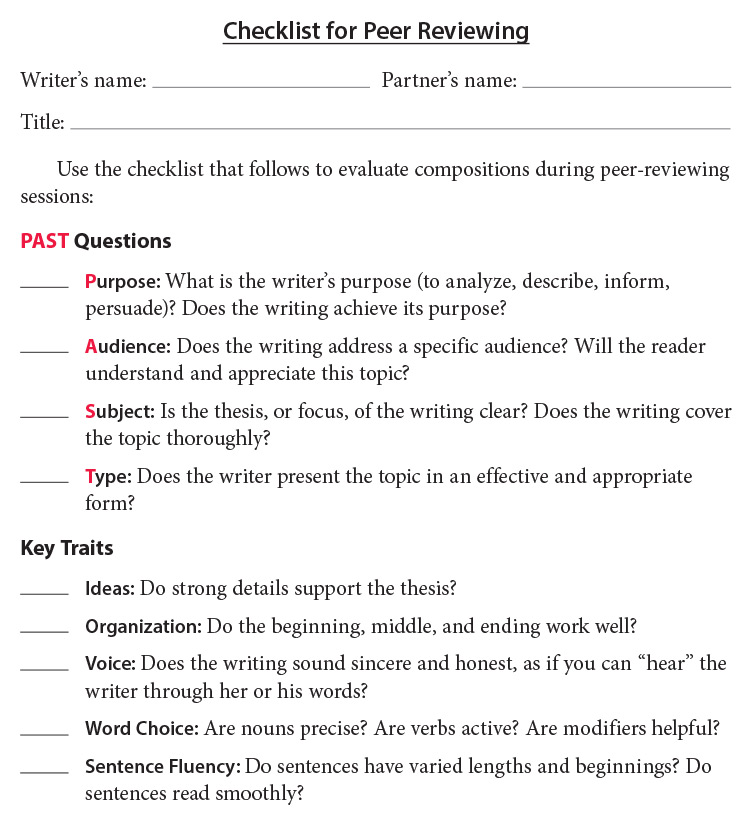
Have a trusted classmate read your review and complete the form.
Revising in Action
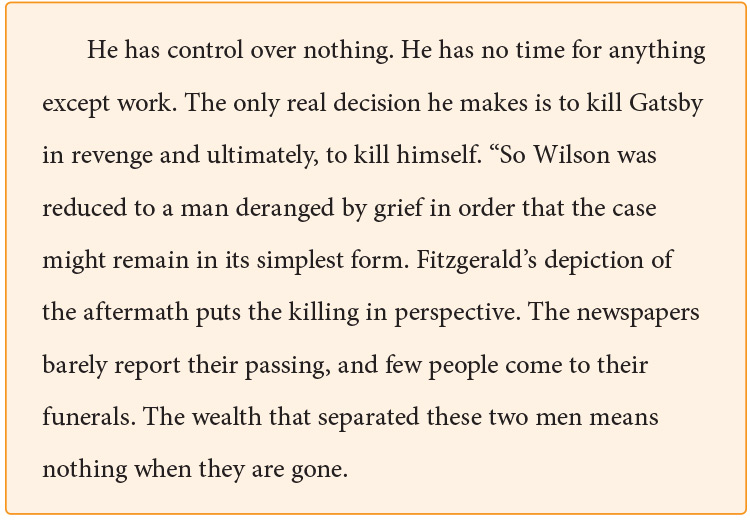
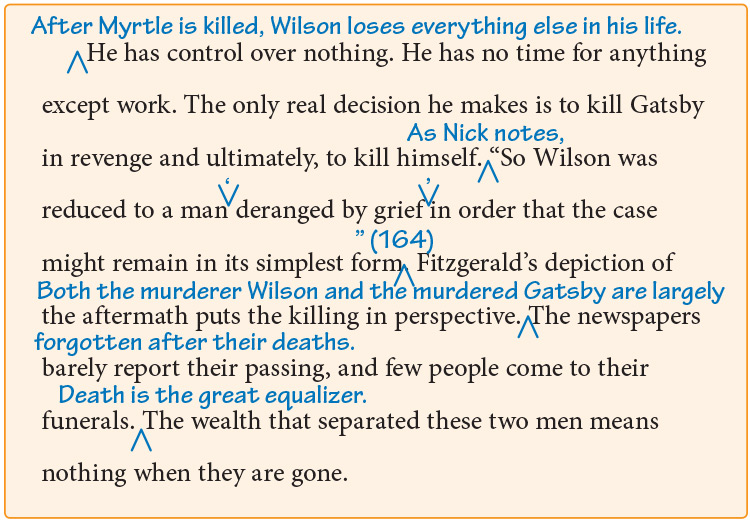
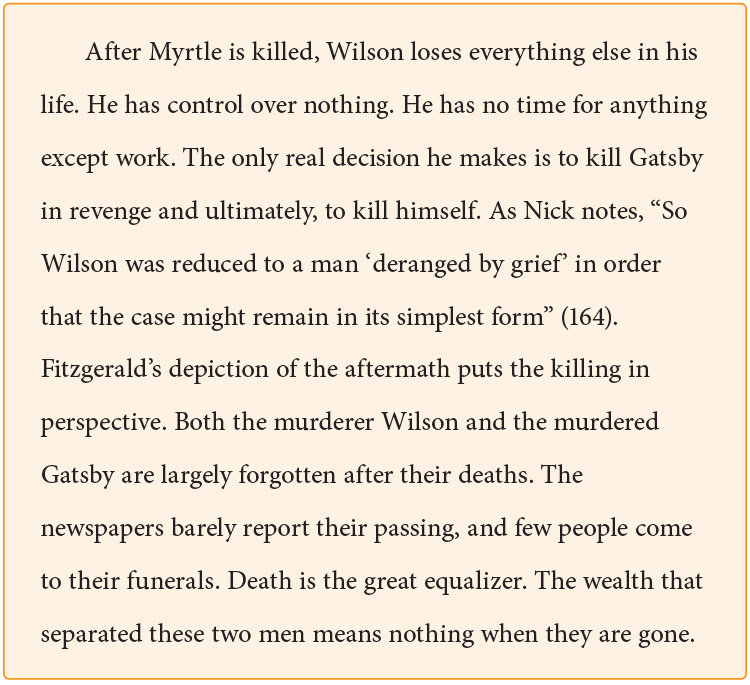
When you revise, you add, delete, rewrite, and rearrange your writing to make it clearer. Here are some revisions to the character analysis of George Wilson from The Great Gatsby.
-
Paragraph Before Revisions
-
New material helps explain a quotation and connect to larger themes. A citation is added.
-
Paragraph After Revisions
Revise with a checklist.
Read each line. When you can answer each question with a yes, check it off.
Developing Your Ideas
- Does the analysis have a strong lead that catches the reader's interest?
- Does the thesis statement clearly focus on one or more characters and connect them to a major theme?
- Does the topic sentence of each body paragraph name a specific main point that supports the thesis?
- Does evidence from the literature provide solid support for the analysis?
- Does the voice sound knowledgable and interested?
- Do the sentences read smoothly?