Grade 3

By Anonymous (not verified), 16 March, 2026
This third-grade descriptive paragraph tells about a make-believe neighborhood.
By Anonymous (not verified), 16 March, 2026
In this paragraph, a third-grade student describes his grandfather's face.
By Anonymous (not verified), 12 March, 2026

Editing Personal Narratives

After making big changes to improve your personal narrative, you need to make little changes (editing) to correct any remaining errors. You'll look for problems with sentences, punctuation, capitalization, grammar, usage, and spelling. The following activities will help you edit your narrative.

Editing Dialogue for Quotation Marks

Dialogue uses quotation marks. These special marks go before and after the exact words of the speaker.

“Yum,” I said.

Manny’s dad said, “Welcome to the fiesta.”

Periods and commas that follow the speaker’s words always go inside the quotation marks.

“It’s time to change into our costumes,” said Manny. “Follow me.”

Question marks and exclamation marks go inside the quotation marks when they punctuation the dialogue.

“Are you ready for this?” asked Manny.

“Wow!” I said.

Watch the video "Punctuating Dialogue."

Hide video

Insert quotation marks.

Insert quotation marks before and after the speaker’s words. Use the examples on this page for help. The first one has been done for you.

By Anonymous (not verified), 12 March, 2026

Revising Personal Narratives

Once you draft your personal narrative, take a break and come back to it to see it freshly. When you revise, you make sure the people, places, and events are clearly described and the writing captures the experience in a vivid way. These activities will help you revise.

Revising to Add Sensory Details

To help your story come alive, you can add details about what you saw, heard, smelled, tasted, and touched. These are called sensory details.

Sensory details help you show readers what is happening, rather than just telling them. You can collect these details in a sensory chart.

See

Hear

Smell

Taste

Touch

bright pink, yellow, and red dresses

sparkly suits

big green chilis in white sauce

beat of guitar and trumpets

laughter and fast conversations

yummy smells coming from the kitchen

soupy and spicy green pepper

delicious tacos

flaky pastries

high fives

Watch the video "Sensory Details."

Hide video

See

bright pink, yellow, and red dresses

sparkly suits

big green chilis in white sauce

Hear

beat of guitar and trumpets

laughter and fast conversations

Smell

yummy smells coming from the kitchen

Taste

soupy and spicy green pepper

delicious tacos

Touch

flaky pastries

high fives

Add sensory details.

Read the first draft of your personal narrative. Think of sensory details that you could add to make the writing come alive. Record the details in a sensory chart. Then add them to your personal narrative.

By Anonymous (not verified), 12 March, 2026

Writing a Personal Narrative

Once you finish prewriting, you are ready to tell your story in writing. These activities will help you hook the reader's interest at the beginning, build interest through a sequence of events, and lead to a strong ending for your personal narrative. You'll also read another student's essay to see how all of the parts came together.

Writing the Beginning Paragraph

Write a lead.

Read each lead-writing strategy. Then write an example of your own.

The first sentence in your narrative should grab the reader’s attention. It is called a lead. The following strategies will help you write an effective lead.

  1. Start in the middle of the action:

    I thought I was ready when I arrived at our school’s auditorium.

  2. Start with dialogue:

    “Just wait a little longer,” said my grandpa.

  3. Start with an interesting fact or statement:

    When Manny came to my school, I didn’t expect to become best friends.

Write your beginning paragraph.

Write your lead and give more details to introduce your experience.

Lead:

Introductory Details:

By Anonymous (not verified), 12 March, 2026

Prewriting for Personal Narratives

Prewriting is your first step in writing a personal narrative. These prewriting activities will help you select a topic to write about, gather important details about the topic, and organize your thoughts before you begin a first draft.

Prewriting to Focus Your Ideas

Choose your topic.

Your goal is to write a personal narrative about an unforgettable experience. Complete the following sentence starters to help you discover a writing idea. Then circle the topic you wish to write about.

  • I’ll never forget the time when . . .
  • I learned an important lesson when . . .
  • I was proud of myself when . . .

Gather the basic parts.

Fill in a 5 W’s memory chart to gather all of the basic details about the experience.

By Anonymous (not verified), 12 March, 2026

Reading Personal Narratives

Before you write about your own experience, you'll want to see how other students created personal narratives. This lesson shows you a narrative paragraph and a narrative essay, explaining each part. As you read them, think about how the writers made the people, places, and events come to life through description, action, and dialogue.

Reading a Narrative Paragraph

A personal narrative paragraph has three main parts. The topic sentence introduces your story. The body sentences describe what happened to you. The ending sentence tells why the experience was important. This paragraph shares one writer’s story about a school play.

Sample Paragraph

Listen to "Frozen on Stage."

Your browser does not support the audio tag.

Hide audio

Frozen on Stage

Topic SentenceMy first school play is something I’ll never forget. I was playing Mary Todd Lincoln, the wife of Abraham Lincoln. The whole auditorium was packed with people. Body SentencesIt was hot inside, even though it was the middle of the winter. Ms. Valentine gave me the cue, so I walked on stage toward Chad, who was playing Abraham Lincoln. When I looked at the audience, I froze and forgot my line. Now I was really sweating. I looked at Chad, and he pointed to his hat. That helped me remember the line. I said, “Geez, Abe, your hat is on crooked again.” The crowd laughed, and I relaxed. We got a standing ovation when the show ended. Chad was a great teammate. Ending SentenceI knew from then on that I would be a good teammate, too.

By Anonymous (not verified), 12 March, 2026

Warm-Up for Personal Narratives

All of us have important times in our lives. By thinking back to these times, we understand ourselves better. By sharing these times with those we love, we become closer. This lesson will help you think about events in your life.

What Is a Narrative?
Writing a Personal Narrative
(c) Thoughtful Learning 2015

Listen to "What Is a Narrative?"

Your browser does not support the audio tag.

Hide audio

A narrative is a story. It tells something that happened, like in a book or a movie. But books and movies are not the only places to find good stories. Your experiences make great stories, too.

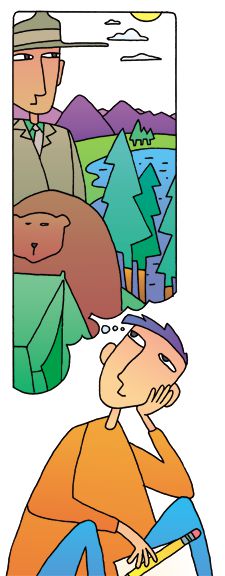
A personal narrative is a true story about something that happened in your life. You might share an exciting, surprising, or scary experience, like the time you went camping and saw a bear. Or you might share a moment when you learned an important lesson.

The best personal narratives include many details, helping readers feel like they are a part of the story, too. In this unit, you will write a true story from your own life in way that makes it come alive once again!

Watch the video "What Is a Personal Narrative?"

Hide video

Thinking About a True Story

Before you can share a story, you need to remember all the important things that happened. Asking and answering the 5 W’s questions can activate your memory and help you record important details about your experience.

  • Who was with me?
  • What exactly happened?
  • Where did this happen?
  • When did this happen?
  • Why did it happen?
By Anonymous (not verified), 12 March, 2026

Prewriting for Problem-Solution Essays

Before you start writing your essay, you need to think about some problems in your community and ways you could help solve them. These prewriting activities will help you examine a problem, come up with a solution, and gather and organize details before you begin a first draft.

Prewriting to Explore Problems

Consider problems.

Think about problems you have noticed at home, at school, and in your community. List them in the table. When you finish, put a star next to the one you feel strongest about.

One problem at home is

One problem at school is

One community problem is

I get distracted when I work on my homework.

There’s too much shoving and pushing during recess.

Rosemont Park is dirty and unsafe.*

By Anonymous (not verified), 12 March, 2026

Prewriting for Opinion Essays

Prewriting is your first step in writing an opinion essay. These prewriting activities will help you select a topic to write about, develop an opinion statement, and gather and organize your details before you begin a first draft.

Prewriting to Select a Topic

For your own opinion essay, you need to select a topic that is debatable and that you feel strongly about. A debatable topic is one that people have differing opinions about. There is no debate that young people need to exercise, but there is debate about extending the school year.

Brainstorm topics.

For each category, list at least two debatable opinions that you could write about.

School Classes