Grade 4

By Anonymous (not verified), 12 March, 2026

Reading Personal Narratives

Before you write about your own experience, you'll want to see how other students created personal narratives. This lesson shows you a narrative paragraph and a narrative essay, explaining each part. As you read them, think about how the writers made the people, places, and events come to life through description, action, and dialogue.

Reading a Narrative Paragraph

A personal narrative paragraph has three main parts. The topic sentence introduces your story. The body sentences describe what happened to you. The ending sentence tells why the experience was important. This paragraph shares one writer’s story about a school play.

Sample Paragraph

Listen to "Frozen on Stage."

Your browser does not support the audio tag.

Hide audio

Frozen on Stage

Topic SentenceMy first school play is something I’ll never forget. I was playing Mary Todd Lincoln, the wife of Abraham Lincoln. The whole auditorium was packed with people. Body SentencesIt was hot inside, even though it was the middle of the winter. Ms. Valentine gave me the cue, so I walked on stage toward Chad, who was playing Abraham Lincoln. When I looked at the audience, I froze and forgot my line. Now I was really sweating. I looked at Chad, and he pointed to his hat. That helped me remember the line. I said, “Geez, Abe, your hat is on crooked again.” The crowd laughed, and I relaxed. We got a standing ovation when the show ended. Chad was a great teammate. Ending SentenceI knew from then on that I would be a good teammate, too.
By Anonymous (not verified), 12 March, 2026

Warm-Up for Personal Narratives

All of us have important times in our lives. By thinking back to these times, we understand ourselves better. By sharing these times with those we love, we become closer. This lesson will help you think about events in your life.

What Is a Narrative?

Writing a Personal Narrative
(c) Thoughtful Learning 2015

Listen to "What Is a Narrative?"

Your browser does not support the audio tag.

Hide audio

A narrative is a story. It tells something that happened, like in a book or a movie. But books and movies are not the only places to find good stories. Your experiences make great stories, too.

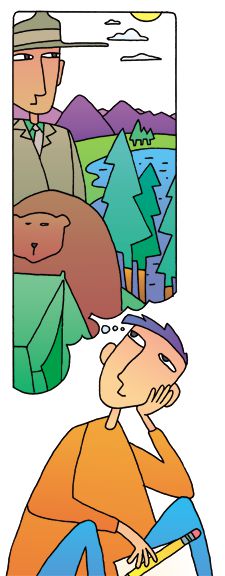
A personal narrative is a true story about something that happened in your life. You might share an exciting, surprising, or scary experience, like the time you went camping and saw a bear. Or you might share a moment when you learned an important lesson.

The best personal narratives include many details, helping readers feel like they are a part of the story, too. In this unit, you will write a true story from your own life in way that makes it come alive once again!

Watch the video "What Is a Personal Narrative?"

Hide video

Thinking About a True Story

Before you can share a story, you need to remember all the important things that happened. Asking and answering the 5 W’s questions can activate your memory and help you record important details about your experience.

  • Who was with me?
  • What exactly happened?
  • Where did this happen?
  • When did this happen?
  • Why did it happen?
By Anonymous (not verified), 12 March, 2026

Assessing with an Explanatory Rubric

Test graders will use a rubric to judge the quality of your writing for assessment. By using the following rubric to judge your own writing, you can become aware of what testers are looking for and can improve your scores in the future.

Assess with a rubric.

Use the following rubric to score an explanatory essay for assessment.

By Anonymous (not verified), 12 March, 2026

Viewing for Assessment

Some tests ask you to watch a video and respond to it in a paragraph or essay. Often, you'll need to refer to details from the video and any readings you have done. The following activities will help you practice viewing for assessment.

Carefully watch this video.

Pay close attention as you watch this video about monarchs and milkweed, produced by the federal government.

Watch the video "Monarchs and Milkweed"

Hide video

Respond to the video.

Answer the questions to test your understanding of the video “Monarchs and Milkweed.” Circle the letter of the best answer.

By Anonymous (not verified), 12 March, 2026

Writing an Essay for Assessment

Some tests ask you to write an essay response to articles you have closely read. The following activity will help you practice.

Analyze an essay prompt.

Read the following prompt, answer the PAST questions, write a focus statement, and list details.

  1. Read the writing prompt.
  2. Imagine that your teacher has assigned you to write an explanatory essay about the lives of monarch butterflies. You will be using the sources in this unit. Focus your thinking about monarch butterflies and create an essay. Include details from the sources to support your ideas.

  3. Answer the PAST questions.
  4. Purpose?

    Audience?

    Subject?

    Type?

By Anonymous (not verified), 12 March, 2026

Writing a Paragraph for Assessment

Some tests ask you to write a paragraph in response to sources you have read or viewed. The following activity will help you practice responding.

Analyze the writing prompt.

Read the following prompt, answer the PAST questions, write a topic sentence, and list details.

  1. Read the writing prompt.
  2. You have just read three articles and watched a video about monarch butterflies. Write a paragraph that explains how the additional sources expand your understanding from Source 1. Include at least two examples, naming the title and author of each source that you use.

  3. Answer the PAST questions.
  4. Purpose?

    Audience?

    Subject?

    Type?

By Anonymous (not verified), 12 March, 2026

Practicing for Assessment

Reading and writing tests measure important learning skills. You can do your best on such tests by reading and writing every day. You can also get a better score if you practice for assessment.

How Can I Practice for Assessment?

Writing a Process Essay
© Thoughtful Learning 2016

Listen to "How Can I Practice for Assessment?"

Your browser does not support the audio tag.

Hide audio

The best way to practice for a reading and writing assessment is to take a practice test. This unit asks you to closely read information and write about it, just as you will do on actual assessments.

You’ll find interesting articles to read and respond to. You’ll also get to watch a video. In the end, you’ll need to take the information you discover and use it to write an informational essay of your own.

If you would like more help with close reading and informational writing, see the unit “Reading and Writing for Assessment.”

Reading a Practice Assessment

Some tests ask you to closely read and respond to explanatory articles and then use them to write an essay. One technique for reading closely is SQ3R:

  • Survey the headings, illustrations, beginning, and ending of the text.
  • Question what the text is about and what you expect to learn from it.
  • Read the text carefully.
  • Recite the main points covered in the text.
  • Review the material, thinking about how it relates to other things you have learned.

Closely read source 1.

Use SQ3R to closely read the following text.

Listen to "Source 1: King of the Butterflies"

Your browser does not support the audio tag.

Hide audio

Source 1

By Anonymous (not verified), 12 March, 2026

Writing On-Demand Essays

A writing assessment gives you a short time to write a response to a prompt.

You’ve read about the origin of pizza. What is your favorite food? How is it made? Why do you like it? Write an essay that names your favorite food, describes the ingredients, explains how it is made, and gives sensory details about it. Make your readers’ mouths water!

To do so, you should use a shortened form of the writing process:

Prewriting (5 Minutes)

Answer the PAST questions.

Purpose? Explain how it’s made

Audience? New person

Subject? A favorite food

Type? Essay

Write a focus statement.

Most Americans like tacos, but they haven’t had Mexican tacos.

List supporting details.

—Using cilantro, goat cheese, homemade white corn tortilla

—Making tortillas

—Cooking meat, cutting cilantro

—Putting taco together

By Anonymous (not verified), 12 March, 2026

Analyzing Writing Prompts

Often tests contain writing prompts that you must respond to. Your first step is to understand the writing prompt. You can use the PAST questions:

  • Purpose? Why am I writing? (To explain? To demonstrate?)
  • Audience? Who will read my writing? (Tester? Classmates?)
  • Subject? What subject should I write about? (Games? Pizza?)
  • Type? What type of writing should I create? (Essay? Letter?)

Sample Writing Prompt

What animal sayings do you use? Think of three different sayings and what they mean. Think of how you might use them. Write an essay that explains what a saying is and names the three animal sayings you like most. Define each. Imagine you are explaining the sayings to someone who is learning English.

Answers to PAST Questions

  • Purpose?

    To explain the meaning of the sayings and give examples

  • Audience?

    A person who is learning English

  • Subject?

    Animal sayings

  • Type?

    Essay

By Anonymous (not verified), 12 March, 2026

Understanding Vocabulary

When you read an unfamiliar word, you need to figure out its meaning based on how it is used. You can use the following context clues to guess a meaning.

Word parts

can reveal meaning.

A stop sign is an octagon.

(The prefix octa means “eight” and gon means “side,” so octagon must mean “eight sided.”)

Cause-and-effect

clues hint at meanings.

A good cardio workout gets your blood pumping.

(“Blood pumping” means cardio must have something to do with the heart.)

Definitions

in the text can help you understand.

Deer are herbivorous, eating just plants.

(Herbivorous means “eating just plants.”)

A series

groups an unknown word with known words.

The shelter had a tabby, a Siamese, and a calico.

(Since tabby and Siamese are cat breeds, calico must be a cat breed as well.)

Examples

give a specific version of a general idea.

The jacket was embellished with sequins and fringe.

(Sequins and fringe are decorations for a jacket, so embellished must mean “decorated.”)

Synonyms

have the same meaning as the unfamiliar word.

A suspension bridge hangs from cables.

(The word hangs is a synonym of the word suspension.)

Antonyms

have the opposite meaning as an unfamiliar word.

Herbivores eat plants, unlike carnivores.

(If the antonym herbivores refers to plant eaters, then carnivores must refer to meat eaters.)

Tone

reveals the writer’s thoughts about a word.

The pastoral landscape featured picnic blankets and children chasing kites.

(The presence of picnic blankets and children with kites means that pastoral must refer to a wide-open and pleasant landscape.)