CCSS.ELA-LITERACY.W.4.4

By Anonymous (not verified), 12 March, 2026

Editing Fiction Reviews

After revising your fiction review, you need to edit it to correct any remaining errors. You'll look closely at sentences, punctuation, capitalization, grammar, usage, and spelling. The following activities will help you edit your review.

Editing for Present Tense

Writing verbs in the present tense will make your review more lively. The present tense shows that something is happening now or happens regularly. Even though you read the book in the past, you can describe things that happened in the book in the present tense.

Past tense: A classmate wrote hurtful comments about her heritage.

Present tense: A classmate writes hurtful comments about her heritage.

Choose present-tense verbs.

Select the present-tense verb from the options in each sentence.

  1. Something bad (happenshappens, happened) to the main character.
  2. Shiloh (cowered, cowerscowers) around people.
  3. Marty and his family (livelive, lived) in West Virginia.
  4. When Shiloh (ran, runsruns) away, Marty (built, buildsbuilds) him a cage.
By Anonymous (not verified), 12 March, 2026

Revising Fiction Reviews

Okay, so you've finished your first draft. Great work! What should you do next? First, set it aside for a while. When you return to it, you will be able to read it with fresh eyes. Why is this important? It will help you recognize areas that need improvement. That's the purpose of revising—to make your ideas stronger and easier to follow. The improvement strategies on this page will help you add, cut, and rearrange the writing you've already done.

Revising to Cite Evidence

Citing specific details from the book can help you explain the characters, conflict, and theme. You can make a general idea (purple) stronger or more convincing by adding different types of specific evidence (green).

  • Dialogue is something a character says.
  • Marty feels bad about lying to his family. He says, “Funny how one lie leads to another, and before you know it your whole life can be a lie.”

  • Reasons answer the question why?
  • Marty feels sad. He catches Judd kicking Shiloh.

  • Actions are something a character does.
  • Lucy wants her own space. She builds a wall to split her shared bedroom.

  • Examples provide a specific instance of something.
  • Lucy doesn't feel connected to some Chinese customs. She doesn’t like traditional Chinese food such as octopus and frog.

By Anonymous (not verified), 12 March, 2026

Writing a Fiction Review

Once you finish prewriting, you are ready to create the first draft of your review. These writing activities will help you create strong beginning, middle, and ending parts. You'll also read another student's review to see how all of the parts work together.

Writing the Beginning Paragraph

The purpose of your beginning paragraph is to grab your reader's attention, introduce the title and author of your book, and tell something interesting about it. The paragraph should start with a lead sentence, which gets the reader interested in the book. You can introduce the title and author in the lead or in a new sentence. Then, to close out the paragraph, introduce the big challenge the main character must face in the book. But don't spoil the ending!

Write a lead sentence.

Try out at least two of these strategies for introducing the topic of your review. Read the examples for ideas.

1. Ask a question related to the work.

Have you ever felt like a stranger in your school or community?

2. Talk directly to your readers.

You never know when you will meet someone who will change your life.

3. Provide a suspenseful detail from the story.

Just when Lucy thought she was getting her very own room, a stranger showed up and changed everything.

4. Share a feeling you have about the work.

The Great Wall of Lucy Wu by Wendy Wan-Long Shang changed the way I think about my heritage.

Write your beginning paragraph.

Start with your lead sentence. Follow with one or two sentences that identify the title and author of the book and introduce the biggest challenge facing the main character.

By Anonymous (not verified), 12 March, 2026

Prewriting for Fiction Reviews

To write a great review, you need to choose a book you enjoy and spend some time gathering key details from it. These prewriting activities will prepare you to write a first draft.

Prewriting for Topic and Character Details

Your first prewriting step is to choose a work of fiction for your review. Make sure the work is something you like and remember well. You can also read something new—a mystery, an adventure book, a novel, or even a play.

Fill in a topic matrix.

Fill in a topic matrix to think about a book you might want to review. Consider books you really enjoy or that you read recently.

What is the book’s title?

Who is the author?

What is the book about?

What do you like about the book?

Teaching Tip

If necessary, students can complete the topic matrix for multiple books to help them decide the best topic for their review.

By Anonymous (not verified), 12 March, 2026

Revising Personal Narratives

Once you draft your personal narrative, take a break and come back to it to see it freshly. When you revise, you make sure the people, places, and events are clearly described and the writing captures the experience in a vivid way. These activities will help you revise.

Revising to Add Sensory Details

To help your story come alive, you can add details about what you saw, heard, smelled, tasted, and touched. These are called sensory details.

Sensory details help you show readers what is happening, rather than just telling them. You can collect these details in a sensory chart.

See

Hear

Smell

Taste

Touch

bright pink, yellow, and red dresses

sparkly suits

big green chilis in white sauce

beat of guitar and trumpets

laughter and fast conversations

yummy smells coming from the kitchen

soupy and spicy green pepper

delicious tacos

flaky pastries

high fives

Watch the video "Sensory Details."

Hide video

See

bright pink, yellow, and red dresses

sparkly suits

big green chilis in white sauce

Hear

beat of guitar and trumpets

laughter and fast conversations

Smell

yummy smells coming from the kitchen

Taste

soupy and spicy green pepper

delicious tacos

Touch

flaky pastries

high fives

Add sensory details.

Read the first draft of your personal narrative. Think of sensory details that you could add to make the writing come alive. Record the details in a sensory chart. Then add them to your personal narrative.

By Anonymous (not verified), 12 March, 2026

Writing a Personal Narrative

Once you finish prewriting, you are ready to tell your story in writing. These activities will help you hook the reader's interest at the beginning, build interest through a sequence of events, and lead to a strong ending for your personal narrative. You'll also read another student's essay to see how all of the parts came together.

Writing the Beginning Paragraph

Write a lead.

Read each lead-writing strategy. Then write an example of your own.

The first sentence in your narrative should grab the reader’s attention. It is called a lead. The following strategies will help you write an effective lead.

  1. Start in the middle of the action:

    I thought I was ready when I arrived at our school’s auditorium.

  2. Start with dialogue:

    “Just wait a little longer,” said my grandpa.

  3. Start with an interesting fact or statement:

    When Manny came to my school, I didn’t expect to become best friends.

Write your beginning paragraph.

Write your lead and give more details to introduce your experience.

Lead:

Introductory Details:

By Anonymous (not verified), 12 March, 2026

Prewriting for Personal Narratives

Prewriting is your first step in writing a personal narrative. These prewriting activities will help you select a topic to write about, gather important details about the topic, and organize your thoughts before you begin a first draft.

Prewriting to Focus Your Ideas

Choose your topic.

Your goal is to write a personal narrative about an unforgettable experience. Complete the following sentence starters to help you discover a writing idea. Then circle the topic you wish to write about.

  • I’ll never forget the time when . . .
  • I learned an important lesson when . . .
  • I was proud of myself when . . .

Gather the basic parts.

Fill in a 5 W’s memory chart to gather all of the basic details about the experience.

By Anonymous (not verified), 12 March, 2026

Warm-Up for Personal Narratives

All of us have important times in our lives. By thinking back to these times, we understand ourselves better. By sharing these times with those we love, we become closer. This lesson will help you think about events in your life.

What Is a Narrative?

Writing a Personal Narrative
(c) Thoughtful Learning 2015

Listen to "What Is a Narrative?"

Your browser does not support the audio tag.

Hide audio

A narrative is a story. It tells something that happened, like in a book or a movie. But books and movies are not the only places to find good stories. Your experiences make great stories, too.

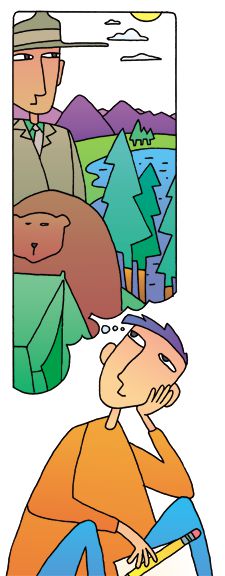
A personal narrative is a true story about something that happened in your life. You might share an exciting, surprising, or scary experience, like the time you went camping and saw a bear. Or you might share a moment when you learned an important lesson.

The best personal narratives include many details, helping readers feel like they are a part of the story, too. In this unit, you will write a true story from your own life in way that makes it come alive once again!

Watch the video "What Is a Personal Narrative?"

Hide video

Thinking About a True Story

Before you can share a story, you need to remember all the important things that happened. Asking and answering the 5 W’s questions can activate your memory and help you record important details about your experience.

  • Who was with me?
  • What exactly happened?
  • Where did this happen?
  • When did this happen?
  • Why did it happen?
By Anonymous (not verified), 12 March, 2026

Writing On-Demand Essays

A writing assessment gives you a short time to write a response to a prompt.

You’ve read about the origin of pizza. What is your favorite food? How is it made? Why do you like it? Write an essay that names your favorite food, describes the ingredients, explains how it is made, and gives sensory details about it. Make your readers’ mouths water!

To do so, you should use a shortened form of the writing process:

Prewriting (5 Minutes)

Answer the PAST questions.

Purpose? Explain how it’s made

Audience? New person

Subject? A favorite food

Type? Essay

Write a focus statement.

Most Americans like tacos, but they haven’t had Mexican tacos.

List supporting details.

—Using cilantro, goat cheese, homemade white corn tortilla

—Making tortillas

—Cooking meat, cutting cilantro

—Putting taco together

By Anonymous (not verified), 12 March, 2026

Analyzing Writing Prompts

Often tests contain writing prompts that you must respond to. Your first step is to understand the writing prompt. You can use the PAST questions:

  • Purpose? Why am I writing? (To explain? To demonstrate?)
  • Audience? Who will read my writing? (Tester? Classmates?)
  • Subject? What subject should I write about? (Games? Pizza?)
  • Type? What type of writing should I create? (Essay? Letter?)

Sample Writing Prompt

What animal sayings do you use? Think of three different sayings and what they mean. Think of how you might use them. Write an essay that explains what a saying is and names the three animal sayings you like most. Define each. Imagine you are explaining the sayings to someone who is learning English.

Answers to PAST Questions

  • Purpose?

    To explain the meaning of the sayings and give examples

  • Audience?

    A person who is learning English

  • Subject?

    Animal sayings

  • Type?

    Essay