CCSS.ELA-LITERACY.W.5.6

By Anonymous (not verified), 12 March, 2026

Editing Personal Narratives

After making big changes to improve your personal narrative, you need to make little changes (editing) to correct any remaining errors. You'll look for problems with sentences, punctuation, capitalization, grammar, usage, and spelling. The following activities will help you edit your narrative.

Editing Dialogue for Quotation Marks

Dialogue uses quotation marks. These special marks go before and after the exact words of the speaker.

“Yum,” I said.

Manny’s dad said, “Welcome to the fiesta.”

Periods and commas that follow the speaker’s words always go inside the quotation marks.

“It’s time to change into our costumes,” said Manny. “Follow me.”

Question marks and exclamation marks go inside the quotation marks when they punctuation the dialogue.

“Are you ready for this?” asked Manny.

“Wow!” I said.

Watch the video "Punctuating Dialogue."

Hide video

Insert quotation marks.

Insert quotation marks before and after the speaker’s words. Use the examples on this page for help. The first one has been done for you.
By Anonymous (not verified), 12 March, 2026

Revising Personal Narratives

Once you draft your personal narrative, take a break and come back to it to see it freshly. When you revise, you make sure the people, places, and events are clearly described and the writing captures the experience in a vivid way. These activities will help you revise.

Revising to Add Sensory Details

To help your story come alive, you can add details about what you saw, heard, smelled, tasted, and touched. These are called sensory details.

Sensory details help you show readers what is happening, rather than just telling them. You can collect these details in a sensory chart.

See

Hear

Smell

Taste

Touch

bright pink, yellow, and red dresses

sparkly suits

big green chilis in white sauce

beat of guitar and trumpets

laughter and fast conversations

yummy smells coming from the kitchen

soupy and spicy green pepper

delicious tacos

flaky pastries

high fives

Watch the video "Sensory Details."

Hide video

See

bright pink, yellow, and red dresses

sparkly suits

big green chilis in white sauce

Hear

beat of guitar and trumpets

laughter and fast conversations

Smell

yummy smells coming from the kitchen

Taste

soupy and spicy green pepper

delicious tacos

Touch

flaky pastries

high fives

Add sensory details.

Read the first draft of your personal narrative. Think of sensory details that you could add to make the writing come alive. Record the details in a sensory chart. Then add them to your personal narrative.

By Anonymous (not verified), 12 March, 2026

Writing a Personal Narrative

Once you finish prewriting, you are ready to tell your story in writing. These activities will help you hook the reader's interest at the beginning, build interest through a sequence of events, and lead to a strong ending for your personal narrative. You'll also read another student's essay to see how all of the parts came together.

Writing the Beginning Paragraph

Write a lead.

Read each lead-writing strategy. Then write an example of your own.

The first sentence in your narrative should grab the reader’s attention. It is called a lead. The following strategies will help you write an effective lead.

  1. Start in the middle of the action:

    I thought I was ready when I arrived at our school’s auditorium.

  2. Start with dialogue:

    “Just wait a little longer,” said my grandpa.

  3. Start with an interesting fact or statement:

    When Manny came to my school, I didn’t expect to become best friends.

Write your beginning paragraph.

Write your lead and give more details to introduce your experience.

Lead:

Introductory Details:

By Anonymous (not verified), 12 March, 2026

Editing Problem-Solution Essays

After revising your problem-solution essay, you need to edit it to correct any remaining errors. You'll look closely at sentences, punctuation, capitalization, grammar, usage, and spelling. The following activities will help you edit your essay.

Editing for the Future Tense

When you write about something that hasn’t happened yet, you should add will before the base form of the verb. This will change the sentence to the future tense, expressing action that will happen later. In a problem-solution essay, use the future tense to predict what will result if a solution goes into action.

A school service project will clean and beautify the park.

In this example, the helping verb will shows that the verbs clean and beautify happen in the future.

Use the future tense.

Rewrite the following sentences in the future tense. In some cases, you will have to change the spelling of the main verb. One example is provided for you.

  1. I caught a butterfly.

    I will catch a butterfly.

  2. I walk home from my neighbor’s house.
  3. We clean the kitchen.
  4. Workers painted the walls white.
  5. My family goes to vacation in Florida.
  6. My classmates and I perform in a play at the end of the year.
  7. The rain cools down the pool water.
  8. What happens next?
By Anonymous (not verified), 12 March, 2026

Prewriting for Problem-Solution Essays

Before you start writing your essay, you need to think about some problems in your community and ways you could help solve them. These prewriting activities will help you examine a problem, come up with a solution, and gather and organize details before you begin a first draft.

Prewriting to Explore Problems

Consider problems.

Think about problems you have noticed at home, at school, and in your community. List them in the table. When you finish, put a star next to the one you feel strongest about.

One problem at home is

One problem at school is

One community problem is

I get distracted when I work on my homework.

There’s too much shoving and pushing during recess.

Rosemont Park is dirty and unsafe.*

By Anonymous (not verified), 12 March, 2026

Editing Opinion Essays

After making big changes to improve your opinion essay, you need to make little changes (editing) to correct any remaining errors. You'll look for problems with sentences, punctuation, capitalization, grammar, usage, and spelling. The following activities will help you edit and publish your writing.

Editing Commas with Intro Words

Place a comma after introductory words, phrases, and clauses in sentences. The comma after introductory material signals that the main part of the sentence will follow.

Here is an example where the comma comes after a word.

Admittedly, many older adults are uncomfortable with new technology.

In this example, the comma comes after a phrase.

First of all, cars have come to rule our lives.

The comma comes after a clause in this last example.

Because art is so important, the School District must keep the art program.

Watch the video "Commas with Introductory Words"

Hide video

By Anonymous (not verified), 12 March, 2026

Revising Opinion Essays

Once you finish a first draft of your opinion essay, set it aside for awhile. When you return to it, you can see it anew. That's what revising means—seeing your work with new eyes. When you revise, you look at your essay from your reader's perspective to make sure your writing includes compelling details and flows smoothly. These activities will help you revise.

Revising to Make Concessions

It is important that you remain fair in an opinion essay. This means that you must consider all the issues and other opinions related to your topic. If you concede some of the issues on “the other side,” you can actually strengthen your own opinion.

The second paragraph in “Car Problems” fairly concedes that cars are important in modern life. But the writer also says that they are still a problem. Sometimes, a concession will begin with a transition such as these: it is true that, admittedly, even though, or I agree that . . .

Evaluate concessions.

Review these concession paragraphs and decide if the writer remains fair in discussing opposing ideas. Also underline the transition that introduces the concession, if one is used.

It is true that many older adults are uncomfortable with new technology. They have spent most of their lives without laptops and smart phones, and it is hard for them to learn how to use them. But we should still make every attempt to become a paperless society.

By Anonymous (not verified), 12 March, 2026

Writing an Opinion Essay

Once you finish prewriting, you are ready to create the first draft of your essay. These writing activities will help you create a strong beginning, middle, and ending for your opinion essay. You'll also read examples from another student's essay to see how each part works.

Writing the Beginning Paragraph

The beginning paragraph of an opinion essay is very important. It should introduce the topic, get the reader’s attention, and state your opinion. To get the reader’s attention, you can ask questions, make a dramatic statement or two, or share important information.

Review a sample and write your beginning.

Read this beginning paragraph and then write your own.

Dramatic Statements It is expensive and dangerous. It doesn’t always work in cold weather, and it pollutes. Would anyone possibly want such a thing? The answer is yes. Topic Named People in the United States and around the world all want their own cars. Opinion Statement People can’t wait to drive them, even though they do cause problems.

By Anonymous (not verified), 12 March, 2026

Prewriting for Opinion Essays

Prewriting is your first step in writing an opinion essay. These prewriting activities will help you select a topic to write about, develop an opinion statement, and gather and organize your details before you begin a first draft.

Prewriting to Select a Topic

For your own opinion essay, you need to select a topic that is debatable and that you feel strongly about. A debatable topic is one that people have differing opinions about. There is no debate that young people need to exercise, but there is debate about extending the school year.

Brainstorm topics.

For each category, list at least two debatable opinions that you could write about.

School Classes

By Anonymous (not verified), 12 March, 2026

Warm-Up for Process Essays

A process essay leads readers through a series of steps for getting something done. This lesson will help you think about different processes and which ones you might explain in an essay.

What Is a Process?

Listen to "What Is a Process?"

Your browser does not support the audio tag.

Hide audio

Writing a Process Essay
(c) Thoughtful Learning 2016

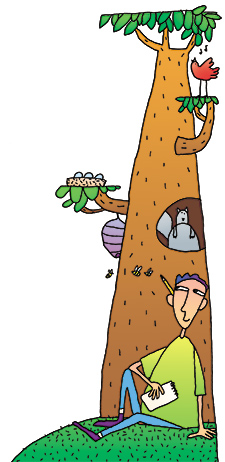
A process is a series of steps for getting something done. For a bird, building a nest is a process. For a bee or a squirrel, gathering food is a process. And for a student, writing a process essay is, itself, a process.

What processes do you know how to do? What processes could you explain to others?

When you write a process essay, you explain how to do something or how something works. Each paragraph in your essay focuses on a step in the process. The sentences follow time order, leading the reader from start to finish.

Process writing helps you get the job done!

Watch the video "What Is a Process?"