CCSS.ELA-LITERACY.W.5.2.B

By Anonymous (not verified), 12 March, 2026

Editing Nonfiction Reviews

After revising your nonfiction review, you need to edit it to correct any remaining errors. You'll look closely at sentences, punctuation, capitalization, grammar, usage, and spelling. The following activities will help you edit your review.

Editing for Comma Splices

A comma splice is a sentence error that happens when you join (splice) two sentences using a comma. A comma alone is not strong enough to join two sentences. You can correct the error in one of three ways: (1) replacing the comma with end punctuation, (2) replacing the comma with a semicolon, or (3) adding a coordinating conjunction after the comma.

Comma Splice

People used to believe that there were people on Mars, they made up stories about Martians.

Corrected with End Punctuation

People used to believe that there were people on Mars. They made up stories about Martians.

Corrected with a Semicolon

People used to believe that there were people on Mars; they made up stories about Martians.

Corrected with a Coordinating Conjunction

People used to believe that there were people on Mars, so they made up stories about Martians.

Correct comma splices.

Fix the comma splices in the following sentences.

  1. Mars shines with red and orange light, it is often called the Red Planet.
  2. The Romans named Mars after their god of war, its red color reminded them of blood and war.
  3. Mars is only one-half the size of Earth, the Red Planet actually has more moons than Earth.
  4. Someday, astronauts will go to Mars, they will live on the planet for a while and check for signs of life.
  5. Mars is much colder than Earth, the astronauts will need food and heated suits.

Editing the Punctuation of Titles

Different types of titles need different types of punctuation. Titles of shorter pieces of writing—such as short stories, articles, and poems—should be placed in quotation marks. Titles of longer pieces—such as books and magazines—should be italicized. Can you recognize the difference in these examples?

Nonfiction book

The Diary of Ann Frank

Nonfiction article

“How Anne Frank's Diary Survived”
By Anonymous (not verified), 12 March, 2026

Revising Nonfiction Reviews

Once you finish a first draft of your review, set it aside awhile. When you return to it, you can see it with a fresh perspective. That's what revising means—seeing your work with new eyes. When you revise, you look at your writing from your reader's perspective to make sure it includes interesting ideas and reads smoothly. These activities will help you revise.

Revising to Replace General Details

If parts of your writing sound uninteresting, they may contain too many general words and details. Revise those parts by including more specific words and details. The specific details could come from the work itself or your own thinking. For example, instead of stating something is "good" or "interesting" provide details about why it is good or interesting.

  • General words: After a bit, Superman got really popular.
  • Specific words: After a few months, Superman's popularity erupted.
  • General detail: He imagined having superpowers would finally get the attention of the girls in his class.
  • Specific detail: He imagined having the power to jump over tall buildings would finally get the attention of the girls in his class.

Revise for specific details.

Closely read and review your first draft to complete the revising tasks.

  1. Find at least two general words (good, interesting, boring) and replace them with specific words. (Ask a partner or look in a thesaurus for help.)
  2. Find one general detail about the book or article, and replace it with a specific detail from the work. (Consider replacing it with something a person said or did.)
By Anonymous (not verified), 12 March, 2026

Writing a Nonfiction Review

Once you finish prewriting, you are ready to create the first draft of your review. These writing activities will help you create strong beginning, middle, and ending parts. You'll also read another student's review to see how all of the parts work together.

Writing the Beginning Paragraph

Your beginning paragraph should start with a lead sentence, which gets the reader interested in the book. In the next sentence or two, you should identify the title and author of the book. In the last sentence, you should state the focus or the main idea of the book.

Write a lead sentence.

Try out at least two of these strategies for introducing the topic of your review. Read the examples for ideas.

1. Ask a question related to the work.

Have you ever wondered where superheroes come from?

2. Talk directly to your readers about the work.

It’s not every day that you learn how a superhero was born. But when you read “Superman Takes Off” by Stephen Krenzky, you sure do!

3. Introduce an interesting or suspenseful detail from the work.

One day, sometime during the Middle Ages, valuable jewels disappear from the Royal Treasury.

4. Share a feeling you have about the work.

Shipwreck at the Bottom of the World is an exciting book by Jennifer Armstrong.

Write your focus statement.

State the main point of the book. This statement should summarize what the book is about.

The article tells about how Superman made his debut and why he, literally, took off.

By Anonymous (not verified), 12 March, 2026

Assessing with an Explanatory Rubric

Test graders will use a rubric to judge the quality of your writing for assessment. By using the following rubric to judge your own writing, you can become aware of what testers are looking for and can improve your scores in the future.

Assess with a rubric.

Use the following rubric to score an explanatory essay for assessment.

By Anonymous (not verified), 12 March, 2026

Writing an Essay for Assessment

Some tests ask you to write an essay response to articles you have closely read. The following activity will help you practice.

Analyze an essay prompt.

Read the following prompt, answer the PAST questions, write a focus statement, and list details.

  1. Read the writing prompt.
  2. Imagine that your teacher has assigned you to write an explanatory essay about the lives of monarch butterflies. You will be using the sources in this unit. Focus your thinking about monarch butterflies and create an essay. Include details from the sources to support your ideas.

  3. Answer the PAST questions.
  4. Purpose?

    Audience?

    Subject?

    Type?

By Anonymous (not verified), 12 March, 2026

Writing a Paragraph for Assessment

Some tests ask you to write a paragraph in response to sources you have read or viewed. The following activity will help you practice responding.

Analyze the writing prompt.

Read the following prompt, answer the PAST questions, write a topic sentence, and list details.

  1. Read the writing prompt.
  2. You have just read three articles and watched a video about monarch butterflies. Write a paragraph that explains how the additional sources expand your understanding from Source 1. Include at least two examples, naming the title and author of each source that you use.

  3. Answer the PAST questions.
  4. Purpose?

    Audience?

    Subject?

    Type?

By Anonymous (not verified), 12 March, 2026

Revising Process Essays

Once you finish a first draft of your process essay, set it aside for awhile. When you return to it, you can see it anew. That's what revising means—seeing your work with new eyes. When you revise, you look at your essay from your reader's perspective to make sure you have included all of the important ideas and placed them in the best structure. These activities will help you revise.

Revising to Elaborate Details

To explain something, you need to elaborate. When you elaborate, you use different types of details to explain an idea.

Step 2: Get a cage

Next, you need to get a cage for your hamster.

Detail 1: Metal cages

Metal cages let the air flow through.

Detail 2: Plastic cages

Plastic cages can have all kinds of tubes for exercise.

Detail 3: Cage features

You need a water bottle, food dish, and wheel for running.

By Anonymous (not verified), 12 March, 2026

Writing a Process Essay

Once you finish prewriting, you are ready to create the first draft of your ideas. These writing activities will help you create a strong beginning, middle, and ending for your process essay. You'll also read another student's essay to see how all of the parts came together.

Writing the Beginning Paragraph

Write your beginning paragraph.

Write your lead sentence and move to your focus statement.

Lead Sentence

Detail Sentences

Focus Statement

By Anonymous (not verified), 12 March, 2026

Prewriting for Process Essays

Prewriting is your first step in writing a process essay. These prewriting activities will help you select a topic to write about, create a focus statement, and gather and organize your details before you begin a first draft.

Prewriting to Focus Your Ideas

Plan your writing.

Use this sheet to plan your process essay.

  1. List three things that you know how to do really well.
  2. Which of these three processes would you like to explain in an essay?
  3. What tools and materials do you need for this process?
  4. What steps would you list for doing this process?
  5. What special thought or feeling do you have about this process?
By Anonymous (not verified), 12 March, 2026

Warm-Up for Process Essays

A process essay leads readers through a series of steps for getting something done. This lesson will help you think about different processes and which ones you might explain in an essay.

What Is a Process?

Listen to "What Is a Process?"

Your browser does not support the audio tag.

Hide audio

Writing a Process Essay
(c) Thoughtful Learning 2016

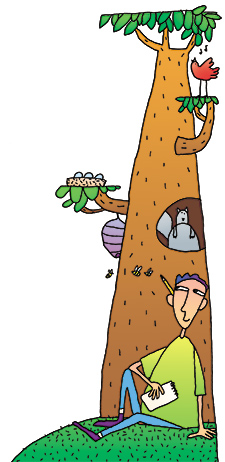
A process is a series of steps for getting something done. For a bird, building a nest is a process. For a bee or a squirrel, gathering food is a process. And for a student, writing a process essay is, itself, a process.

What processes do you know how to do? What processes could you explain to others?

When you write a process essay, you explain how to do something or how something works. Each paragraph in your essay focuses on a step in the process. The sentences follow time order, leading the reader from start to finish.

Process writing helps you get the job done!

Watch the video "What Is a Process?"