Revising Nonfiction Reviews
Once you finish a first draft of your review, set it aside awhile. When you return to it, you can see it with a fresh perspective. That's what revising means—seeing your work with new eyes. When you revise, you look at your writing from your reader's perspective to make sure it includes interesting ideas and reads smoothly. These activities will help you revise.
Revising to Replace General Details
If parts of your writing sound uninteresting, they may contain too many general words and details. Revise those parts by including more specific words and details. The specific details could come from the work itself or your own thinking. For example, instead of stating something is "good" or "interesting" provide details about why it is good or interesting.
- General words: After a bit, Superman got really popular.
- Specific words: After a few months, Superman's popularity erupted.
- General detail: He imagined having superpowers would finally get the attention of the girls in his class.
- Specific detail: He imagined having the power to jump over tall buildings would finally get the attention of the girls in his class.
Revise for specific details.
Closely read and review your first draft to complete the revising tasks.
- Find at least two general words (good, interesting, boring) and replace them with specific words. (Ask a partner or look in a thesaurus for help.)
- Find one general detail about the book or article, and replace it with a specific detail from the work. (Consider replacing it with something a person said or did.)
Revising to Combine Short Sentences
Too many short sentences used in a row can make your writing sound choppy and unnatural. One way to add sentence variety to your review is to combine simple sentences with a comma and a coordinating conjunction to create a compound sentence.
Simple sentences: Jonas is chosen as the Receiver of Memory. The Giver is his teacher.
Compound sentence: Jonas is chosen as the Receiver of Memory, and the Giver is his teacher.
Coordinating conjunctions, such as and, are special connecting words. They not only connect sentences but also the ideas in those sentences, so you'll want to choose the connecting word that best shows the relationship between the ideas. To do so, think of coordinating conjunctions as traffic lights:
- and signals that two ideas are connected or have equal value
- but signals that one idea is different from another or signals an unexpected twist
- or signals a choice
- for signals that the next idea caused the first idea (for is another word for because)
- so signals that the next idea is the result of the first idea (so is another word for as a result)
Create compound sentences.
Combine the two sentences with a comma and a coordinating conjunction that best expresses the connection between the ideas (and, but, or, for, so). Hint: Each specific coordinating conjunction should be used once in the activity.
- Wilma Mankiller's life was marked by hardship. She achieved many great things.
- The government took over her family's land. They had to move to San Francisco.
- She could have given up. She could continue to live a life of service.
- She chose to live a life of service. The Cherokee people meant so much to her.
- Mankiller made sure the Cherokee people had clean drinking water. She worked to improve job opportunities for them.
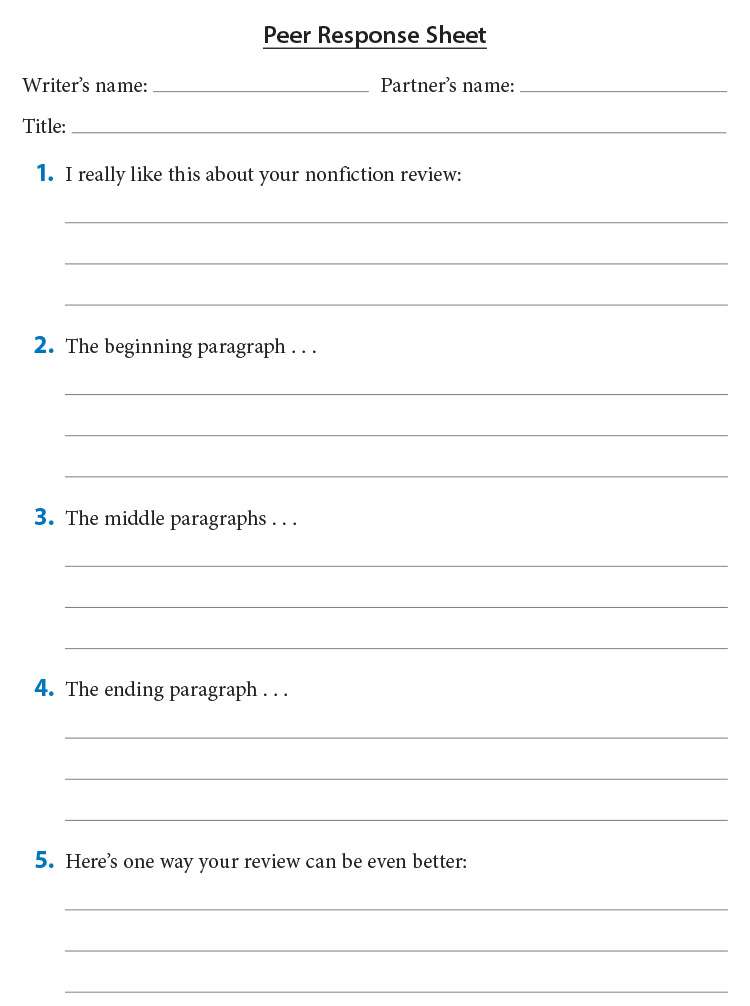
Revising with a Peer Response
Share your writing.
Have a trusted classmate read your review and complete the form.
Revising in Action
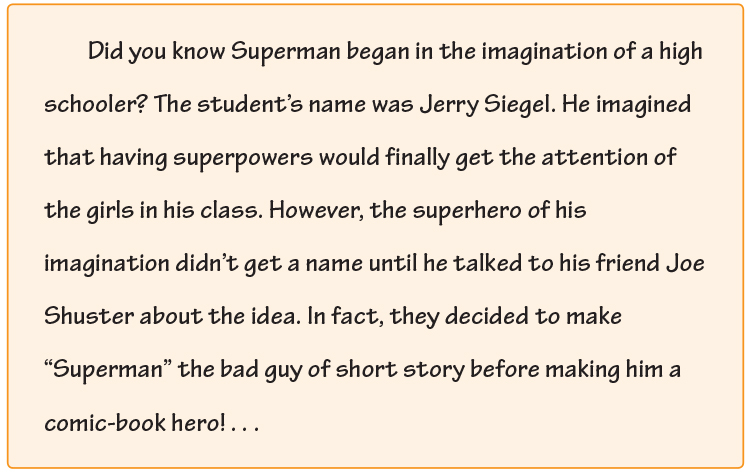
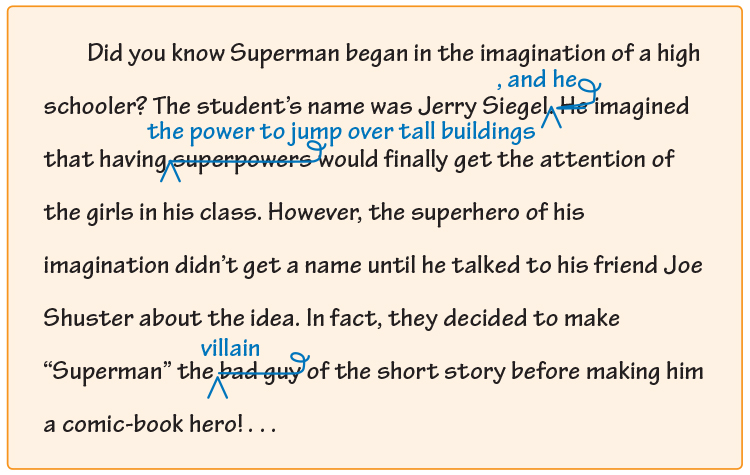
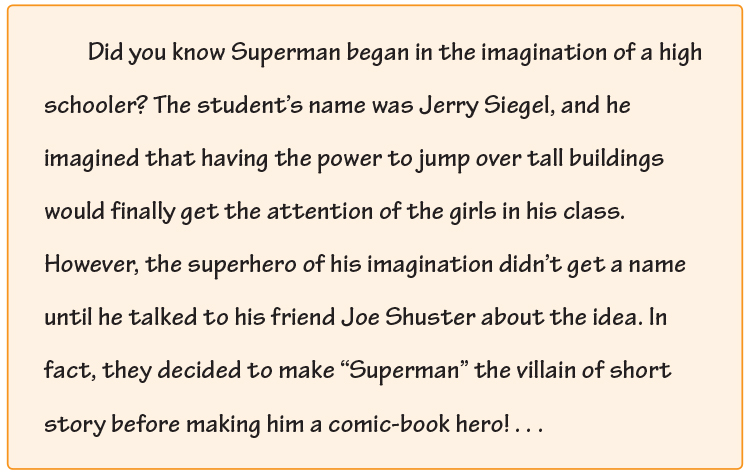
When you revise, you add, delete, rewrite, and rearrange your writing to make it clearer. Here are some revisions to the review of "Superman Takes Off."
-
Paragraph Before Revisions
-
Sentences are combined and specific details replace general ones details.
-
Paragraph After Revisions
Revise with a checklist.
Read each line. When you can answer each question with a yes, check it off.
Developing Your Ideas
- Does the review explain what the book or article is about without giving too much away?
- Does it explain what you like about the work?
- Does it highlight the theme or main message of the work?
Structuring Your Ideas
- Does the beginning introduce the title and author of the work in an interesting way?
- Do middle paragraphs include details from the book or article to explain what it is about and why you like it?
- Does the ending offer a recommendation about the work?