CCSS.ELA-LITERACY.W.11-12.10

By Anonymous (not verified), 12 March, 2026

Assembling Your Narrative Argument

By now you have completed drafts of an argument essay and a narrative. Great work! The two main components of your narrative argument are ready to go. Now comes the fun part—combining both forms into a single paper. Finding the right mix is not an exact science. You'll need to experiment with different arrangements to create your strongest argument. The activities in this lesson will help.

Combining Argument and Narrative

Follow these steps to blend your two separate essays into a narrative argument. As you work through the steps, remember that you can add, cut, rewrite, and rearrange parts of both original pieces as needed.

  1. Make your original argument essay the base of your paper.
  2. Read over both pieces one more time.
  3. Decide what portions of your narrative support your argument.
  4. Experiment with different combinations of narration and argumentation. Here are three common ways to organize a narrative argument:
    • One-After-Another: Start with your full narrative and transition to your full argument or vice versa.
    • Start-and-End: Start with a portion of your narrative, transition to your argument, and then return to your narrative.
    • Back-and-Forth: Start with your narrative or argument and transition back and forth multiple times between both pieces.

Narrative Argument Organizer

  1. Evaluate the results. Which pattern most effectively strengthens the argument? Which pattern is easiest to follow? Which pattern will most likely get readers to empathize with your position?
  2. Choose a pattern.
  3. Add parts (or all) of your narrative to your argument essay. If you are working in a word-processing program, you can simply copy and paste the parts. Reword sections as needed to improve the flow.
By Anonymous (not verified), 12 March, 2026

Writing an Argument Essay

You've researched controversial topics in your school, community, nation, and world. You've stated a position and explored reasons for and against it. You've even outlined your argument and responded to objections. Now it's time to write your first draft. The following activities will guide you.

Writing the Argument Beginning

The beginning first needs to grab the reader's attention. Then it should introduce your topic and provide background leading up to your position statement. To get started with your beginning paragraph, you can experiment with different lead-writing strategies.

Write a lead sentence.

Write a different lead sentence(s) for each strategy to capture the reader's attention. Use the examples as inspiration.

  1. Ask a provocative question.

    Why is gender such a taboo subject in high school?

  2. Provide a fascinating quotation.

    "True equality means holding everyone accountable in the same way, regardless of race, gender, faith, ethnicity, or political ideology."
    ― Monica Crowley

  3. Provide a surprising fact.

    Did you know more than half of female students in grades 7-12 report experiencing some form of sexual harassment?

  4. Directly address the issue.

    Recently a wave of women's empowerment has swept across the country, but it hasn't seemed to reach high schools.

Write your beginning paragraph.

Start with your lead, and then provide background and develop a paragraph leading to your position statement.

Writing the Middle Paragraphs

Develop a middle paragraph for each reason that supports your position statement. Organize these paragraphs using your outline (for a receptive audience) or follow a pattern for a resistant audience.

By Anonymous (not verified), 12 March, 2026

Revising Research Papers

Congratulations! You've completed a first draft of your research paper, pouring your ideas out onto the pages. Take a short break, or at least a long breath. Now that you have a first draft, you have something to work with. Some parts may be great just as they are. Some parts may need more details, or better wording, or rearranging, or rewriting. That's okay! Revision helps you improve your first draft in major ways. The following activities will guide you.

Revising to Elaborate Details

In the warm-up to this unit, you discovered that basic research answers questions like who, what, where, and when, but rigorous research moves on to deeper questions like why, how, could, would, and should. You can answer basic questions with facts. To answer deeper questions, you'll need many other types of details: explanations, statistics, anecdotes, quotations, reflections, and even visuals. You need to elaborate your ideas.

In the following paragraphs from "The Man Writ Large," note how the topic sentence introduces the key event. Afterward, the writer uses a variety of details to fully elaborate the event, helping readers understand the why, how, could, and should of the situation. Click on the callouts to view each part.

Topic Sentence That indomitable spirit would have its greatest test a week later on July 1. Explanation While most of the regular army troops focused on a siege at Santiago, the Rough Riders, the Buffalo Soldiers, and a few regular army regiments sought to dislodge Spanish control at El Canarey. Doing so would prevent attacks on the American flanks during the siege ("Spanish"). Roosevelt would once again lead his troops uphill into the face of an entrenched foe with superior weaponry. Statistic Roosevelt, however, had a 10 to 1 advantage of soldiers against the 500 Spanish defenders. Just as he had done at the docks at Tampa Bay, Roosevelt jostled his Rough Riders forward to bypass the regular-army regiments and begin the assault on Kettle Hill. Anecdote A Buffalo Soldier asked, "Who do you think you are?" and was told, "Rough Riders going to take that hill. Get out of the way or fall in with us." The Buffalo Soldier replied, "I'll be damned if those Rough Riders will get ahead of me!" Roosevelt thus ended up effectively commanding his own men and that of the separate regiment. Quotation A Rough Rider said of that sudden battlefield brotherhood, "I most positively assert that every face I looked into, both white and black, had a broad grin upon it"(Gardner 161).

The regiments ground forward, eventually taking Kettle Hill, but gunfire still rained down on them from San Juan Hill. Amid the withering fire, Roosevelt raised his pistol and shouted, "Now by God, men! Let's charge 'em!" He jumped a fence and ran down Kettle Hill toward San Juan Hill, but in the noise and confusion, only five of his own men followed. He had to retreat to gather the others, as Roosevelt remembered it: "Even while I taunted them bitterly for not having followed me, it was all I could do not to smile at the look of injury and surprise that came over their faces" (Gardner 167-169). Mounting his horse Little Texas, Roosevelt led his soldiers in the charge up San Juan Hill, and to victory. Diary Entry In his July 1 diary entry, Roosevelt scribbled in pencil, "Rose at 4. Big battle. Commanded regiment. Helped extreme front of firing line. Under shell and rifle fire."Reflection Later, he would dub the charge up San Juan Hill "the great day of my life" ("T.R."). A battle that had been expected to take two hours stretched to twelve, with 300 Spanish casualties to the 500 U.S. casualties ("Spanish").
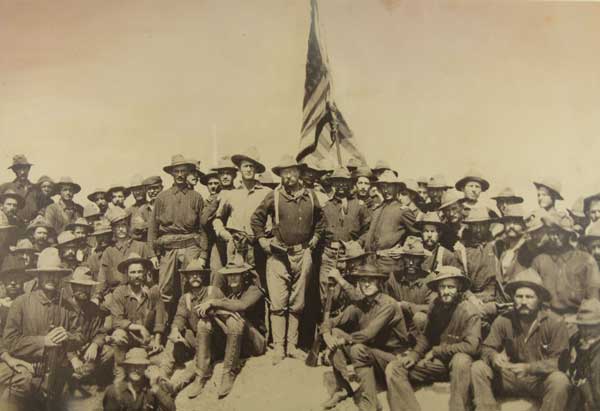
Roosevelt and the Rough Riders atop San Juan Hill. Theodore Roosevelt Birthplace National Historic Site.
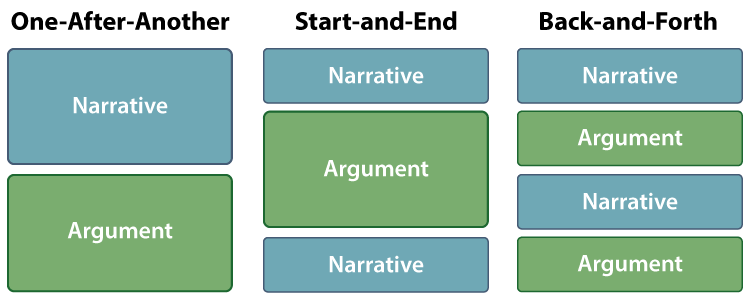
Photo and Caption Roosevelt and the Rough Riders atop San Juan Hill. Theodore Roosevelt Birthplace National Historic Site.

By Anonymous (not verified), 12 March, 2026

Writing a Research Paper

After fully engaging your sources, you have plenty of remarkable information to convey to your reader. The problem may be figuring out where to begin. What do you share first?

The following activities will suggest many starting points and ending points and other points in between. The strategies below will prime the pump of your ideas, getting them to flow easily into your first draft.

Writing the Beginning Paragraph

Your first job in writing a research paper is to catch your reader's interest. You can experiment with a number of strategies to form an interesting lead sentence.

Write a lead sentence.

Try out some of these strategies for introducing your research paper. Read the examples for ideas.

  1. Start with a fascinating quotation.

    "Do things. Be sane. Don't fritter away your time; create, act, take a place wherever you are, and be somebody; get action.”
    —Theodore Roosevelt, Sr.

  2. Express what is most interesting about the subject.

    Teddy Roosevelt transformed himself from an asthmatic weakling to a brawler who won in Cuba and Panama, in Washington and on Mount Rushmore.

  3. Provide an anecdote.

    As they charged up San Juan Hill into the teeth of machine-gun fire, Teddy Roosevelt turned to a fellow soldier and shouted, "Holy Godfrey, what fun!"

  4. Ask an engaging question.

    Are heroes born, or are they made?

By Anonymous (not verified), 12 March, 2026

Prewriting for Research Papers

When something fascinates you, studying it is simple. You naturally train all your attention on it and try to figure it out. Learning is easy because all the doors and windows of your mind are flung wide open. When something bores you, studying it is a chore. You can't stay focused. No one could pay you enough to care.

Since you need to closely study whatever topic you choose for your research paper, you should strive up front to find a topic that fascinates you. The next activity will help you find a strong topic, and the activities afterward will help you launch your research.

Prewriting to Select a Topic

The following "Basics of Life" list includes broad subject areas that are critical to life. You can click on any entry to find more resources about it. You can also apply these general subjects to a specific class in order to find a unique topic. For example, applying "Personality" to the Spanish-American War unit in AP U.S. History would suggest studying the irrepressible Teddy Roosevelt and his Rough Riders.