By Anonymous (not verified), 12 March, 2026

Reading Fiction Reviews

Before you write your own review, you should see how other students reviewed fiction. As you read these samples, pay close attention to the types of details included. Consider how you might share similar details in your own review.

Reading a Paragraph Review

A paragraph response to a book has three main parts: The topic sentence introduces the title, author, and main idea. The body sentences introduce the main character, the obstacles faced, and the lessons learned. The ending sentence gives your final opinion of the book.

Sample Paragraph

Listen to "Review of Shiloh"

Your browser does not support the audio tag.

Hide audio

Review of Shiloh

Topic Sentence Shiloh by Phyllis Reynolds Naylor is a story about a boy’s struggle to keep a dog that is not his. Marty Preston lives in West Virginia. One day while exploring, he discovers a beagle. He names the dog Shiloh but learns that the dog belongs to Judd Travers, who is known for mistreating animals. Body Sentences When Marty’s dad makes him return Shiloh to Judd, Marty sees Judd kick Shiloh. Then one day Shiloh escapes, and Marty builds him a cage in the woods. Marty struggles to decide how to keep the dog without stealing from a neighbor or lying to his parents. Something happens that forces him to tell the truth. Ending Sentences If you want to know if he keeps Shiloh, you will have to read the book yourself. I think you’ll like Shiloh as much as I did.

Respond to the paragraph.

Answer the questions about the paragraph.

  1. Name the title, author, and main character of the book.
  2. What main obstacle faces the main character?
By Anonymous (not verified), 12 March, 2026

Warm-Up for Writing Fiction Reviews
Writing a Nonfiction Review
(c) Thoughtful Learning 2018

One fun way to think about a book is to write a review. In a book review, you tell others what a book is about and help your readers decide if they want to read it next! The activities in this unit will guide you in reviewing a fiction book by focusing on characters, conflict, and theme.

What Is a Fiction Review?

Listen to "What Is a Fiction Review?"

Your browser does not support the audio tag.

Hide audio

Fiction books are gateways to new worlds. When you open a book and begin reading, you are transported to a new place with interesting characters, conflicts, and adventures. When you finish a good book, you probably know the story well enough to tell others about it.

In a fiction review, you let others know about a book by explaining its important parts and characters without saying too much. After all, you don’t want to spoil the ending!

Thinking About Character Traits

The main character may be the most important part of a fiction book. This person or animal is sometimes called the protagonist. To truly understand what happens in a book, you need to think carefully about the main character.

Creating a Character Profile Page

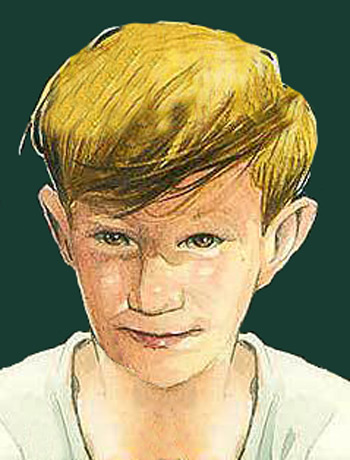
To get to know a character better, create a profile page that shares important information about the character. Study how one student created a sample profile page to learn about the main character in the book Shiloh.

Shiloh

Name:

Marty

Age:

11

Hometown/place:

West Virginia

Likes:

All animals (especially Shiloh), the outdoors, the woods, exploring, his brothers and sisters

Dislikes:

Hurting animals, lying, and dishonest people

Greatest wants/desires:

To make Shiloh his dog, to protect him and keep away from Judd, and to change laws to protect dogs

Greatest fears/obstacles:

Not being able to protect Shiloh, lying to his parents, and knowing that Judd owns and hurts Shiloh; also laws that let people own animals even if they mistreat them
By Anonymous (not verified), 12 March, 2026

Assessing with an Explanatory Rubric

A test grader will use a rubric to score your on-demand writing. A rubric lists the features the grader is looking for at different levels of performance. If you understand the kinds of rubrics that graders use, you will better understand how to write responses that score well.

By Anonymous (not verified), 12 March, 2026

Writing a Story for Assessment

Some tests ask you to write a story of your own, using another story as inspiration. The following activity will help you practice.

Analyze a story prompt.

Read the following prompt and answer the PAST questions about it. Then write down ideas for your story.

Read the writing prompt.

You’ve just read about a shadow and a reflection. Now imagine that you have an adventure with your own shadow or reflection. How do you discover each other? Do you get along? What do you do together? Write a short story that describes your experience with your shadow or reflection. Try to make your story entertaining and original.

Answer the PAST questions.

Purpose?

Audience?

Subject?

Type?

By Anonymous (not verified), 12 March, 2026

Writing an Essay for Assessment

Some tests ask you to write an essay response to short stories and poems you have closely read. The following activity will help you practice.

Analyze an essay prompt.

Read the following prompt, answer the PAST questions about it, write a focus statement, and list details.

Read the writing prompt.

The short story “Friend Beneath Your Feet” tells about a day that Jana spends with her shadow. The poem “Chicago Poet” tells about a poet seeing himself in a mirror. Both deal with reflections and shadows, which stay with us our whole lives. What theme is the same in this short story and this poem? How does the short story express this theme? How does the poem express it? Use evidence from the two sources.

Answer the PAST questions.

Purpose?

Audience?

Subject?

Type?

By Anonymous (not verified), 12 March, 2026

Responding to a Poem for Assessment

When you closely read a poem on an assessment, pay attention to the sounds of poetry, such as rhythm, alliteration, and repetition. Also note the meaning of poetry, focusing on features like imagery, metaphor, and symbolism.

Closely read a poem.

Read the following poem, paying attention to sound and meaning.

Source 2

Chicago Poet

Carl Sandburg

I saluted a nobody.

I saw him in a looking-glass.

He smiled—so did I.

He crumpled the skin on his forehead,

     frowning—so did I.

Everything I did he did.

I said, “Hello, I know you.”

And I was a liar to say so.

Ah, this looking-glass man!

Liar, fool, dreamer, play-actor,

Soldier, dusty drinker of dust—

Ah! he will go with me

Down the dark stairway

When nobody else is looking,

When everybody else is gone.

He locks his elbow in mine,

I lose all—but not him.

By Anonymous (not verified), 12 March, 2026

Warm-Up for Literature Assessment

Some major assessments test your ability to read and respond to literature.

How Can I Practice for Assessment?

Literature Assessment
© Thoughtful Learning 2016

The best way to practice for a reading and writing assessment is to take a practice test, like the one in this unit. You will closely read a story and a poem and write about them. You'll also write a story of your own.

You’ll find a playful story about a girl who tries to get away from her shadow. You’ll also read a poem about a man speaking to his reflection. Read them closely. You’ll be drawing evidence from them to build a response. You’ll also get to experiment with telling a story of your own.

If you would like more help with closely reading literature and responding in writing, see the unit “Reading and Writing Literature for Assessment.”

Responding to a Story for Assessment

When you closely read a story, pay attention to character, setting, conflict, and theme.

Closely read a short story.

Read the following story. You will need to answer questions afterward, but you can refer back as needed.

Source 1

Friend Beneath Your Feet

By Felice Williams

Jana stretched, yawned, and jumped out of bed.

“Ow! Hey! Get off me!”

Startled, Jana jumped back in bed. “Who said that?”

A muffled voice came underneath her. “Me!”

“Who are you?”

“Your shadow, that’s who,” the shadow replied. “I’m pinned underneath you!”

“Sorry!” Jana replied, scrambling off the bed.

“You’re stepping on my feet!” the shadow growled.

Jana lifted her feet, dancing to keep from stepping on the shadow, but every time her foot came down, the shadow was right under it. “Hey, you keep putting your feet under mine!”

“Of course I do. I’m your shadow!”

Jana shook her head. “Then I can’t help stepping on your feet or pinning you to the bed, can I?”

“No, you can’t help it,” her shadow replied, “but at least you could realize you’re doing it. Maybe you wouldn’t stomp around so much if you thought about how you’re always stepping on my feet!”

By Anonymous (not verified), 12 March, 2026

Writing On-Demand Essays

A writing assessment gives you a short time to write a paragraph or an essay. To do so, you should use a shortened form of the writing process.

Prewriting (5 Minutes)

Start by reading the writing prompt and analyzing it using the PAST questions.

Sample Writing Prompt

In “Finding Your Instrument” by Tom Diesel, Jamal and his friends are trying to decide what instrument they would like to play. Denny and the others choose saxophone, but Jamal decides on trombone. Why? What motivates Jamal's decision? Write an essay that explains Jamal's choice, using evidence from the source to support your explanation.

Answer the PAST questions.

Purpose? Explain Jamal’s choice

Audience? Tester

Subject? “Finding Your Instrument”

Type? Essay

Write a focus statement.

Jamal realizes he’s better off choosing his own way.

List supporting details.

--Denny is pressuring everyone to play saxophone.

--Denny makes fun of Jamal.

--Jamal tries trombone.

By Anonymous (not verified), 12 March, 2026

Analyzing Writing Prompts

Often tests contain writing prompts that you must respond to. Your first step is to understand the writing prompt. Use the PAST questions.

  • Purpose? Why am I writing? (To analyze? To entertain?)
  • Audience? Who will read my writing? (Tester? Classmates?)
  • Subject? What subject should I write about? (Story? Poem?)
  • Type? What type of writing should I create? (Essay? Story?)

Sample Writing Prompt

In “The Most Sensible Car” by Carolyn Asher, Coup is looking for a practical owner. In the end, Coup says, “Nobody wants a truly sensible car these days.” Is he right? What evidence from the story supports your conclusion. Write an essay explaining Coup’s problem with finding an owner, and show what the story says about life.

Answers to PAST Questions

  • Purpose?

    Explain Coup’s problem with finding an owner and show what the story says about life

  • Audience?

    Any other reader

  • Subject?

    “The Most Sensible Car” by Carolyn Asher

  • Type?

    Essay

Note: Some writing prompts do not answer all of the PAST questions. If an answer is not given, infer one (come up with a reasonable answer based on the rest of the information).

By Anonymous (not verified), 12 March, 2026

Using Evidence from Sources

Whenever you use ideas from a source, you need to name the source and the author. Usually, you put the ideas in your own words (paraphrase them).

Glenda of the Giraffe People

By Leslie Fields

Glenda liked to hang around. Literally. Every recess, she hung from the monkey bars until the line of kids barked her down. Then she would hang from the side braces of the swings. At home, she . . .

In the story “Glenda of the Giraffe People,” Leslie Fields (Title and Author) shows a student who hangs from monkey bars and trees to stretch. . . . (Paraphrase)

If you use the writer’s exact words, put the words in quotation marks. If the quotation is followed by a comma or period, put it inside the end quotation mark.

In the story “Glenda of the Giraffe People,” Leslie Fields (Title and Author) shows a student who “likes to hang around. Literally.” (Quotation) Glenda wants . . .

Paraphrase and quote.

Paraphrase and quote the selection. Credit the title and author.