By Anonymous (not verified), 12 March, 2026

Analyzing Conflict

Once you know what a character wants, you can think about the obstacles in the way—what the person has to overcome. Obstacles create conflict. You’ll find six basic types of conflict:

  1. Person versus self means the character is his or her own worst enemy or is struggling to make up his or her mind.
  2. Person versus person pits the character against another character.
  3. Person versus society brings the character into conflict with what other people want or think is okay.
  4. Person versus nature has the person fight weather, animals, wilderness, natural disaster, or forces like aging or gravity.
  5. Person versus supernatural sets the character against fate or magic.
  6. Person versus machine pits the character against computers or technology.
By Anonymous (not verified), 12 March, 2026

Analyzing Characters

Stories focus on people, animals, or humanlike objects called characters. You can analyze a character by describing the person physically and mentally.

  • Name

    Coup, the most sensible car at the dealership

  • Physical description (gender, age, appearance, health, strength, speed)

    He is a new car, “blue, midsized, economical, with a ten-year warranty;” he’s not the fastest, the largest, or the most stylish.

  • Mental description (intelligence, personality, confidence, attitude)

    He is practical and shy. He knows the kind of owner he wants but rarely sees one. He’s picky. He also seems discouraged and closed off.

  • Motivation (what the character wants)

    Coup wants to find a practical owner. He wants to be driven away from the dealership, but he seems afraid to let people try him out.

Read for character.

Pay close attention to the main character and what she wants.

By Anonymous (not verified), 12 March, 2026

Closely Reading Stories

To closely read stories, you should read once to get an overall sense of what is happening. Then return to read a second time and focus on character, setting, conflict, and theme.

Read a short story.

Pay close attention to the main character and what he wants.

By Anonymous (not verified), 12 March, 2026

Warm-Up for Reading and Writing Literature Assessments

Reading lets you experience great stories, and writing helps you tell your own great stories. That's why some major assessments test your ability to read literature, write about it, and maybe even write your own stories.

What Is Literature Assessment?

Reading and Writing Literature Assessments
© Thoughtful Learning 2016

Literature assessments test how well you read stories and poems and whether you can write clearly about them. On some literature assessments, you will create your own stories. This unit will help you prepare for these kinds of assessments.

In the following activities, you’ll learn about close reading—reading to understand how a story or poem works. You’ll discover how writers use character, setting, plot, conflict, and theme to develop stories. You’ll also learn how poets use rhythm, rhyme, imagery, and figures of speech. Then you’ll discover strategies for on-demand writing—strategies for developing your own ideas during an assessment.

Thinking About Close Reading

To read closely, you need to think about the parts of a story: character, setting, conflict, and theme. Even flash fiction has these elements.

Read closely.

Read the following flash-fiction story and answer the questions.

Worm with a Backbone

By Kerry Jackson

Flippy the Fish had never seen such a fat worm. It just hung there, wriggling under the water. Its pink skin gleamed with morning sunlight, and the flesh puffed up in the most delicious way. What a perfect breakfast! Flippy was just a little blue gill in a big pond, but if he ate enough worms like this, he’d be a big fish in no time. Except there was something weird about this worm. It was curved. It wriggled, yes, but it never unbent. Flippy moved closer and blinked. The worm looked like it had a backbone—a metal backbone curved in a hook shape. Hmm. Who wants to eat metal? Not so delicious after all, Flippy thought. He finned away across the pond, looking for a better breakfast.
By Anonymous (not verified), 12 March, 2026

Editing Application Letters

To make a great impression, your letter needs to be free of careless errors. Misspelled names, missing end punctuation, or sloppy design could derail an otherwise great letter. The following editing activities will help you create a neat and clean final version of your letter.

Editing Special Parts of a Letter

When checking a business letter for punctuation, pay special attention to addresses, dates, the salutation, and the closing.

Use a comma . . .

  • between a city and a state in an address: Phoenix, Arizona
  • between the day of the month and the year in a date: May 7, 2016
  • after the closing: Sincerely, Yours truly,

Use a colon . . .

  • after the salutation: Dear Mr. Abrams: Dear Ms. Rodriguez:

When checking for capitalization, pay special attention to the salutation and closing.

Capitalize . . .

  • the word “Dear” in the salutation: Dear Senator Ainsley:
  • the first word in the closing: Yours truly, Sincerely,
  • first and last names, titles, months, and addresses: Mrs. Daly

Edit for punctuation and capitalization.

Edit the following parts of business letters for punctuation and capitalization. The first one has been done for you.

By Anonymous (not verified), 12 March, 2026

Revising Application Letters

Once you finish a first draft of your application letter, set it aside for awhile. When you return to it, you can see it with a fresh perspective. When you revise, you look at your essay from your reader's point of view to make sure your writing includes a proper tone and effective details. These activities will help you revise.

By Anonymous (not verified), 12 March, 2026

Writing an Application Letter

Once you finish prewriting, you are ready to write the body of your letter. These activities will help write strong opening, middle, and ending parts.

Writing the Opening Part

Write your opening part.

Read about opening strategies. Then use them to write the beginning of your letter of application.

In the first part of your letter, you should do two things.

  • Identify the position that you are applying for.

    I am interested in going to SeaScapes Scuba Camp this summer.

  • Tell what you know about the organization, such as where you learned about it.
  • I read about your camp in the most recent issue of Scuba Kidz magazine. I understand that your camp is for kids aged 10 to 16 with all different levels of experience.

Opening Paragraph

Writing the Middle Part

Write your middle part.

Read about middle strategies. Then use them to write the middle part of your letter.

By Anonymous (not verified), 12 March, 2026

Prewriting for Application Letters

Prewriting is your first step in writing an application letter. These activities will help you select a topic, gather and organize important details, and review the key parts of business letters.

Prewriting to Find the Right Opportunity

Review opportunities.

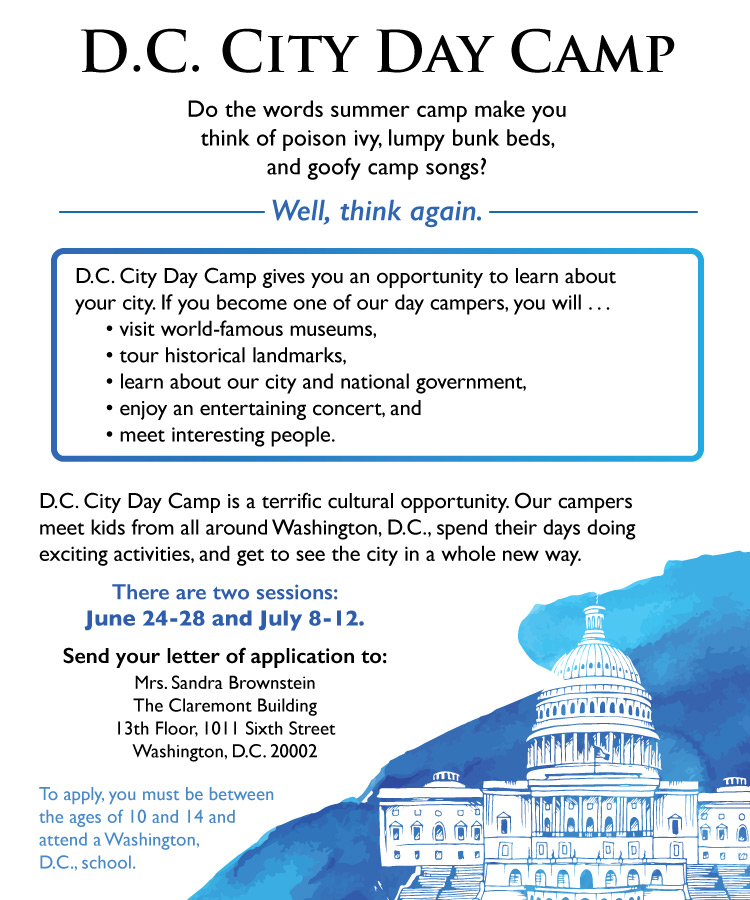
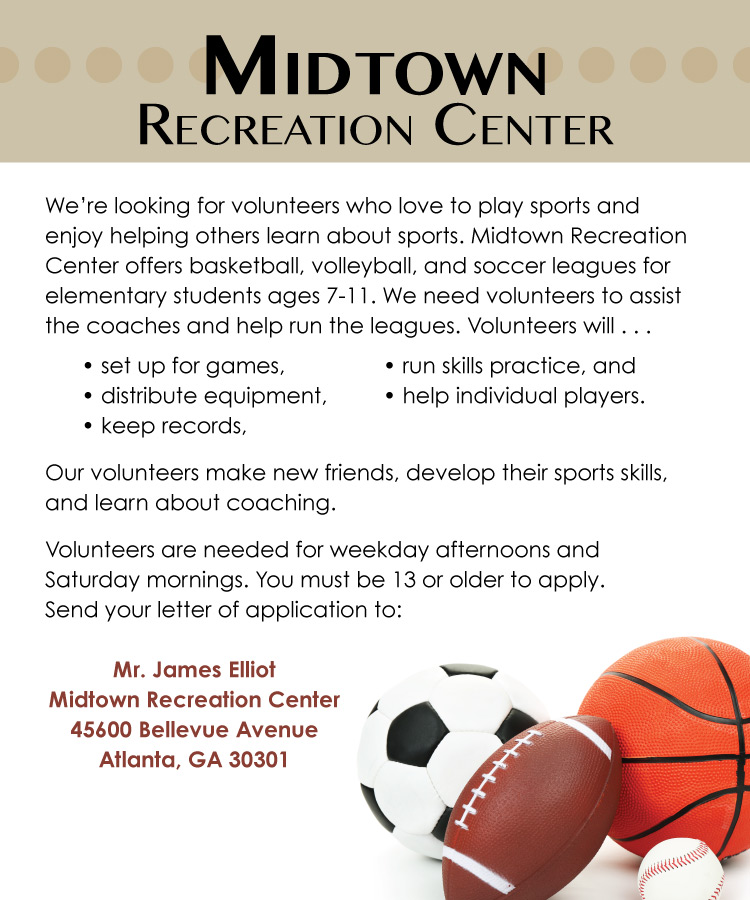
What follows are two example advertisements. Review the ads by clicking the arrows and consider how you would respond to them in an application letter. Pick one ad to respond to and list three reasons why you would be a good candidate for the opportunity.

  • Example Advertisement
  • Example Advertisement
By Anonymous (not verified), 12 March, 2026

Reading an Application Letter

Before writing your application letter, you should read an effective sample. In this lesson, you'll first read a sample announcement. Then you'll read one applicant's response. As you read the sample application letter, consider how the writer put ideas together and how you might use some of the strategies in your own writing.

Reading an Announcement

Read a sample announcement.

Read the following announcement about a summer camp. The writer of the sample letter that follows it responds to the opportunity presented in the announcement.

Sample Announcement

Sample Announcement
By Anonymous (not verified), 12 March, 2026

Warm-Up for Application Letters

When applying for a job or other opportunity, you'll often be asked to write an application letter. In such a letter, you reveal your goals, qualifications, and skills. This unit will show you how to write a winning letter.

What Is an Application Letter?

Writing a Application Letter
© Thoughtful Learning 2016

What happens when you meet someone new? You probably tell the person your name and a few details about yourself. Next, you might talk about common interests. If the two of you become friends, you will learn more about each other over time.

Sometimes, it’s important to tell key details about yourself right away. For example, if you want to spend a week at soccer camp or volunteer at the local animal shelter, you may need to write a special letter to introduce yourself and make your request. This type of business letter is called a letter of application.

In an application letter, you give information about yourself and tell your reasons for applying for something. When writing your letter, be sure to state all of your ideas clearly and politely. If you do, you will make a good first impression, which is very important.

Thinking About Your Strengths and Weaknesses

Before you can write your letter of application, you should evaluate which skills and qualities you have and which ones you still need to work on. Here's how one student took stock of her skills.

Things I Do Well