Editing Historical Narratives
After revising your narrative, you need to edit it to correct any remaining errors. You'll look closely at sentences, punctuation, capitalization, grammar, usage, and spelling. The following activities will help you edit your historical narrative.
Editing Dialogue for Quotation Marks
Dialogue uses quotation marks. These special marks go before and after the exact words of the speaker.
“Let’s keep looking,” I said.
A crewmember said, “We should stay clear of the rocks.”
Periods and commas that follow the speaker’s words always go inside the quotation marks.
“You have navigated us this far,” I responded. “I trust the south branch will keep us on the Missouri River.”
Question marks and exclamation marks go inside the quotation marks when they punctuate the dialogue.
“Captain Lewis, might that be the Great Falls?” asked Manny.
“At last—the Great Falls!” exclaimed Lieutenant Clark.
Watch the video "Punctuating Dialogue."
Hide video
Teaching Tip
In one special case, punctuation should go outside the quotation marks. This occurs when a question mark or an exclamation point is used to punctuate the sentence, rather than the quotation. Note the difference in these examples:
“Will we have turkey and apples?” asked Trev.
Did you hear Mom say, “We’re out of pickles”?
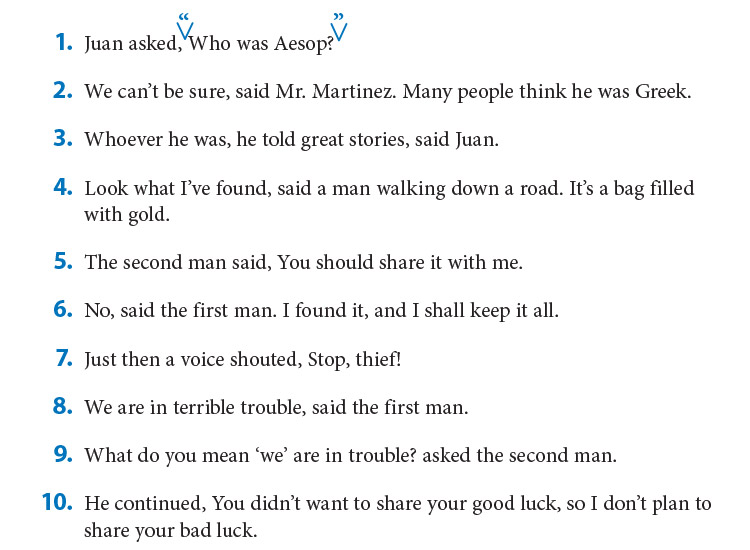
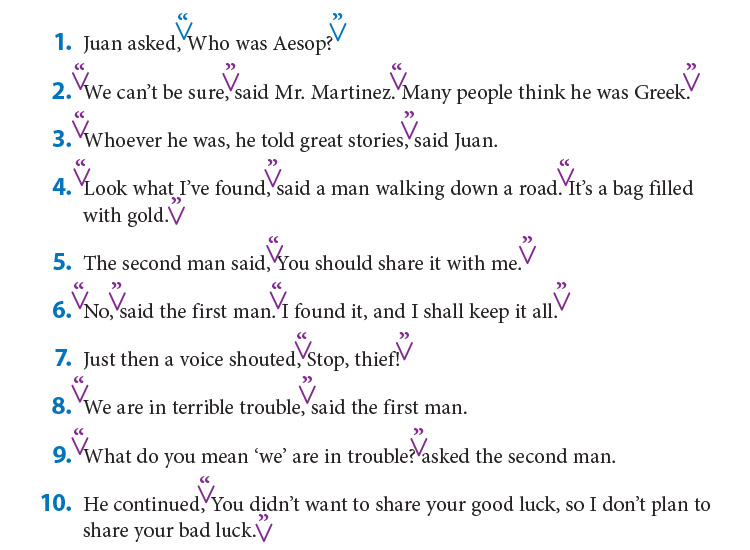
Insert quotation marks.
Insert quotation marks before and after the speaker’s words. Use the examples on this page for help. The first one has been done for you.
Editing Strings of Dialogue
When two or more characters are having a conversation, begin a new paragraph each time a different person speaks. This will make it easier for readers to keep track of who is talking.
- Dialogue that runs together
“Meet me at the river’s edge,” Hamilton said. “What for?” asked David. “It’s a surprise,” Hamilton answered. “Just make sure you wear your swimming suit.”
- Dialogue indented for each new speaker
“Meet me at the river’s edge,” Hamilton said.
“What for?” asked David.
“It’s a surprise,” Hamilton answered. “Just make sure you wear your swimming suit.”
Break up long strings of dialogue.
The following narrative paragraph includes long strings of dialogue. Insert a paragraph symbol (¶) in each place where a new paragraph should begin. The first one is done for you.
The sun beat down, hot as ever. A year after arriving, I still wasn’t used to the Arizona desert heat. “When do you think it will be done?” I asked my father. ¶“The war?” he asked. “No, this crummy heat.” I said. He laughed. Then I asked, “Well, what about the war?” “There’s no telling, but we must keep our spirits up,” he responded. “I’ll need to find some shade first,” I said. With that, we walked back to the camp headquarters.
The sun beat down, hot as ever. A year after arriving, I still wasn’t used to the Arizona desert heat. “When do you think it will be done?” I asked my father. ¶“The war?” he asked. ¶“No, this crummy heat.” I said. He laughed. Then I asked, “Well, what about the war?” ¶“There’s no telling, but we must keep our spirits up,” he responded. ¶“I’ll need to find some shade first,” I said. With that, we walked back to the camp headquarters.
Edit your dialogue.
Read your narrative, paying attention to your dialogue. Break up any long strings of dialogue. Also check the placement of punctuation near quotation marks.
Editing in Action
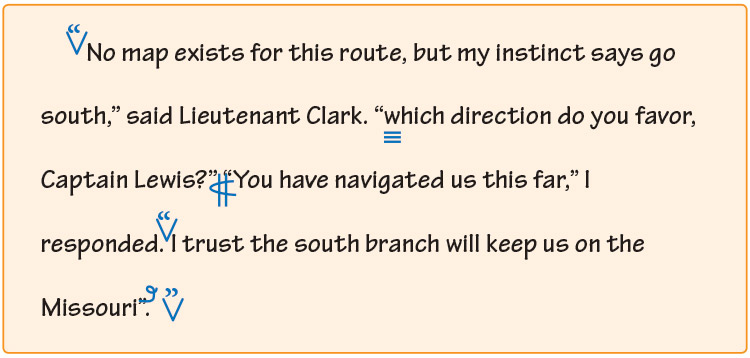
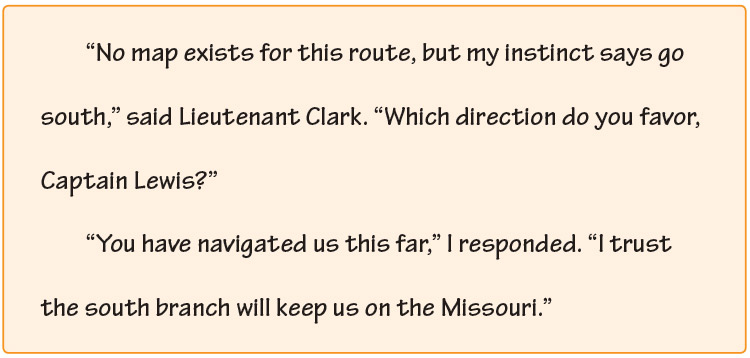
When you edit, you check to make sure your narrative is correct.
-
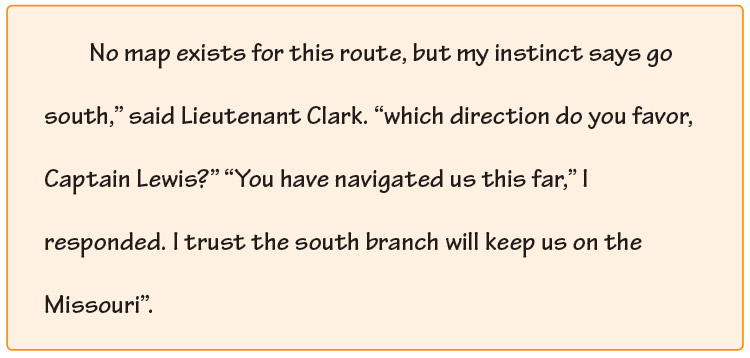
Paragraph Before Edits
-
Revisions are made to punctuate dialogue and to break up long strings of dialogue.
-
Paragraph After Edits
Edit with a checklist.
Read each line. When you can answer each question with a yes, check it off.
Checking Grammar and Usage
- Are my nouns and verbs specific?
- Do I use the correct verb tense with actions?
- Are words used correctly (your/you’re, their/they’re, its/it’s)?
- Do my subjects and verbs agree in number? (Manny and I were laughing, not Manny and I was laughing.)
- Are sentences complete (no fragments or run-ons)?
Checking Capitalization, Punctuation, and Spelling
- Are first words in sentences capitalized?
- Are proper names of people, places, and things capitalized?
- Do commas and quotation marks set off dialogue?
- Are long strings of dialogue separated into paragraphs?
- Are words correctly spelled?
Publishing Historical Narratives
When you publish your historical narrative, you make it public, sharing it with others. First, you need to make a clean final copy of your work. Then you should find ways to share what you have written with classmates, your teacher, your family, and your friends.
Publishing a Final Copy
Create a final copy of your historical narrative.
Include your editing changes and read over your work a final time. (If you are working on a computer, spell check your story.)
Reflecting on Your Writing
Reflect on your writing.
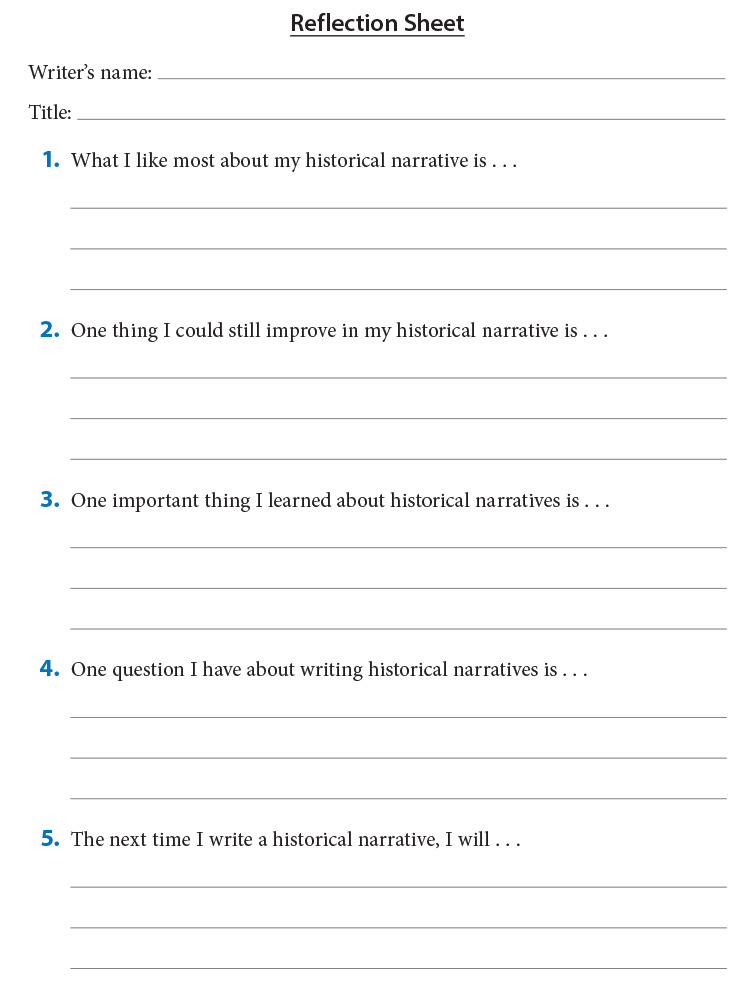
Complete the following form to think about what you learned.