CCSS.ELA-LITERACY.L.8.1

By Anonymous (not verified), 12 March, 2026

Editing Character Analyses

After revising your character analysis, you should next carefully edit it for correctness. Editing involves reviewing your punctuation, capitalization, spelling, and grammar. The following activities will help you work through important editing issues.

Editing Common Comma Errors

In the last lesson, you learned how to combine sentences to improve the flow of your writing. In this lesson, you'll review how to avoid three common comma errors that can occur when you combine sentences.

  1. Missing Comma in a Compound Sentence: When you combine two sentences (independent clauses) using a coordinating conjunction (and, but, or, nor, for, so, yet), always place a comma before the conjunction.

    Manuel gave swimming lessons to Sam, and Lupita coaxed him into the wave pool.

    Note: Without the comma, this compound sentence could be misread as "Manuel gave swimming lessons to Sam and Lupita . . .

  2. Missing Comma in a Series: Use commas to separate three or more words, phrases, or clauses, in a series.

    I want to thank my parents, Spock, and Serena Williams.

    Note: Without the final comma, this sentence could be misread as "I want to thank my parents, Spock and Serena Williams (the parents are Spock and Serena Williams?).

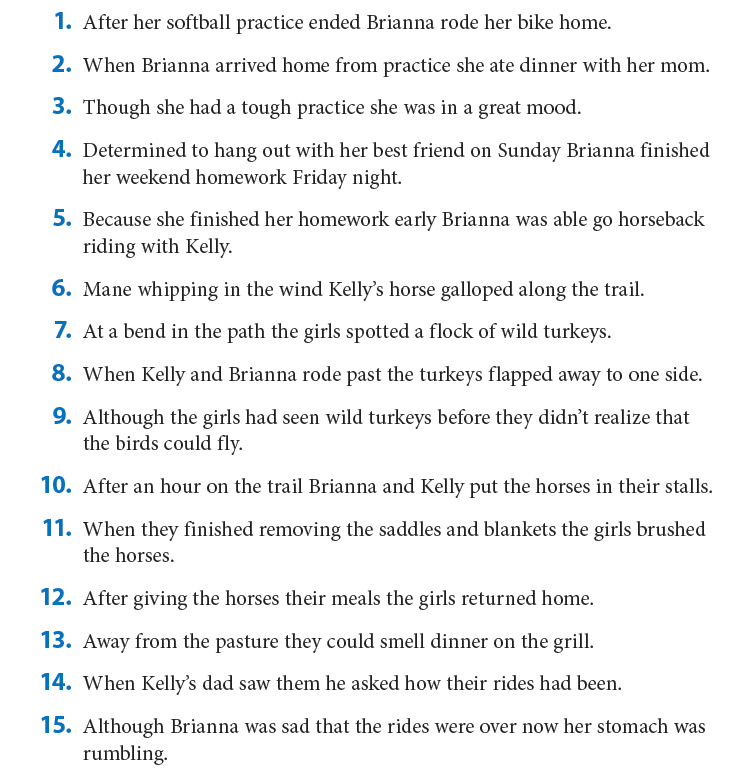
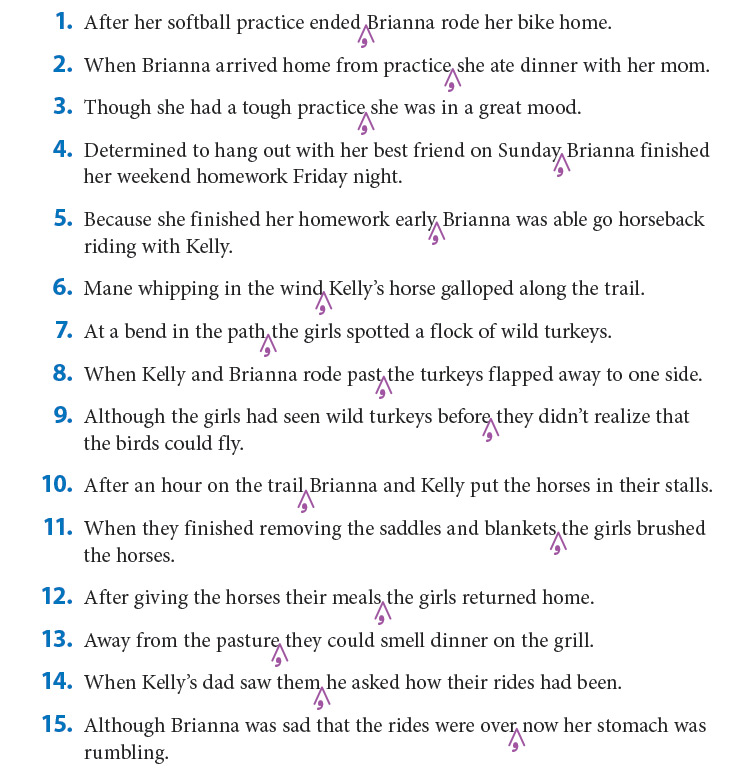
  3. Missing Comma After Long Introductory Phrases or Clauses: Place a comma after a long introductory phrases or clauses before the main part of sentence.

    In the middle of the night, the neighborhood was usually very quiet.

    When I heard a thump and shout, the pounding of my heart filled the room.

    Note: Without the comma, the opening clause gets confused with the subject: "a thump and shout the pounding of my heart . .&nbsp."

By Anonymous (not verified), 12 March, 2026

Editing Research Reports

After revising your report, you need to edit it to correct any remaining errors. You'll look closely at sentences, punctuation, capitalization, grammar, usage, and spelling. The following activities will help you edit your research report.

Editing In-Text Citations

Always place in-text citations in parenthesis at the end of a sentence but before the end punctuation. In a direct quote, citations come after the closing quotation mark but before the end punctuation.

  • Correct: Ride wished the science part of her mission got more attention (Hurwitz 28).

  • Incorrect: Ride wished the science part of her mission got more attention. (Hurwitz 28)

  • Correct: “She inspired generations of young girls to reach for the stars” (Macy 5).

  • Incorrect: “She inspired generations of young girls to reach for the stars (Macy 5).”

Cite sources correctly.

Insert the citations in the correct places in each sentence. One example is provided.

  1. Thurgood Marshall changed the course of the Civil Rights Movement. (Smith 18)
  2. Thurgood Marshall changed the course of the Civil Rights Movement (Smith 18).

  3. Marshall believed in justice for all people. (Smith 24)
  4. “Every day we live with the legacy of Justice Thurgood Marshall.” (Feldman 45)
  5. In grade school, he had to memorize the Constitution as a punishment for goofing around. (“Biography”)
By Anonymous (not verified), 12 March, 2026

Editing Advertisement Essays

After you've improved the appeals in your first draft, gotten rid of logical fallacies, and otherwise revised your advertisement essay, you are ready to edit your work. You'll look for problems with sentences, punctuation, capitalization, grammar, usage, and spelling. The following activities will help you.

Editing for Pronoun Agreement

A pronoun is used in place of a noun or another pronoun. The word that the pronoun refers to is called an antecedent. Pronouns and antecedents must agree. This means that they must both be singular or they must both be plural. It also means that the gender should match. Here are some examples.

Tula doesn’t think she needs a seat belt.

(The pronoun “she” and its antecedent “Tula” are both singular and feminine.)

Nick forgot to wear his seat belt.

(The pronoun “his” and its antecedent “Nick” are both singular and masculine.)

Seat belts save lives if they are used properly.

(The pronoun “they” and its antecedent “seat belts” are both plural.)

Check for pronoun-antecedent agreement.

In each sentence below, underline the pronouns and the antecedents. If they do not agree, correct the error.

  1. That linebacker should pay more attention to their diet. That linebacker should pay more attention to his diet.
  2. Teenagers think that he or she can eat poorly and not get sick. Teenagers think that they can eat poorly and not get sick.
  3. My friends believe they can eat chips for breakfast and lunch. My friends believe they can eat chips for breakfast and lunch.
  4. Tess knows junk food affects their health. Tess knows junk food affects her health.
  5. Sickly people may get well just by changing his or her diet. Sickly people may get well just by changing their diet.
  6. Doctors tell patients to put fruits and vegetables on their plates every day. Doctors tell patients to put fruits and vegetables on their plates every day.
  7. Those boys put too much food on his plates. Those boys put too much food on their plates.
  8. Bev trusted his own diet plan. Bev trusted her own diet plan.
  9. Many people try to watch his weight. Many people try to watch their weight.
  10. Charlie always eats the food he takes. Charlie always eats the food he takes.

Edit for pronoun-antecedent agreement.

Reread your essay, making sure all pronouns agree with their antecedents. If you find any problems, correct them.

By Anonymous (not verified), 12 March, 2026

Editing Persuasive Essays

After making big changes to improve your persuasive essay, you need to make little (but important) changes to correct any remaining errors. When you edit, you look for problems with sentences, punctuation, capitalization, grammar, usage, and spelling. The following activities will help you edit and publish your writing.

Editing for Subject-Verb Agreement

The two past-tense forms of the “be” verb (was and were) often cause problems when it comes to subject-verb agreement. (Was is singular, and were is plural.)

Katrice was in study hall when the first alarm went off.

"Katrice" is a singular subject, and "was" is a singular verb.

The lunch trays were found in a huge cupboard.

“Trays” is a plural subject, and “were” is a plural verb. The subject and verb agree in number.

Note: Always use the plural verb “were” with the subject “you,” whether “you” is singular or plural in number.

You were the hardest worker at the festival.

In this sentence “you” is a singular subject.

You were the last students to finish the test.

In this sentence “you” is a plural subject.

Choose the correct verb.

Highlight or underline the verb that agrees in number with the subject in each of the following sentences. Make a copy of this Google doc or download a Word template.

By Anonymous (not verified), 12 March, 2026

Editing Comparison-Contrast Essays

After revising your essay, you need to edit it to correct any remaining errors. You'll look closely at sentences, punctuation, capitalization, grammar, usage, and spelling. The following activities will help you edit your comparison-contrast essay.

Editing Compound Sentences

Simple sentences have just one complete thought.

Dolphins are playful. They often perform tricks.

Whales can live in cold water. Dolphins prefer warm water.

What if you combined them? A compound sentence joins simple sentences using a comma and and, or, but, for, nor, or so.

Dolphins are playful, and they often perform tricks.

Whales live in warm and cold water, but dolphins prefer warm water.

Combine to create compound sentences.

Combine the pairs of sentences using a comma and the word given in parentheses.

  1. I like helping my mom cook. It's fun to taste our creations. (and)
  2. We were going to go sledding. There was not enough snow. (but)
  3. Special Challenge: Find two simple sentences from your essay. Add a comma and the word and, but, or or to combine the two sentences.

Insert commas where needed.

For each sentence, insert the missing comma before the connecting word to create a compound sentence.

By Anonymous (not verified), 12 March, 2026

Editing Cause-Effect Essays

Revising makes big improvements to your writing while editing focuses on little (but important) corrections. You'll look for problems with sentences, punctuation, capitalization, grammar, usage, and spelling. The following activities will help you edit your cause-effect essay.

Editing for Commas with Intro Words

When a sentence starts with four or more introductory words, insert a comma after them, before the main part of the sentence.

Responding to a national initiative, our school changed its lunch program.

Even though Sam prefers white bread, he is giving wheat bread a chance.

Insert commas after introductory words.

Insert a comma after four or more introductory words.

Commas
  • Commas
  • Commas

Editing for the Right Word

“Affect” and “effect” sound the same but have different meanings and spellings.

  • Affect is a verb that means “influence.”
  • Effect is most often used as a noun to mean “result.” Effect can also be used as a verb to mean “bring about” or “accomplish.”

Weather affects (“influences”) clothing choices.

Weather has a strange effect (“result”) on my mood.

Sunny weather has positive effects (“results”).

Jill hopes to effect (“bring about”) change with her persuasive speech.

By Anonymous (not verified), 12 March, 2026

Editing Phase Autobiographies

After making big changes to improve your phase autobiography, you need to make little changes (editing) to correct any remaining errors. You'll look for problems with sentences, punctuation, capitalization, grammar, usage, and spelling. The following activities will help you edit your writing.

Editing Possessives

In writing, possessives are used to show ownership. Read the following rules and examples about forming possessives.

  • To form the possessive of a singular noun or an indefinite pronoun, add ’s. (Indefinite pronouns include one, anybody, nobody, somebody, anyone, no one, someone.)

the dog’s ball, Jess’s book, someone’s backpack

  • To form the possessive of most plural nouns (those that end in s), add only the apostrophe.

the boys’ locker room, the teachers’ lounge, the Smiths’ party

  • To form the possessive of irregular plural nouns (those that do not end in s), add ’s.

the children’s toys, women’s basketball

Form possessives.

If the possessive form in any of the following sentences is incorrect or missing, replace it with the correct form. Use the rules and examples above as a guide.

  1. Joes train has been delayed. Joe’s train has been delayed.
  2. My books pages are stuck together. My book’s pages are stuck together.
  3. The mens’ locker room is down the hall. The men’s locker room is down the hall.
  4. The women basketball game lasted two hours. The women's basketball game lasted two hours.
  5. I poured the cat food into Henry’s bowl. I poured the cat food into Henry’s bowl. (correct)
  6. The party is at the Green’s house. The party is at the Greens’ house.
  7. The outcome of the election is anybodys’ guess. The outcome of the election is anybody’s guess.
  8. The closet was full of children’s toys. The closet was full of children’s toys. (correct)
  9. The first baseman missed the coachs’ sign. The first baseman missed the coach’s sign.
  10. Alisha met her friends at Janets’ house. Alisha met her friends at Janet’s house.
By Anonymous (not verified), 12 March, 2026

Editing Historical Narratives

After revising your narrative, you need to edit it to correct any remaining errors. You'll look closely at sentences, punctuation, capitalization, grammar, usage, and spelling. The following activities will help you edit your historical narrative.

Editing Dialogue for Quotation Marks

Dialogue uses quotation marks. These special marks go before and after the exact words of the speaker.

“Let’s keep looking,” I said.

A crewmember said, “We should stay clear of the rocks.”

Periods and commas that follow the speaker’s words always go inside the quotation marks.

“You have navigated us this far,” I responded. “I trust the south branch will keep us on the Missouri River.”

Question marks and exclamation marks go inside the quotation marks when they punctuate the dialogue.

“Captain Lewis, might that be the Great Falls?” asked Manny.

“At last—the Great Falls!” exclaimed Lieutenant Clark.

Watch the video "Punctuating Dialogue."

Hide video

Teaching Tip

In one special case, punctuation should go outside the quotation marks. This occurs when a question mark or an exclamation point is used to punctuate the sentence, rather than the quotation. Note the difference in these examples:

“Will we have turkey and apples?” asked Trev.

Did you hear Mom say, “We’re out of pickles”?

By Anonymous (not verified), 12 March, 2026

Editing Personal Narratives

After making big changes to improve your personal narrative, you need to make little changes (editing) to correct any remaining errors. You'll look for problems with sentences, punctuation, capitalization, grammar, usage, and spelling. The following activities will help you edit your narrative.

Editing to Punctuate Dialogue

Dialogue, or written conversation, works only when it is punctuated correctly. Use the examples that follow as a guide to punctuating dialogue.

Put quotation marks around spoken words.

Martha whispered, “What page are we on?”

Use a comma to separate the speaker from the spoken words.

Martha whispered, “What page are we on?”

If the comma comes after the quotation, put the comma inside the quotation marks.

“Pay attention,” Lupe said.

If a period comes after a quotation, put the period inside the quotation marks.

Martha insisted, “Just tell me.”

If the speaker interrupts a spoken sentence, use two commas to show the interruption.

“Lupe,” Martha pressed, “I thought we were friends.”

If the speaker comes between two sentences, use a period to end one sentence before beginning another.

“We are friends,” said Lupe. “I just don't want to get in trouble for whispering.”

OR

“We are friends.” Lupe added, “I just don't want to get in trouble for whispering.”