Editing Literary Analyses
After revising your literary analysis, you should edit it for style and correctness. Now is the time to carefully review sentences, punctuation, capitalization, spelling, usage, and grammar. Use the following activities to edit your analysis.
Editing for Subject-Verb Agreement
When you write using the literary present tense, you need to make sure that subjects and verbs agree in number (singular or plural). Note these other tips for ensuring subject-verb agreement.
A singular subject needs a singular verb, and a plural subject needs a plural verb.
The warren sits high atop a dry hill.
The rabbits sit in the grass and graze.
Two or more subjects joined by and are always plural.
Hazel and Fiver see Watership Down in the distance.
When two or more subjects are joined by or or nor, the verb should agree with the last subject.
Neither the other rabbits nor Hazel understands Fiver's fear of Cowslip's warren.
Collective nouns treated as one thing are singular; those treated as a group of individuals are plural.
The Owsla prepares for battle.
The Owsla sharpen their claws.
When words come between the subject and verb, make sure to match the true subject.
A band of rabbits has many enemies.
Edit for subject-verb agreement.
For each sentence, select the correct form of the verb in parentheses.
- Hazel and Fiver (goes, gogo) to see the Chief Rabbit.
- Neither Hazel nor Fiver (convincesconvinces, convince) the Chief Rabbit of the danger.
- The Owsla of the doomed warren (triestries, try) to stop Hazel and his band from escaping.
- One by one, the Owsla (is, areare) defeated by Bigwig, Silver, and Buckthorn.
- The Efrafa warren (rulesrules, rule) its inhabitants ruthlessly.
- Bigwig (provesproves, prove) himself to the Owsla and wins a spot in it.
- The does and Bigwig (escapes, escapeescape) from the militant warren.
- Neither the does nor Bigwig (escapesescapes, escape) without the help of Kehaar.
- Efrafa (doesn'tdoesn't, don't) forgive the invaders.
- Fighters from the Efrafa Owsla (attacks, attackattack) the warren at Watership Down.
Editing to Punctuate Quotations
When you use evidence word for word from literature, you need to enclose the selection in quotation marks and provide a page reference. Follow these steps to make sure you correctly form text citations.
Mention the work and the author at least once in your paper before quoting evidence.
When asked about Watership Down by Richard Adams, most readers say it is a novel about rabbits. . . .
Introduce the quotation before and explain it afterward. (Don't just "plunk" it in place without explanation.)
Despite the setback, Hazel trusts his brother and makes a fateful decision: " 'Fiver and I will be leaving the warren tonight,' he said deliberately. 'I don't know exactly where we shall go, but we'll take anyone who's ready to come with us' " (23). Hazel's pronouncement immediately convinces Bigwig.
Use double quotations before and after the quote. If quotation marks appear within, use single quotations for them.
But one of Hazel's most powerful acts of delegation takes a subtle form: " 'Come on, Dandelion, tell us a story. I know you are handy that way. Pipkin here can't wait to hear it' " (34).
Place the page number afterward in parentheses, before the end punctuation for the overall sentence.
" 'Before everyone goes up to the top,' said Hazel, 'we ought to find out what it's like. I'm going up myself to have a look round' " (131).
Use an ellipsis (three periods separated by spaces) to show where words are left out. If the ellipsis follows a complete sentence, leave the end punctuation of the previous sentence and add the ellipsis afterward.
" 'It's like this. We can stay here and try to make the best of things as they are, or we can put them right once and for all. Of course there's a risk. . . . But haven't we faced one risk after another, all the way from the warren we left? What do you mean to do? Stay here and scratch each other's eyes out over two does, when there are plenty in Efrafa that you're afraid to go and get?' " (260).
Edit to punctuate quotations.
In each sentence below, correct any errors in punctuating quotations. Then, review your own writing to make sure you have correctly punctuated quotations.
- The bus reappears at the end of the story: " The Greyhound was mostly empty, a dry gourd rolling across the desert, occasionally spilling out a seed or two in an inhospitable outpost" (313).
- Loyd explains: “It’s the same with people. There’s nothing sad about it. People dream about what they do when they’re awake” ( 133).
- Codi first connects with Jack when she talks to him at the party: “ '"You thinking about crashing this party?'" I asked the dog. It glanced up at me for a second, with a patient look, then fixed its gaze back on the crowd” (63).
- Doc Homer recalls, “He hears Hallie shrieking in the background. They are both crying as if they are drowning themselves. Drowning pups” (21)..” (21)
- At Hallie’s funeral, Codi finally understands the love and support that her hometown offers her: "Loyd was standing on one side of me, and Emelina on the other, and whenever I thought I might fall or just cease to exist, the pressure of their shoulders held me there" (. 327).
Editing in Action
When you edit, you check sentences, punctuation, capitalization, spelling, usage, and grammar. You make corrections to ensure that your work is error free.
-
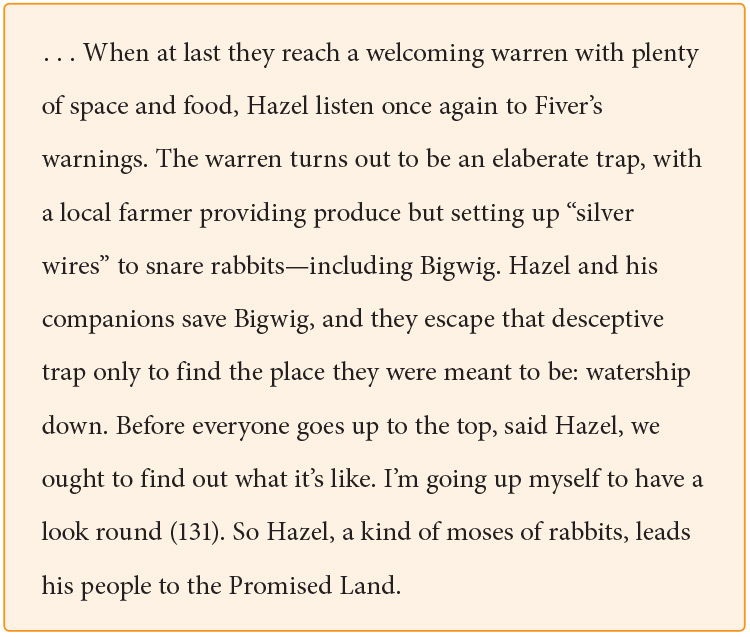
Paragraph Before Edits
-
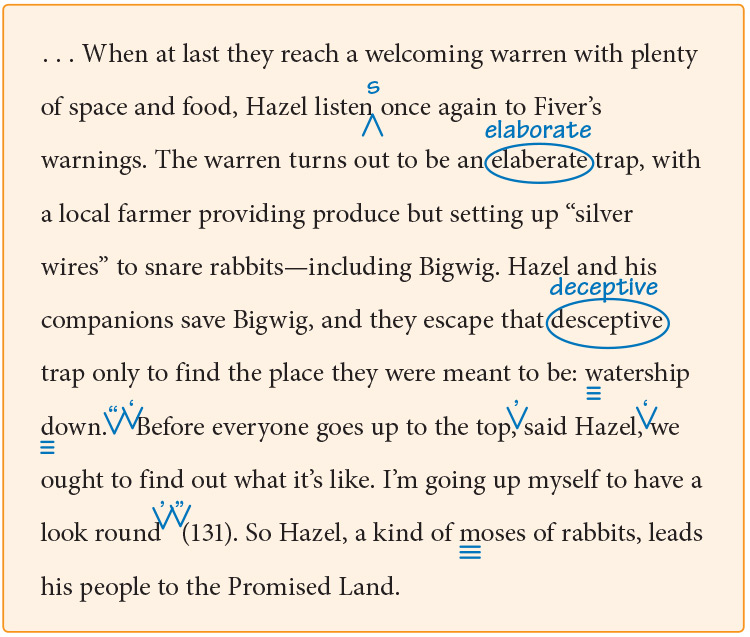
Subject-verb agreement, spelling, and punctuation are corrected.
-
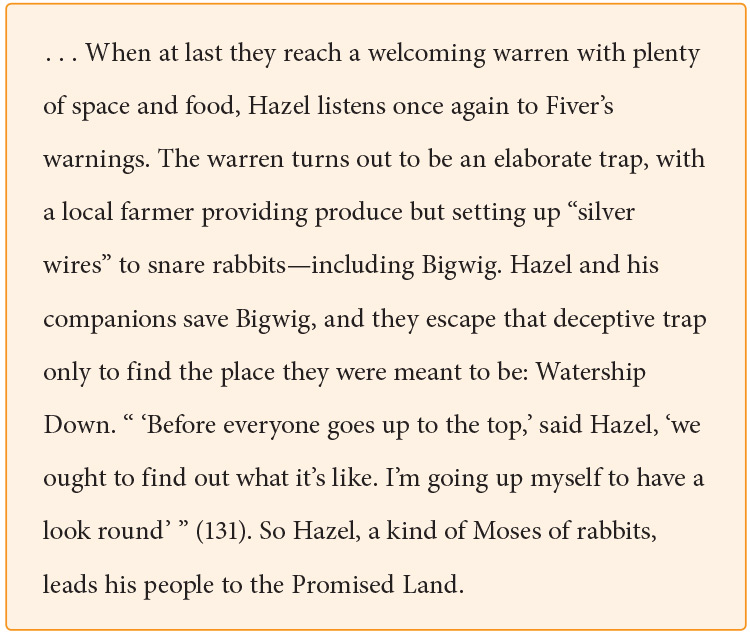
Paragraph After Edits
Edit with a checklist.
Read each line. When you can answer each question with a yes, check it off. Continue editing until each line is checked.
Sentences
- Do sentences read smoothly, with varied lengths and styles?
- Are sentences correct, without run-ons, comma splices, or fragments?
Punctuation
- Do commas appear before coordinating conjunctions (and, but, or, nor, for, so, yet) in compound sentences?
- Do commas follow introductory clauses and longer introductory phrases (four words or more)?
- Do double quotation marks surround exact words taken from the literature, with single quotes for dialogue within?
- Do parentheses cite the page number of the source of quoted material (with the text already providing the title and author)?
- Are the titles of book-length literature in italics and titles of short stories in quotation marks?
Mechanics
- Are proper nouns and the first words in sentences capitalized?
- In titles, are the first and last words capitalized as well as all words in between except coordinating conjunctions (and, but, or), articles (a, an, the), and short prepositions (in, of, at, with, on)?
- Have I checked spellings of the names of characters and locations in the literature?
- Have I checked spelling using a dictionary or the spell checker on my computer?
Grammar
- Do subjects and verbs agree in number?
- Do pronouns and antecedents agree in number, person, and gender?
- Are comparative and superlative forms of adjectives (good, better, best) and adverbs (rapidly, more rapidly, most rapidly) correctly formed?
Usage
- Are special terms from the novel correctly used in the discussion?
- Are commonly confused words used correctly (your/you’re, their/they’re, its/it’s)?
Publishing Literary Analyses
After you've put so much effort into prewriting, drafting, revising, and editing, you'll want to share your work with others. Publishing is just that. Make a clean final copy of your work. Then find ways to share your writing with classmates, your teacher, your family, and your friends. You may also wish to submit your work to a literary contest or online publication.
Publishing a Final Copy
Create a final copy of your analysis.
Include your revising and editing changes and read over your work a final time, this time out loud. (If you are working on a computer, spell-check your work.)
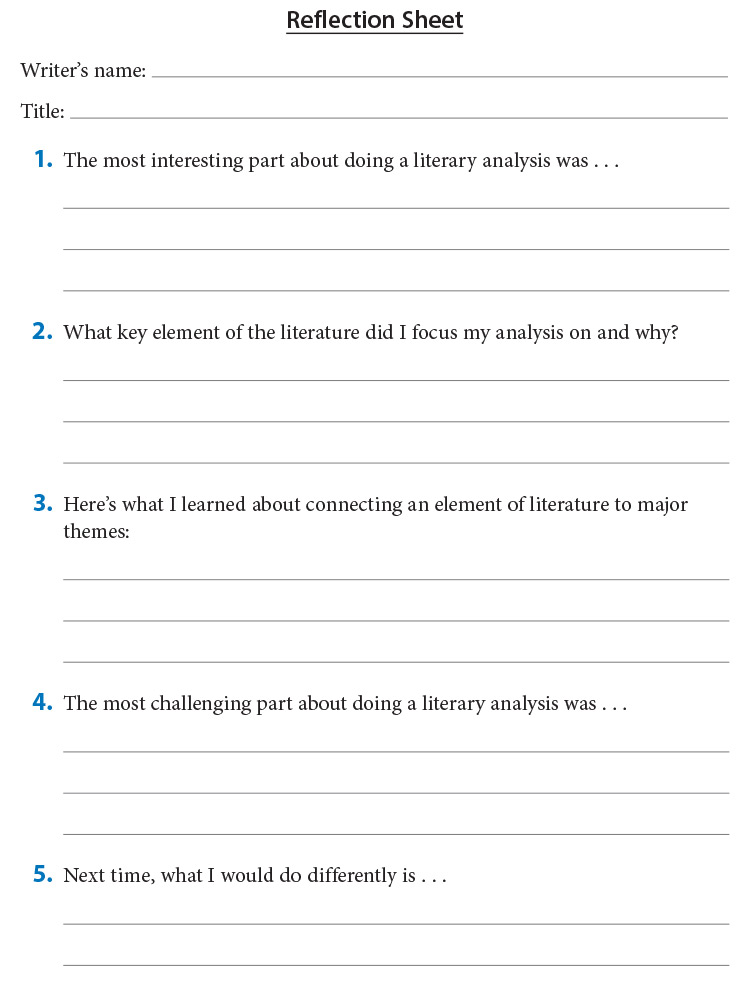
Reflecting on Your Writing
Reflect on your writing.
Complete the following sheet to reflect on analyzing literature.