Writing a Research Paper
After fully engaging your sources, you have plenty of remarkable information to convey to your reader. The problem may be figuring out where to begin. What do you share first?
The following activities will suggest many starting points and ending points and other points in between. The strategies below will prime the pump of your ideas, getting them to flow easily into your first draft.
Writing the Beginning Paragraph
Your first job in writing a research paper is to catch your reader's interest. You can experiment with a number of strategies to form an interesting lead sentence.
Write a lead sentence.
Try out some of these strategies for introducing your research paper. Read the examples for ideas.
- Start with a fascinating quotation.
"Do things. Be sane. Don't fritter away your time; create, act, take a place wherever you are, and be somebody; get action.”
—Theodore Roosevelt, Sr. - Express what is most interesting about the subject.
Teddy Roosevelt transformed himself from an asthmatic weakling to a brawler who won in Cuba and Panama, in Washington and on Mount Rushmore.
- Provide an anecdote.
As they charged up San Juan Hill into the teeth of machine-gun fire, Teddy Roosevelt turned to a fellow soldier and shouted, "Holy Godfrey, what fun!"
- Ask an engaging question.
Are heroes born, or are they made?
Write your beginning paragraph.
Start with your lead, and then provide background information and develop a paragraph leading to your thesis statement.
Writing the Middle Paragraphs
Develop a middle paragraph for each main point that supports your thesis statement. Start each paragraph with a topic sentence that names the main point. Thoroughly explain each main point using facts, statistics, definitions, examples, and quotations from sources. Cite information from sources.
Write your middle paragraphs.
Develop a paragraph of support for each main point about your thesis statement.
Teacher Tip
Allow students to develop these paragraphs first if they wish. Sometimes, students prefer to work from the details up to the thesis statement rather than the reverse direction.
Writing the Ending Paragraph
Your ending paragraph draws your research paper to an effective close. You can develop this paragraph using a number of different ending strategies.
Try ending strategies.
Write a sentence for each ending strategy. Read the examples for ideas. Then consider using some or all of these sentences in your ending paragraph.
- Summarize the significance of your topic.
Roosevelt had virtually willed the Rough Riders into existence, creating them out of Harvard football captains and Wild West cowboys—the two halves of himself.
- Provide another strong quotation from the source.
One of the Rough Riders reflected on the mood of the troops as they followed Roosevelt up Kettle Hill and San Juan Hill: "I most positively assert that every face I looked into, both white and black, had a broad grin upon it.'
- Show the larger significance of what you have discovered.
Roosevelt's "crowded hour" of courage in the face of fire made him a national hero and, three years later, the president of the United States.
- Leave the reader with a strong final thought.
As Roosevelt's life demonstrated, an iron will can turn a weak body into fire-forged steel.
Write your ending paragraph.
Use some or all of the strategies you tried above as you build an ending paragraph for your research paper.
Reading a Sample Draft
Read a sample research paper.
As you read this draft, notice how the writer puts the parts together.
Listen to "The Man Writ Large"
Hide audio
Sample Research Paper
Running HeaderReyes 1
Carlos Reyes
Mr. Dan Meddaugh
AP History
10 March 2018
The Man Writ Large
“Do things. Be sane. Don't fritter away your time; create, act, take a place wherever you are, and be somebody; get action.”
—Theodore Roosevelt, Sr.
Lead Sentence Teddy Roosevelt was a sickly child. At three years old, his asthma attacks became so bad that his parents feared he would die of suffocation. Mustard plasters, ipecac treatments, electric shocks, and rigorous massages failed to alleviate his condition. During the worst attacks, Teddy even had to choke down black coffee and suck on cigars (Ward and Burns 8). None of these remedies worked. Beginning Paragraph What did work was determination and exercise. Teddy worked tirelessly in his home gymnasium, took boxing lessons, and learned to ride and shoot. He came to see life as an ongoing battle (12). Through force of his iron will, Teddy transformed himself from an asthmatic weakling into a brawny brawler. Twenty years later, Roosevelt turned the same iron will to creating the Rough Riders. He almost single-handedly willed them into existence, gathered them, trained them, and led them to Cuba. Thesis Statement This "cowboy regiment" was Roosevelt writ large—a division of Wild West buckaroos and Ivy League rowing captains grinning ear to ear as they charged into the face of machine-gun fire behind their irrepressible commander.
Topic Sentence Teddy Roosevelt always sought a fight worth fighting. After his election to the New York Assembly, he shocked his fellow assemblymen by attacking both the Democratic and Republican Party machines and their corrupt practices In-Text Citation (Ward and Burns 26). His father had been denied a
Reyes 2
key post in government due to party corruption, and Roosevelt was determined to root it out. He gained a reputation as a lion-tamer and fierce reformer. Then, when Roosevelt's mother and wife died on the same day, he fought grief in an altogether different way—by becoming a cowboy in North Dakota. Quotation "There were all kinds of things of which I was afraid at first, ranging from grizzly bears to 'mean' horses and gunfighters; but by acting as if I was not afraid I gradually ceased to be afraid. Most men can have the same experience if they choose" (Ward and Burns 35). That statement came to sum up his philosophy of life. When Roosevelt returned to Washington, he worked his way to the position of assistant secretary of the Navy in the run-up to the Spanish-American War. For most, that position would have allowed plenty of involvement, but Roosevelt wanted to be in the thick of the action. He wrote countless letters to anyone who could secure him a combat position: "I don't want to be in an office during war. I want to be at the front . . . If I were in New York City, I think I could raise a regiment of volunteers in short order. . . . Have you any idea how quickly I could get uniforms, arms, etc.?" (Gardner 14). The nation was soon to find out. On April 25, 1898, Roosevelt became lieutenant colonel of the First United States Volunteer Calvary unit under the command of his friend, Colonel Leonard Wood (18).
Middle Paragraphs Though he was second in command, the regiment was Roosevelt's, through and through. Within days of its announcement, journalists were calling it "Teddy's Terrors," "Teddy's Toughs," "Roosevelt's Red-Hot Roarers," the "Rooseveltians," and finally the name that stuck, "Roosevelt's Rough Riders" (Gardner 20-21). Many of the volunteers were indeed cowboys—sharpshooting horsemen and broncobusters, former sheriffs and a few outlaws that they had sought. Teddy was comfortable among them all, after his time ranching in North Dakota. He also drew in excellent volunteers from the Ivy League, including football and track stars, rowing captains, and steeple-chase riders (29). Though one might expect the western toughs and the eastern elites to clash, Roosevelt created an
Reyes 3
environment that brought them together: "The Rough Riders at the fairgrounds had been tipped off that the Harvard men were in town . . . cheers and shouts erupted for these 'college boys,' who quickly found themselves surrounded by two hundred jostling troopers, each one wanting to shake their hands" (Gardner 33). At first, none of Roosevelt's supplies had arrived—no tents, no blankets, no uniforms, no rifles or sidearms—but the men willingly slept in straw and marched in their own clothes and shot their own guns, whatever it took to train under Roosevelt. Supplies arrived slowly but surely. Roosevelt also secured horses for his troops, though they were not "well broken to saddle" as requested. Roosevelt and his recruits had to break their own horses, teach them to follow commands, get them to form lines, and train them to ignore ubiquitous gunfire (Gardner 44-45). Roosevelt shaped it all, from horse to rider to boots to hats to maneuvers to slogan: "Remember the Main!"—the U.S. ship sunk in Havana harbor.
Getting the Rough Riders from their training camp in San Antonio to the beaches of Cuba was no easy task, either. Roosevelt ordered enough Southern Pacific railcars to transport his regiment, provisions, tents, ammunition, and feed as well as 960 mounts and 232 pack mules (Gardner 58). At every stop along the way to Tampa Bay, crowds of well-wishers threw impromptu parties for the Rough Riders, and in the long tedious miles between, the recruits played tricks on each other. One even lassoed a pig from an adjacent field and hauled it into the boxcar, making it a mascot along with the troop's pet mountain lion and dog (60-63). One of the trains got delayed for eighteen hours, after which the Troop H commander arrested the engineer and conductor and commandeered the train to make the final push to Tampa (65). The next blow came because room on ships was so tight that this cavalry unit would have to leave most of its horses behind. Roosevelt was determined that at least the men and their provisions
Reyes 4
would be in the first wave of U.S. troops. At the docks, Roosevelt marched his Rough Riders through the regular army regiments already waiting for transport and commandeered the Yucatan, stealing the ship from the Seventy-First New York, which was left stranded on the dock (77). Roosevelt did make sure that his ship had room for a pair of reporters with movie cameras (78). Though the Rough Riders launched in a hurry, the overloaded Yucatan then had to sit at sea for a few days because of erroneous reports of an armored Spanish cruiser and torpedo boat waiting to sink them all (81). Once underway, the slow side-wheelers made the journey a week long, with provisions running short. At last in Cuba, the ships had to shell the shore to drive Spaniards out of the village of Daiquiri and try to land at the minuscule dock (25 feet by 40 feet, and partially torn up by the retreating Spaniards). Soldiers had to leap from deck to dock, and two Buffalo Soldiers missed the jump and drowned. Rough Riders tossed supplies from ship-board to comrades waiting on the dock, which caused many crates to land in the drink. Divers descended to fish the lost supplies from the bottom (94-95). One of Roosevelt's horses also drowned during the traumatic landing (99).
Once onshore, Roosevelt's Rough Riders, the black regiment of Buffalo Soldiers, and their regular army comrades made the push from Daiquiri toward Santiago. After nine grueling miles on narrow jungle trails, Roosevelt led his troops into what could only be described as an ambush. War reporter Stephen Crane, author of Red Badge of Courage, put it this way:
Source Excerpt "Lieut. Col. Roosevelt's Rough Riders, who were ambushed yesterday, advanced at daylight without any particular plan of action as to how to strike the enemy. The men marched noisily through the narrow road in the woods, talking volubly, then suddenly they struck the Spanish lines. . . . It was simply a gallant blunder" (Gardner 131).
Reyes 5
On June 24, 1898, on the valley road at a place called Las Guásimas, Roosevelt marched his troops into a group of Spaniards that had entrenched in a V formation, waiting for them ("Spanish"). A half-Cherokee Rough Rider named Tom Isbell got off the first shot, killing a Spanish soldier. The storm of machine gun fire that responded struck Isbell multiple times, though he survived the engagement. That first firefight proved a turning point for Roosevelt. Rough Rider Edward Marshall described Roosevelt's first response to live fire saying he "jumped up and down, literally, I mean, with emotions evidently divided between joy and a tendency to run." Moments later, Marshall noted a sudden change when Roosevelt led a charge through a cut barbed-wire fence: "He became the most magnificent soldier I have ever seen" (Gardner 111). Though they were pinned down by entrenched foes with machine guns, Roosevelt drove his Rough Riders steadily into the teeth of the assault. After a two-hour fight, the Rough Riders drove the Spanish from their positions. In his June 24th diary entry, Roosevelt noted simply, "Fight at Las Guásimas. We drove enemy in fine shape. Lost 60 men killed or wounded." The Spanish lost 24 men. Though Roosevelt and some American reporters claimed a "rout," the Spanish executed an orderly withdrawal from Las Guásimas and joined the fortification of Santiago, which had been their plan all along ("Spanish"). What they had not planned on was an enemy who would suffer more than twice their casualties but continue advancing—the ruthless, reckless courage that emanated from Roosevelt and resonated through the men under his command.
That indomitable spirit would have its greatest test a week later on July 1. While most of the regular army troops focused on a siege at Santiago, the Rough Riders, the Buffalo Soldiers, and a few regular army regiments sought to dislodge Spanish control at El Canarey. Doing so would prevent attacks on the American flanks during the siege ("Spanish"). Roosevelt
Reyes 6
would once again lead his troops uphill into the face of an entrenched foe with superior weaponry. Roosevelt, however, had a 10 to 1 advantage of soldiers against the 500 Spanish defenders. Just as he had done at the docks at Tampa Bay, Roosevelt jostled his Rough Riders forward to bypass the regular-army regiments and begin the assault on Kettle Hill. A Buffalo Soldier asked, "Who do you think you are?" and was told, "We're Rough Riders going to take that hill. Get out of the way or fall in with us." The Buffalo Soldier replied, "I'll be damned if those Rough Riders will get ahead of me!" Roosevelt thus ended up effectively commanding his own men and that of the separate regiment. A Rough Rider said of that sudden battlefield brotherhood, "I most positively assert that every face I looked into, both white and black, had a broad grin upon it" (Gardner 161).
The regiments ground forward, eventually taking Kettle Hill, but gunfire still rained down on them from San Juan Hill. Amid the withering fire, Roosevelt raised his pistol and shouted, "Now by God, men! Let's charge 'em!" He jumped a fence and ran down Kettle Hill toward San Juan Hill, but in the noise and confusion, only five of his own men followed. He had to retreat to gather the others, as Roosevelt remembered it: "Even while I taunted them bitterly for not having followed me, it was all I could do not to smile at the look of injury and surprise that came over their faces" (Gardner 167-169). Mounting his horse Little Texas, Roosevelt led his soldiers in the charge up San Juan Hill, and to victory (see fig. 1). In his July 1 diary entry, Roosevelt scribbled in pencil, "Rose at 4. Big battle. Commanded regiment. Helped extreme front of firing line. Under shell and rifle fire." Later, he would dub the charge up San Juan Hill "the great day of my life" ("T.R."). A battle that had been expected to take two hours stretched to twelve, with 300 Spanish casualties to the 500 U.S. casualties ("Spanish").
Reyes 7
Photo and Caption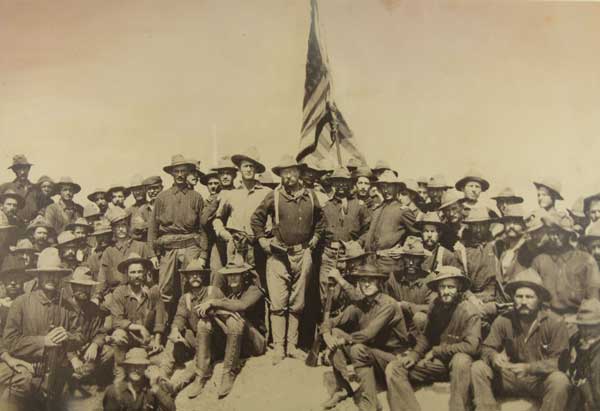
Fig. 1. Roosevelt and the Rough Riders atop San Juan Hill. Theodore Roosevelt Birthplace National Historic Site.
Ending Paragraph Roosevelt had created the Rough Riders in his own image—half Harvard yachtsmen and half Wild West broncobusters. He'd mustered up a ragtag group of volunteers and equipped them with unbroken horses and provisions dragged from suppliers across the country. He trained them, commandeered transport for them, and led them in charge after reckless charge, all to victory. Roosevelt built this fighting force out of nothing, just as he had transformed himself from an asthmatic child to a brawny brawler. And as Roosevelt was making the Rough Riders, they were making him. Edward Marshall noted the moment of transformation, when Roosevelt led the first charge through a fence at Las Guásimas: "It was as if that barbed-wire strand had formed a dividing line in his life, and that when he stepped across it he left behind him in the bridle path all those unadmirable and conspicuous traits which have so often caused him to be justly criticized in
Reyes 8
civic life" (Gardner 111). Roosevelt, of course, still had his critics, including a reviewer for Harper's Weekly who quipped that his self-aggrandizing Rough Riders memoir should have been retitled Alone in Cuba (Goodwin 258). Roosevelt actually befriended that critic and others, unfazed by their barbs. In his speech, "Citizenship in a Republic," Roosevelt summed up his views about critics and men of action:
It is not the critic who counts; not the man who points out how the strong man stumbles, or where the doer of deeds could have done them better. The credit belongs to the man who is actually in the arena, whose face is marred by dust and sweat and blood; who strives valiantly; who errs, who comes short again and again, because there is no effort without error and shortcoming; but who does actually strive to do the deeds; who knows great enthusiasms, the great devotions; who spends himself in a worthy cause; who at the best knows in the end the triumph of high achievement, and who at the worst, if he fails, at least fails while daring greatly, so that his place shall never be with those cold and timid souls who neither know victory nor defeat.
Reyes 9
Works-Cited Entries Works Cited
Gardner, Mark Lee. Rough Riders. William Morrow, 2016.
Goodwin, Doris Kearns. The Bully Pulpit. Simon & Schuster, 2013.
Roosevelt, Theodore. "Citizenship in a Republic." Speech delivered 23 April 1910. TheodoreRoosevelt.com, http://www.theodore-roosevelt.com/trsorbonnespeech.html.
---- "Diary of Theodore Roosevelt from April 16 to August 20, 1898." The Roosevelt Center, Dickinson State University, http://www.theodorerooseveltcenter.org/Research/Digital-Library/Record?libID=o283221.
“Roosevelt and the Rough Riders atop San Juan Hill.” The Roosevelt Center, Dickinson State University, http://www.theodorerooseveltcenter.org/Research/Digital-Library/Record?libID=o284930.
"Spanish American War History 1898." History of American Wars, http://www.history-of-american-wars.com/spanish-american-war-history.html.
"T. R. the Rough Rider: Hero of the Spanish American War." Theodore Roosevelt Birthplace, National Park Service, 26 Feb. 2015, https://www.nps.gov/thrb/learn/historyculture/tr-rr-spanamwar.htm.
Ward, Geoffrey C. and Ken Burns. The Roosevelts: An Intimate History. Alfred A. Knopf, 2014.